Hindutva’s Forward March
In India, Modi's Hindu nationalist BJP is consolidating its power through vigilante violence, censorship, and state repression.
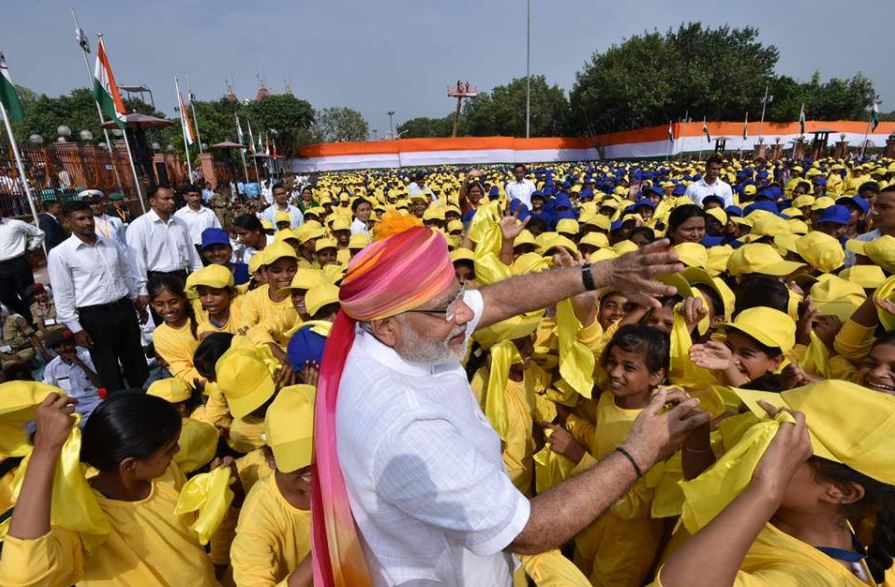
Indian prime minister Narendra Modi on March 15, 2016. Narendra Modi / Flickr
This March, the Bharatiya Janata Party (BJP) won regional elections in four out of five states, including Uttar Pradesh (UP). This huge prize represents a qualitative advance for the party and the Hindu nationalist Sangh Parivar it represents, giving greater legitimacy to their long-term goal of establishing a Hindu state in all but name.
Less than six months later, on the evening of September 5, the Bangalore-based journalist and civil rights activist Gauri Lankesh was shot to death outside her home. She had been a fierce critic of Hindutva organizations and their leaders, including Prime Minister Narendra Modi. This deadly assault dramatizes India’s dangerous trajectory.
This article will trace what has happened since March, measuring Hindutva’s forward march. Though the forces have not advanced as fast or as far as the Sangh and BJP wished, their leaders should have more reason to feel satisfied with their progress. I’m basing this assessment on three parameters: developments on the electoral-political front since March, inroads in the “long march through the institutions,” (where I look at the Election Commission of India, the Supreme Court, the public education sector) and Hindutva’s hegemonizing thrust in civil society, which increasingly focuses on generating fear among dissenters.