Out of Left Field
Major league baseball has a long but little-known history of rebels, reformers, and radicals.
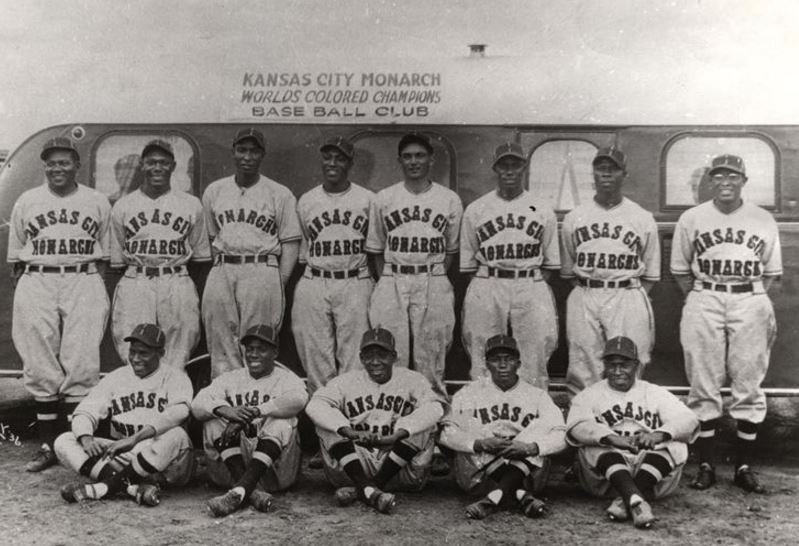
The Kansas City Monarchs, of the Negro League, in 1936. Western Canada Baseball archives
A week after his inauguration, Donald Trump signed the first iteration of his travel ban, sparking nationwide protests. “These refugees are fleeing civil wars, terrorism, religious persecution, and are thoroughly vetted for 2yrs,” tweeted Oakland A’s pitcher Sean Doolittle. “A refugee ban is a bad idea . . . It feels un-American. And also immoral.” St Louis Cardinals outfielder Dexter Fowler, whose wife emigrated from Iran, told ESPN that he opposed the executive order. In response to angry comments from fans, Fowler tweeted, “For the record. I know this is going to sound absolutely crazy, but athletes are humans, and not properties of the team they work for.”
Doolittle and Fowler’s comments reflect ballplayers’ long but little-known tradition of dissent and rebellion. Compared to their counterparts in football and basketball, baseball players have tended to be cautious about speaking out on controversial social and political issues, but, throughout the sport’s history, a minority of players — alongside executives, sportswriters, and managers — has challenged the status quo.
Baseball’s rebels, reformers, and radicals took inspiration from the country’s dissenters and progressive movements, speaking and acting against abuses both within their profession and in the broader society: racism, sexism, homophobia, poverty, war, repression, corporate domination, and worker exploitation.