The Amazonization of Everything
Amazon's success lies in worker exploitation and intrusions into consumers’ private lives.
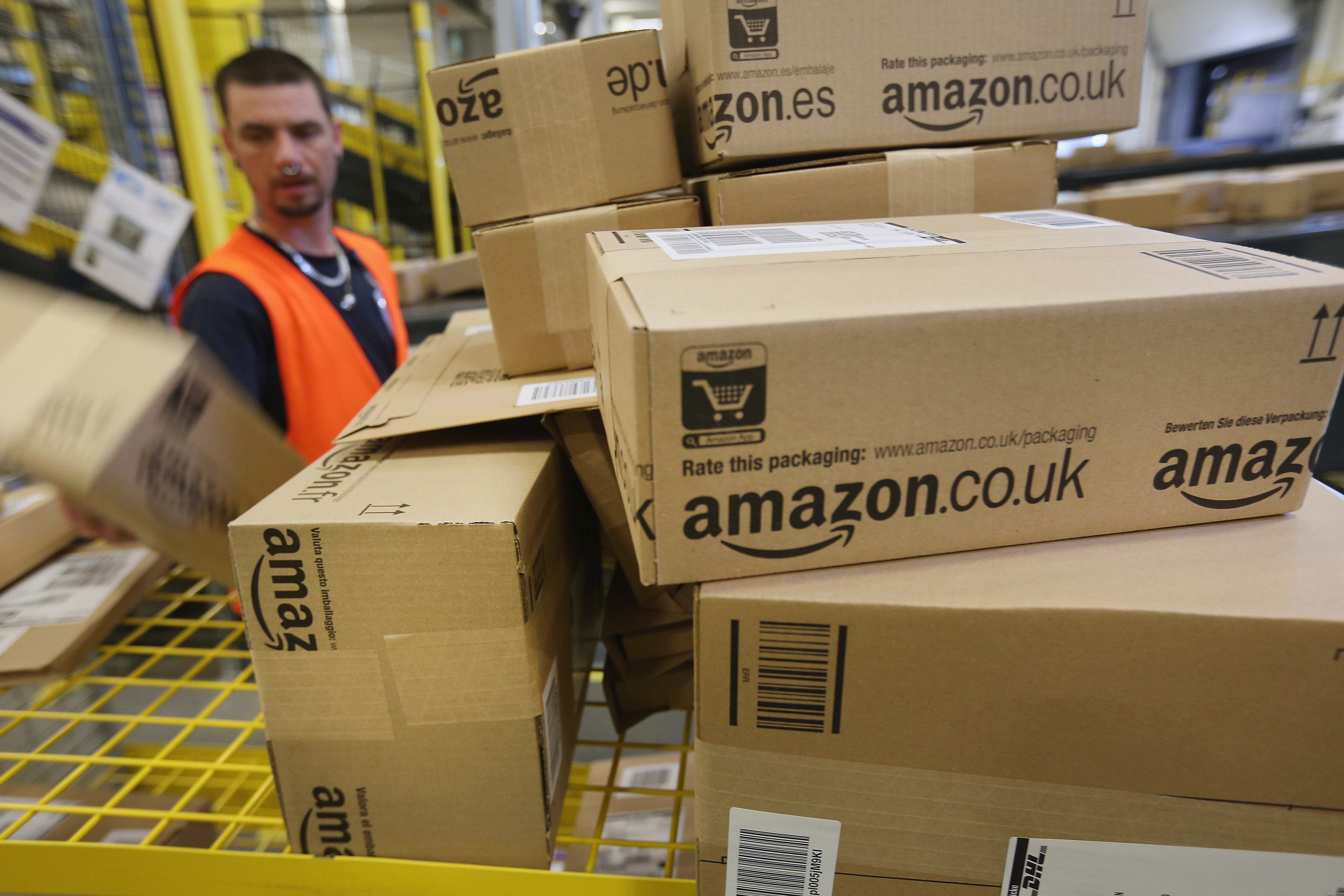
An Amazon warehouse in Brieselang, Germany. Sean Gallup / Getty Images
Media scholars like Siva Vaidhyanathan and Shoshana Zuboff have argued convincingly that ordinary citizens and regulators should be concerned about the immense power Google has amassed over many parts of our lives. Yet Amazon, nearly as ubiquitous, and also a frequent target of critical press, maintains a much less troubled public profile than Google.
This should hardly be the case. Amazon’s role in developing disturbing new workplace trends, especially for non-white-collar workers, should be of central concern for labor advocates. While both Amazon and Google famously maintain resort-like “campuses” to recruit and retain top IT workers, Amazon relies on a workforce three times the size of Google, not including its army of contingent workers, for critical aspects of its business.
As a 2011 story about the company’s Allentown, PA warehouse reported, many of Amazon’s warehouse workers are temps employed by a third-party staffing firm, and it manages its warehouse workers using the same web-centric, piecemeal, “just-in-time” methods it uses for other aspects of its supply chain, enterprise planning, and customer relationship management.