Was John Stuart Mill a Socialist?
John Stuart Mill might have lots of libertarian fans, but his idiosyncratic ideas, despite their limitations, had more in common with democratic socialism than pro-capitalist ideologies.
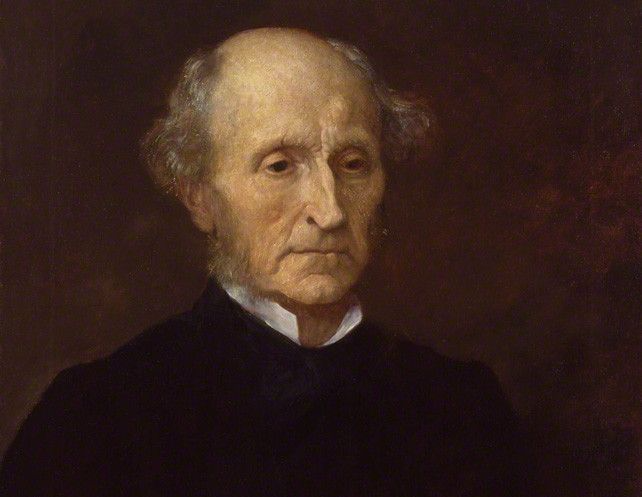
Replica of a portrait of John Stewart Mill commissioned by Sir Charles Dikes. (G. F. Watts / National Portrait Gallery)
John Stuart Mill was the most influential liberal thinker of the nineteenth century. Many of his arguments for free speech and personal autonomy became staples of the tradition, and he still enjoys a pious following among libertarians and self-styled classical liberals. Naturally, the latter affinity has won Mill plenty of enemies on the Left. Karl Marx famously dismissed the “imbecile flatness” of bourgeois hacks like Mill in the first volume of Capital. Years later, Herbert Marcuse (rightly) chided him for holding “elitist” opinions.
This is unfortunate since, as Mill put it in Autobiography, his “ideal of ultimate improvement went far beyond Democracy, and would class [him] decidedly under the general designation of Socialists.” It doesn’t get more emphatic than that.
By the end of his life, Mill espoused what we’d now call liberal socialism: a political order that protects and expands most classical liberal freedoms, but jettisons the stringent private property rights so dear to early liberals like John Locke and James Madison.