Marx Believed Meaningful Work Was Central to the Good Life
Part of Karl Marx’s project was a thoroughgoing critique of capitalism as system of exploitative social relations. But he also thought seriously about the essential place of work in the good life.
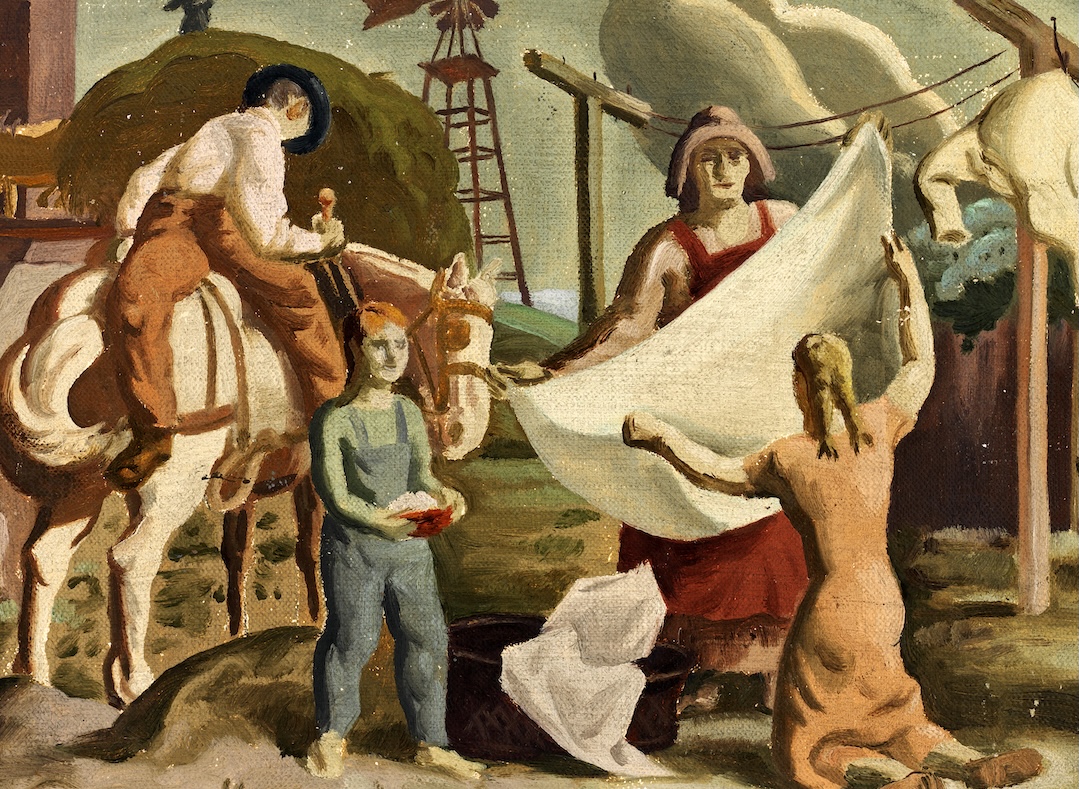
While criticizing capitalism, Karl Marx understood that the recognition people get for their productive contributions to society was essential to their flourishing. (Heritage Art / Heritage Images via Getty Images)
- Interview by
- Hugo de Camps
Not too long ago, a wave of books written by left-wing and liberal commentators appeared celebrating a future in which work would be a thing of the past. The increased productivity of technology would free humans from drudgery and allow them to focus on cultural pursuits and spend more time making friends or finding love, these polemics alleged. Amid the near-daily stream of stories warning about the disastrous social effects that artificial intelligence may have, not just on the labor market but on people’s literacy and numeracy, this earlier mood seems at best misguided.
In his recently published book, Flourishing Together: Karl Marx’s Vision of the Good Society, Jan Kandiyali, a professor of philosophy at Durham University in England, argues that his subject’s views about work and the good life have been deeply misunderstood. Yes, Marx was a profound critic of capitalism. He saw the system as exploitative and harmful to human relations of friendship and love. But he also thought that contributing productively to society was a vital component of the good life.
In a wide-ranging discussion, Kandiyali tells Jacobin why socialists mustn’t abandon this vision. The path to building a better society runs through, rather than past, recognizing the social value of work.
Hugo de Camps
We usually think of Marx mainly as a critic of capitalism. In Flourishing Together, you argue that his work also contains a positive account of human flourishing. What is, in your view, a good society for Marx?
Jan Kandiyali
I agree that people generally think of Marx as a critic of capitalism. The book is motivated by two thoughts: First, that Marx was more concerned with the question of what a good society would look like than people tend to think. And second, that it is a mistake for socialists to confine themselves to criticism of existing society without offering an account of an alternative. As G. A. Cohen once said, unless you write recipes for the cookshops of the future, there is no guarantee you will get the food you like.
I understand a good society as one that enables its members to flourish. The word “enables” is important here. It is not about guaranteeing that people flourish or forcing them to, but about giving them the real opportunity to do so. Moreover, in Marx’s view, a vital component of human flourishing is self-realization in work. So, a good society is one that enables self-realization in work, among other things.
Hugo de Camps
How, exactly, do you understand work in this context?
Jan Kandiyali
Defining work is difficult, and I do not offer a strict definition. I am interested in self-realization in work, understood as activity that enables people to develop their powers and capacities while also meeting the needs of others. That differs from employment understood simply as wage labor. In my sense of the term, people can work without being employed, for example through charity work. Conversely, someone can be employed without working in this sense. Think of David Graeber’s “bullshit jobs” or work that is actively harmful, such as maximizing the addictiveness of gambling technologies. You can receive a wage without engaging in the kind of self-realizing work that I am interested in.
Hugo de Camps
At the center of the book is what you call the mutualist interpretation, contrasted with the parallelist view associated with G. A. Cohen and Jon Elster. On the parallelist view, individuals may flourish alongside one another, but not necessarily through one another. What would you say is missing from this reading, and why do you find the mutualist interpretation more convincing?
Jan Kandiyali
The parallelist reading, which is my term, says that people realize themselves simply by developing their powers and capacities. They may do so in ways that benefit others, but this is not required: their activity might simply benefit themselves.
Cohen illustrates this with the example of a jazz band. Cohen says: one way of understanding Marx’s vision of the good society is to imagine a jazz band in which each player is motivated by their own self-realization. Now, in this jazz band, each player needs their fellow musicians to provide the music for their self-realization. But they do not value their cooperation or the fact that they are providing the conditions for one another’s self-realization.
On the parallelist view, then, we achieve self-realization alongside others, through our parallel projects of self-realization, but not necessarily through contributing to one another’s flourishing. I contrast it with the mutualist interpretation. On the mutualist interpretation, people realize themselves through providing others with the various goods and services they need to pursue their flourishing. So, the mutualist interpretation is a more social and relational vision of the good society.
Now, to turn directly to your question, the short answer is that the parallelist vision leaves out the value of solidarity. By solidarity, I mean concern for others and finding value in activities through which we contribute to their lives. I think Marx and the socialist tradition more generally saw these solidaristic relationships as part of human flourishing. Without them, your life may go well in some respects, but you are missing something important. In a nutshell, that is what the parallelist account leaves out.
Hugo de Camps
You describe mutual self-realization as developing our capacities in ways that provide others with the goods and services they need to flourish. Voluntary care seems a clear case, but what about entertainment or luxury goods? Put differently: Does mutual flourishing depend on distinguishing genuine human needs from preferences shaped by the market?
Jan Kandiyali
I understand needs as things required for people to flourish. That means that we can distinguish genuine needs from preferences shaped by the market — what Marxists, particularly in the tradition of the Frankfurt School, have called false needs. We might desire certain things we do not need.
But at the same time, we should not think of needs in too restricted a way. Marx had a broad and rich understanding of what we need to flourish. In his early writings, he contrasts the wealth and poverty of capitalism with the “rich human being” and “rich human need” associated with communism. The ideal is not merely to satisfy basic physical needs. Cultural goods, aesthetic enjoyment, and entertainment, for example, also count as needs. Marx’s ideal was not one of an austere life of self-denial, nor should ours be.
Hugo de Camps
Recognition by others forms part of your account of socialization through productive activity, but recognition can also be gained through friendship, care, political activity, or artistic creation. Is there anything distinctive, in your view, about work as a source of self-realization?
Jan Kandiyali
I am not claiming that the recognition we receive through friendship, family, or other activities is unimportant. But there is, I think, something distinctive about the recognition we receive for our productive contributions.
Recognition within the family or among friends typically has a certain character. Especially within the family, it tends to be relatively unconditional: it does not typically depend upon your specific achievements. In productive activity, by contrast, you are recognized primarily for what you contribute. If I write a book, for example, other people assess its merits and shortcomings and recognize me on the basis of that contribution.
So, my answer to your question would be quite Hegelian: we have needs for different types of recognition — as family members, friends, producers, and citizens. These forms are distinct and cannot simply substitute for one another.
Hugo de Camps
You present Marx’s vision of socialism as an alternative to liberal egalitarian theories of justice such as John Rawls’s. While liberal egalitarians focus primarily on distribution, your reading of Marx emphasizes production, self-realization, and social relations. What can this account explain that a theory centered on distribution cannot?
Jan Kandiyali
The liberal egalitarianism of Rawls and his immediate followers is an impressive body of work, but I think it has two limitations. First, its focus on distribution leaves out the sphere of production. Perhaps surprisingly, one of the first people to make this point was the libertarian philosopher Robert Nozick, who argued that liberal egalitarians such as Rawls can write as though resources exist in a “big social pot” waiting to be distributed. But obviously enough, those goods have to be produced in the first place. So, liberal egalitarianism has traditionally lacked a theory of what Lucas Stanczyk calls “productive justice.” This lacuna has, to a large degree, been addressed in recent years. (For a Marxist theory of it, I recommend Paul Gomberg’s excellent book, How to Make Opportunity Equal: Race and Contributive Justice.)
Second, the focus on justice leaves out a concern with the good society and what it means for people’s lives to go well. Justice is sometimes glossed as giving people their due. But people can receive their due while living bad lives. For example, they might get their due but pursue worthless conceptions of the good, such as amassing an endless supply of consumer goods. Or they might be treated fairly by social institutions but lack any solidarity with their fellows. Concerns with justice and distribution are obviously important, but they leave out important dimensions of human flourishing. So Marx gives us a way of bringing a concern with work and human flourishing back into debates in political philosophy.
Hugo de Camps
In the book, you present a critique of post-work politics and argue that socialism should aim to transform work rather than reduce its role. Can you explain why?
Jan Kandiyali
There is a divide between socialists who seek to transform work and those who seek to reduce its importance. My book belongs squarely in the former camp, as I think that work can be an important good for us when it is organized in the right way. I believe that a life in which everything we needed appeared like manna from heaven would be far from ideal. In such a world, human beings would no longer need one another to provide the goods and services required for flourishing. We could, of course, still read poetry, play football, or watch films together, but the collective activity of meeting one another’s needs would disappear. This implies that a post-work world would be, in one respect, worse than one in which our labor is required.
Current anxieties about AI and technologically driven unemployment seem to me to support this view. Part of the worry about AI is that people will lose an income, but I do not think this is their sole concern. People are also worried about what they would do if AI took their jobs. Of course, many people also want to work less and have more time for family, friends, and other activities, but I do not think that most people want to eliminate work altogether.
Hugo de Camps
If productive contribution is an important part of human flourishing, does this risk creating new hierarchies between forms of work? And how does your account accommodate those who, because of disability or illness, may be unable to participate in productive activity?
Jan Kandiyali
I will take up the issue of hierarchy and the issue of disability and illness separately.
With regard to hierarchy between different forms of work, the book offers a simple solution. A standard Marxist line is that automation will solve the problem of drudgery. I am not against automating drudgery, but I am skeptical that it can completely solve the issue here. My view is that the drudgery should be shared among everyone able to perform it. That would help overcome hierarchies between different forms of work because drudgery would then be done by everyone.
With regard to those who cannot work because of illness and disability, we should be cautious of thinking that the ill or the disabled cannot work. As proponents of the social model of disability have argued, much depends on the social environment. Maybe some people cannot work now. But with appropriate adjustments, they might be able to.
Of course, it is true that even with all the adjustments, some people still will not be able to work. In Marx’s vision of the good society, the relevant principle is “From each according to their abilities, to each according to their needs!” This means that those who cannot work will not be materially any worse off than those who can, since needs are met irrespective of prior labor contribution. However, it is an implication of the view — and perhaps a difficult one — that people who are unable to produce miss out on a vital component of human flourishing.
Hugo de Camps
How do you see the relationship between ideal theory and more immediate political questions?
Jan Kandiyali
Flourishing Together is primarily a work of ideal, or utopian, political theory. It asks what a genuinely good society might look like and uses that ideal to critique capitalism. The final chapter does discuss issues of transition, but it discusses transition from what Marx called the lower phase of communism to the higher. It does not provide a detailed route from present-day capitalism.
Clarifying the level at which the argument operates is important when we turn to more immediate political questions. My criticism of universal basic income (UBI), for example, does not mean that UBI could not be useful now, perhaps as a way of reducing poverty. Questions like that depend on various concerns about institutions, public support, trade unions, and political organization. I do not deal directly with these issues in the book, but I think it is a very good thing that more work within political philosophy is now considering these questions. Overall, I see nonideal political philosophy and the ideal project of imagining a good society as complementary.