The Trump Era Is Bad. But Is It Evil?
Skepticism toward moral absolutes has made the modern mind leery of the very idea of evil. Philosopher Susan Neiman makes the case that explaining wrongdoing is not the same as reckoning with its moral significance.
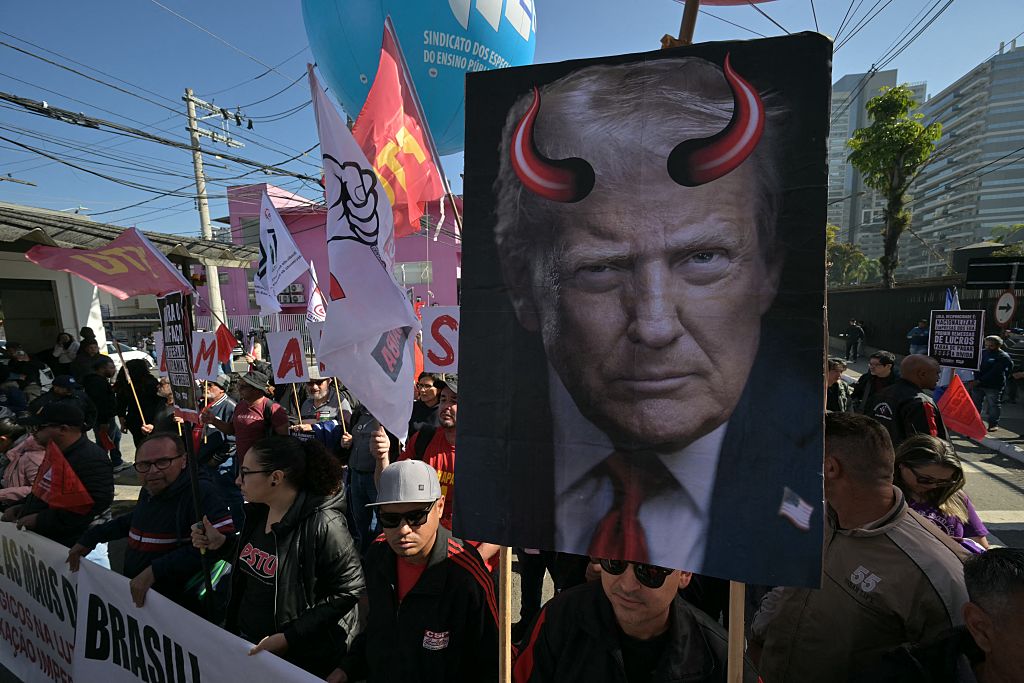
Susan Neiman argues that understanding Donald Trump requires that we take evil seriously. Her latest book asks what happens when we allow cynicism to displace moral judgment. (Nelson Almeida / AFP via Getty Images)
Leftists have an unusual relationship to the language of good and evil. On the one hand, we have a reputation for being righteous. . . . at times even self-righteous. Our publications are saturated with enough morally strident language to make a preacher blush. Even the most “scientific” of scientific socialists aren’t entirely immune, from tireless invocations of Rev Martin Luther King Jr and constant demands for justice and freedom for all to calls to end subordination and marginalization around the globe. On the other hand, leftists tend to be averse to describing structures, let alone people, as evil. Exploitative? Yes. Domineering? Of course. But evil? At best, that’s language reserved for your Hannah Arendt reading group.
Philosopher Susan Neiman takes umbrage at this reticence. Author of the acclaimed Evil in Modern Thought and the controversial Left is Not Woke, Neiman thinks we ought to call a spade and spade and describe the Trump administration as what it is: evil. The disturbing question that follows is: If what Donald Trump stands for is evil, why have millions of people chosen to get behind him not once but three times? As Neiman herself notes:
Knowing as much as can be known about a public figure whose cruelty and corruption have been on display for a decade, how was it possible that Americans elected him twice? One New York friend pointed out that no one who ever dealt with the man wanted to see him again — except for the American people.