Possible Love Is a Cinematic Masterpiece About Class
Lee Chang-dong doesn’t have the same profile as fellow South Korean directors like Bong Joon-ho and Park Chan-wook, but his latest film should change that. Possible Love is a powerful study of class in the wake of a shattering real-life strike defeat.
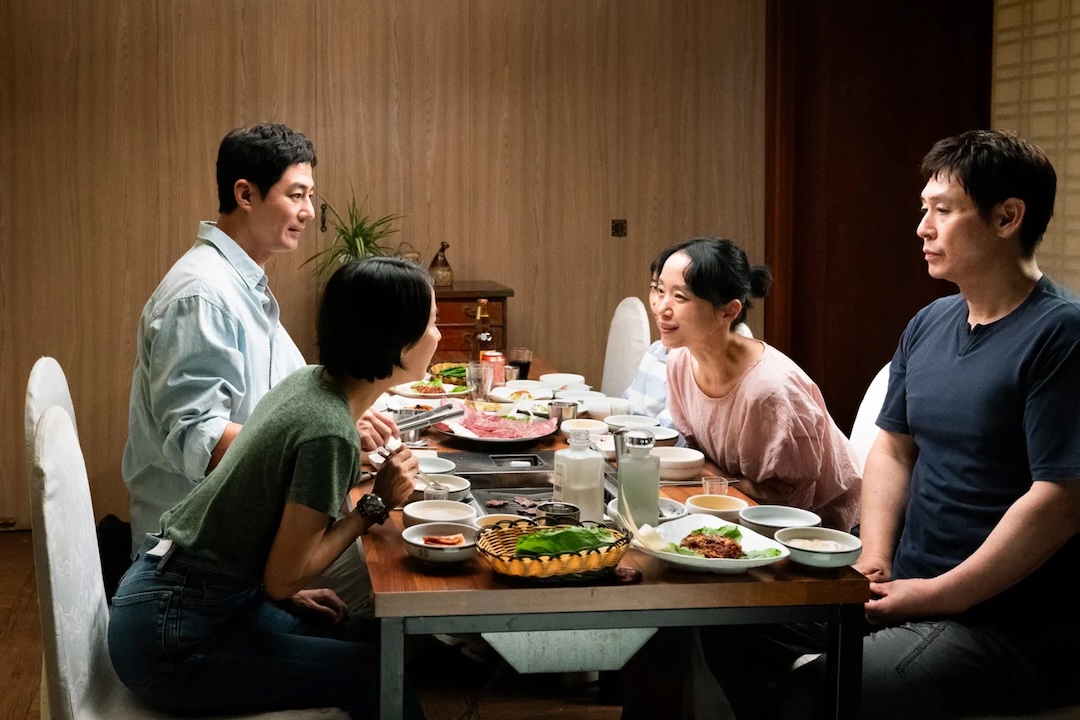
Lee Chang-dong has produced a series of outstanding films about contemporary South Korean society. His latest work, Possible Love, tackles the aftermath of a real-life strike whose defeat paved the way for a brutal assault on South Korea’s working class. (Joo Jae-bum / Netflix)
Possible Love is yet another masterpiece that South Korean director Lee Chang-dong has brought to us, after an eight-year hiatus since his last film Burning (2018). Unlike his younger Korean peers, such as Bong Joon-ho (Parasite) or Park Chan-wook (Old Boy and No Other Choice), Lee, now seventy-two, has often found himself confined to the independent film scene outside South Korea, where he has usually enjoyed modest commercial success.
Deeply rooted in humanity and class relations, Lee’s films deserve a wider audience beyond the ranks of art house aficionados (including Barack Obama, who named Burning among his favorite movies of 2018). Lee’s 1999 film Peppermint Candy weaves the life of a young man into the breakneck pace of South Korean capitalism, showing how innocence loses ground to violence, avarice, and lust. Burning explores the ways in which capitalism preys on and consumes poor young men and women.
Netflix’s funding and global distribution of Possible Love will likely expand Lee’s global reach. However, it has also revealed the maestro’s inability to raise further funds in South Korea, whose media giants — mostly outgrowths of chaebol conglomerates such as CJ ENM or Lotte Entertainment — no longer appear to be willing to bankroll Lee’s bold and unapologetic portrayal of South Korea’s economic system.
The Living and the Dead
For Netflix, Possible Love is a prestige project: an opportunity to bring home an Oscar with a highly accomplished director while reversing a viewership slump and enhancing its brand. Possible Love premiered theatrically in South Korea in September, meeting the Academy’s country-of-origin eligibility deadline. The streaming platform has also made Lee’s previous films available for its subscribers.
Possible Love is set against the aftermath of the 2009 brutal crackdown on the seventy-seven-day strike against massive job cuts at SsangYong Motor (fictionalized in the film as SP Heavy Industries). After crushing the strike, management and the government pushed through one of the country’s first massive layoffs by slashing 50 percent of SsangYong’s blue-collar workforce. In the film as in real life, workers refer to their laid-off colleagues as “the dead” and those who managed to escape the cull as “the living.”
Through the crackdown, corporations and the conservative government set a precedent for mass layoffs. After the defeat at SsangYong, corporations could cut jobs by invoking broadly defined criteria of managerial exigency. The repercussions of the strike and its vivid suppression resonated deeply throughout South Korea.
The strike even became part of the backstory of Squid Game, Netflix’s gamified portrayal of capitalist suffering. In his review of the series, Lee Chang-kun, a leader of SsangYong’s labor union, summed up the experience of an agonizing and prolonged factory occupation:
Out of the blue, we were left with no option but to squat at the factory. We first attempted to turn to each other to survive together. However, we were thrown into a life-or-death situation, often with no other option but to betray and dupe each other. At least once, as in Squid Game, we each had to hurt our closest friends.
Many workers or their family members have since died by suicide or from stress-related conditions such as cardiac arrest. There was probably no better place for Lee to begin Possible Love than the funeral of one such worker.
Anger and Betrayal
In the film, Ho-seok (played by Peppermint Candy star Sul Kyung-gu) was one of the remaining seven hundred striking workers who faced the violent police raid. He had been a welder, proud enough to name his son “Iron.”
Having been injured in the crackdown and subsequently jailed, he has been drained of his blue-collar mettle and sense of purpose, leaving him with simmering feelings of anger and betrayal. His wife, Mi-ok (Secret Sunshine star Jeon Do-yeon) is a good-hearted, innately resilient former seamstress who does her best to hold the family together against all odds in the wake of her husband’s layoff.
At this point, documentary director Ye-ji — played by Cho Yeo-jeong, almost typecast as the seemingly innocuous upper-class woman after her similar role in Parasite — encroaches on Ho-seok and Mi-ok’s fragile universe with her camera lens. A daughter of a small-business owner turned parvenu, Ye-ji is married to Sang-woo (Hope star Zo In-sung), a private equity investor born into generations of wealth and power.
Ye-ji attempts to love Mi-ok and Ho-seok because she believes herself to be a good person. While she is probably sympathetic to Ho-seok and his family, she is strikingly lacking in empathy for their situation. Her superficial innocuousness is pernicious.
Ye-ji’s interest in laid-off workers from SP Industries began during a vacation at a resort in the middle of the Qatar desert, maintained by workers who, her husband tells her, labored hard behind the scenes. Ho-seok is a subject Ye-ji wants to capture through her camera before he disappears into obscurity.
Ye-ji’s husband, Sang-woo, is kind and well-mannered, probably because he has little reason to be otherwise. In his line of business, everything seems impersonal, reduced to numbers and valuations. Although he possesses greater worldly insight than his wife, he need not concern himself with the consequences of his spreadsheets for people like Ho-seok, who remain invisible to him.
There seems to be nothing Ho-seok can do better than Sang-woo. The latter is the better husband, always supportive of his wife, both morally and financially. He is also the better athlete, having tutored the welder’s son in tae kwon do, the sport in which Ho-seok was once a varsity athlete.
To add insult to injury, he is even a superior musician who can play the oboe while Mi-ok sings at karaoke. Ho-seok keeps his guard up around Sang-woo, but he seems to be free of personal jealousy toward him, as though he instinctively feels that the rift between them is one of class rather than individual attributes.
Rather, what has traumatized Ho-seok is the experience of his coworkers, who are now divided into the living and the dead. He has feelings of envy toward the living; they can still throw a fancy birthday party for their children. Emotionally overwhelmed, Ho-seok cannot open up during a group therapy session, where one of the dead laments that they were defeated despite being on the right side.
Impossible Love
It is painful to watch Ho-seok, especially if you understand how strikes and campaigns are defeated — how they implode before they can fizzle out or are violently crushed. We do not walk away from our collective struggles because we abruptly come to fear or love our adversaries. We walk away because we have grown disillusioned or lost trust in the people beside us.
It is before Ye-ji’s camera that Ho-seok finally breaks down in tears and confesses his deepest fear that his wife and former coworkers will discover the anger and sense of betrayal he has kept deep inside. Words like “solidarity” or “resistance” have been reduced to hollow shells of what they used to mean to him.
It is also when Ye-ji finally lowers her intrusive camera, perhaps stunned by the scene, or perhaps realizing she can never genuinely understand (or love) her subjects. Her very innocuity is a form of violence against Ho-seok and Mi-ok. “That’s enough!” both Ye-ji and Mi-ok yell after Ho-seok’s moment opening-up. The two couples part ways.
Director Lee appears to have built the narrative around one of the Ten Commandments, “You shall not covet,” which appears at the beginning of the film. Ye-ji has even coveted Ho-seok’s agonies. For Ho-seok, that suffering still constitutes part of his own dignity. After opening up, he appears to regain part of his strength.
When Mi-ok asks for the first time in the film about their future, “What shall we do?” he answers, “We will keep living on.” “It will rain tomorrow,” his wife says. “It hasn’t today,” her husband replies, as if that were how he has put himself together day by day since the strike was crushed.
Possible Love is difficult to watch because it relentlessly makes you uncomfortable, if not downright pained. Ho-seok is not an idealized figure: he is a wavering worker, trapped in divisions within his own class, rather than a bold and brave militant taking on his boss and the system. However, this makes his character all the more real: like Ho-seok and the film itself, we are all multilayered beings defying any simple definition.