Next Sohee Is Korean Cinema at Its Bleak and Brilliant Best
Behind South Korea’s economic growth, there’s a system that grinds workers to the bone at every stage of the life cycle, from high school students to retirees. The film Next Sohee dramatizes the impact of that system to devastating effect.
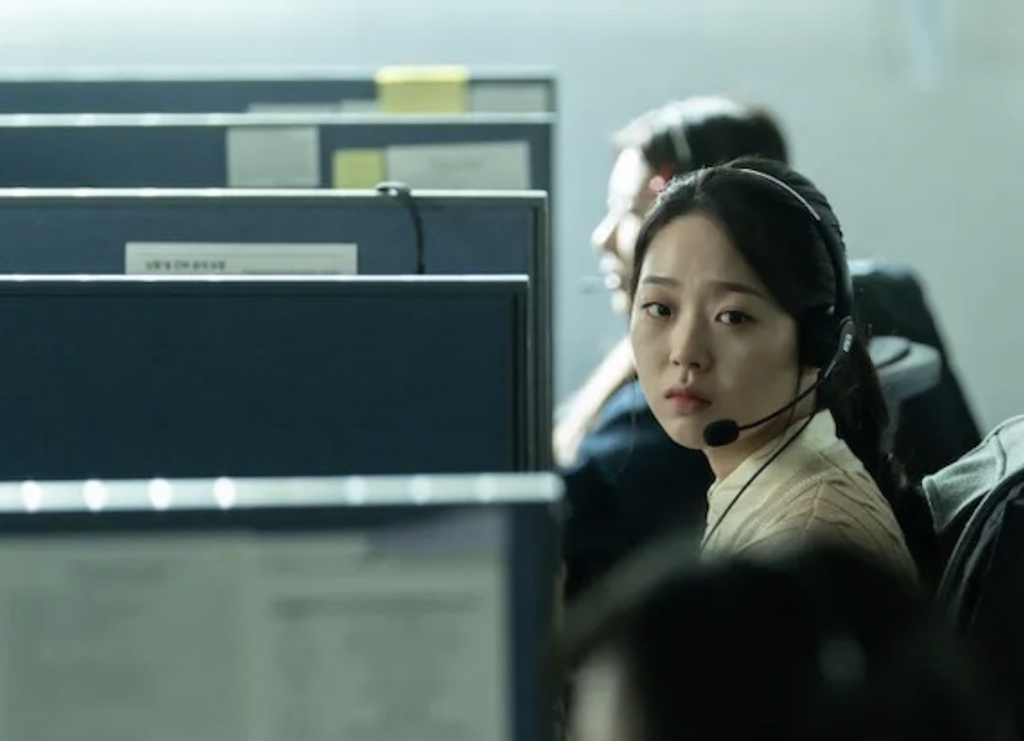
Still from Next Sohee. (Zurty Studios, Echelon Studios, Solaire Partners)
Not so long ago, K-movies and TV dramas were considered cool, even thought-provoking. That was before their breakthrough into the global mainstream, when ideas were typed into laptops in corner coffeehouses in Seoul by young directors and writers, rather than processed as if they were spreadsheet entries by CFOs or CFAs in cushy offices in Hollywood.
It was also when these South Korean artists abhorred clichés. Big money, both at home and from Hollywood, has probably quenched their thirst for fame and wealth, but the price was the loss of edginess. K-films have become trimmed and reprocessed through the Hollywood machine.
It is no wonder that season 2 of Squid Game, while more expensive to make and more aggressively marketed, cannot even be compared with its first season for intensity and intrigue. It is no coincidence either that Bong Joon-ho’s first big Hollywood studio film, Mickey 17, was a cliché-loaded flop. It all felt like kimchi marinated with corn syrup instead of coarse salt.
Both Squid Game and Parasite found global acclaim for their criticism of capitalist inequality. Of course, there are many rooms in the house of mass art, even for harsh and satirical views on capitalism, so long as they remain in the safe realm of depicting a desperate, middle-aged man’s attempts to claw his way back up after a precipitous fall in class status and dignity. I often quipped to myself that they were an inequality painkiller for middle-class, middle-aged insecurity.
Bucking this trend is Next Sohee, an independent film written and directed in 2022 by Jung Joo-ri — also known as July Jung — who is one of a few young female directors in South Korea’s film scene. Next Sohee serves late capitalism on a cold plate, raw and fresh. It is a strong narrative about working-class children who are even denied access to the bottom rungs of the social ladder that the protagonists of Squid Game or Parasite at least had the chance to hold on to.
The Good Chaebol
For this, the film earned recognition at international film festivals from Tokyo to Paris and had a limited theatrical release in Europe. In the United States, Next Sohee went straight to streaming this year. It is now available for free on Tubi and Roku.
Next Sohee is based on the 2016 suicide of Hong Soo-yeon, who plunged to her death in an icy reservoir after four months of harassment and wage theft during her externship at LB Hunet, a call-center subcontractor of LG U+, the telecom unit of the LG conglomerate. Globally known for its durable home appliances, LG is usually regarded as a “good chaebol” — a family-owned industrial conglomerate — because it has largely stayed free of the corruption and corporate malfeasance scandals that routinely tarnish the reputation of other chaebols such as Samsung or Hyundai.
Then again, perhaps LG could keep its hands clean because it has ruthlessly outsourced dirty jobs to subcontractors like LB Hunet, where Hong was part of a customer retention team ominously called “Save.” Of course, LG was not alone in this practice.
All corporations, small or large, have benefited from a new policy introduced by the conservative government of Lee Myung-bak in the early 2010s, which was ostensibly meant to reduce youth unemployment. Lee, a former Hyundai CEO, prettified the statistics by pushing as many vocational high school students as possible into workplace externships, thereby lowering the youth unemployment rate on paper.
Each school district was assigned to externship quotas, which were then passed down to vocational schools. Kids were farmed through workplaces regardless of their interests, skill sets, or basic safety considerations. The government tied financial aid and subsidies for each district and each school to the achievement of their annual quotas.
While the government keeps no official data, a Catholic publication has profiled seven students, including Hong, who ended their own lives or died on the job during the period of 2011 to 2021. In a nutshell, the youth employment program, which was advertised as an emulation of Germany’s apprenticeship model, turned out to be a free-market Stakhanovite campaign that pitted districts and schools against one another for unattainable placement targets within a fixed budget. The policy still remains in place.
Spreadsheet Saga
Next Sohee is about the silent violence of ubiquitous spreadsheets. Sohee found herself crushed under a giant spreadsheet posted on the call-center wall — a grid that assigns retention targets to externs, showing in real time how their potential incentives shrink each week over unmet targets.
Spreadsheets were pinned on the walls of principals and district supervisors, quantifying young students in grids. Sohee’s death should be a rounding error that could still result in funding cuts for her school and district.
Having been trained as a pet caretaker, the seventeen-year-old was entirely unprepared for a call center staffed entirely by teenage girls like her. She was told to answer every call with “We love you, sir/madam” (rendered as “Thank you for calling us” in the English-language subtitles).
Sohee’s task was to coax, placate, or deliberately mislead already-discontented customers into keeping their service (subtitled as “dissuasion” not “retention”). After a series of runarounds and repeated calls, customers just hurled expletives at her, with a side order of perverts trying to twist the conversation into obscenity.
When she finally met her retention target, after hours of unpaid overtime and a great deal of emotional strain, her supervisor withheld her incentive pay anyway. Sohee could not just walk away: she feared the penalty and humiliation back at her school and the reaction of her parents, who had lost any meaningful way to communicate with their only child.
In her debut film role, Kim Si-eun inhabits the character of Sohee, with her puppy-eyed innocence, anger, and frustration. Bae Doona, who may already be familiar to English-speaking audiences from Cloud Atlas and Sense8, plays the police detective who investigated Sohee’s death in defiance of her supervisor. Bae previously played the lead in Jung’s debut feature, A Girl at My Door, a rare LGBTQ film in South Korea.
The subtitles are less than perfect. But that shouldn’t deter you from watching a genuine cinematic gem that should rank highly on left-wing movie lists.