The 1956 Hungarian Uprising Was a Working-Class Revolt
Seventy years ago today, Soviet forces crushed the Hungarian uprising that had electrified Eastern Europe. Latter-day conservative narratives distort the true history of the 1956 revolution and the crucial role of workers’ councils in driving it forward.
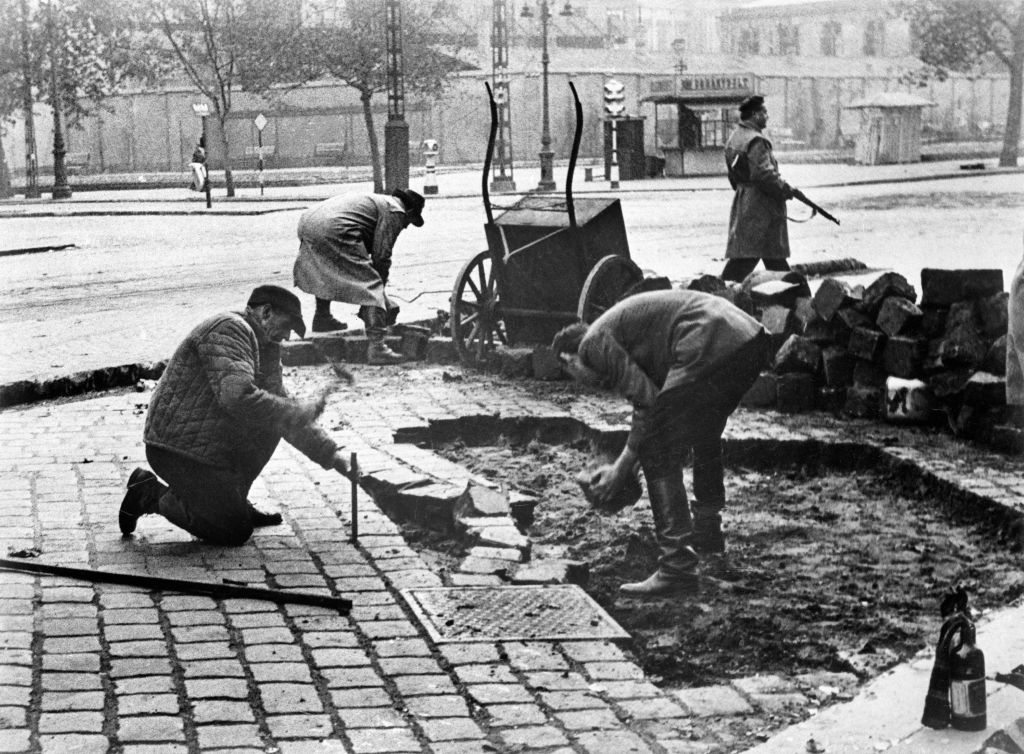
Workers build a barricade in anticipation of the arrival of Soviet troops in Budaepst, on November 4, 1956. (Keystone-France / Gamma-Keystone via Getty Images)
On October 23, 1956, tens of thousands of Hungarians took to the streets of Budapest. What began as a demonstration led largely by students rapidly became a popular uprising against the country’s Stalinist government.
Within days, the authority of the Hungarian Communist Party had crumbled, Soviet troops had been forced to withdraw, and workers across the country were establishing their own councils to organize production and exercise political power.
The Soviet leadership called it a “counterrevolution,” while Western governments celebrated it as a “revolt against communism.” Both interpretations obscured something fundamental: the Hungarian Revolution was driven by workers and ordinary people who wanted to free themselves from a system that claimed to represent their interests.