1956 Was a Missed Opportunity for Socialist Reform in Poland
In October 1956, a protest movement in Poland brought a reform-minded communist leadership to power. Unlike Hungary, Poland managed to avoid Soviet intervention, but the opportunity to democratize its political and economic structures was missed.
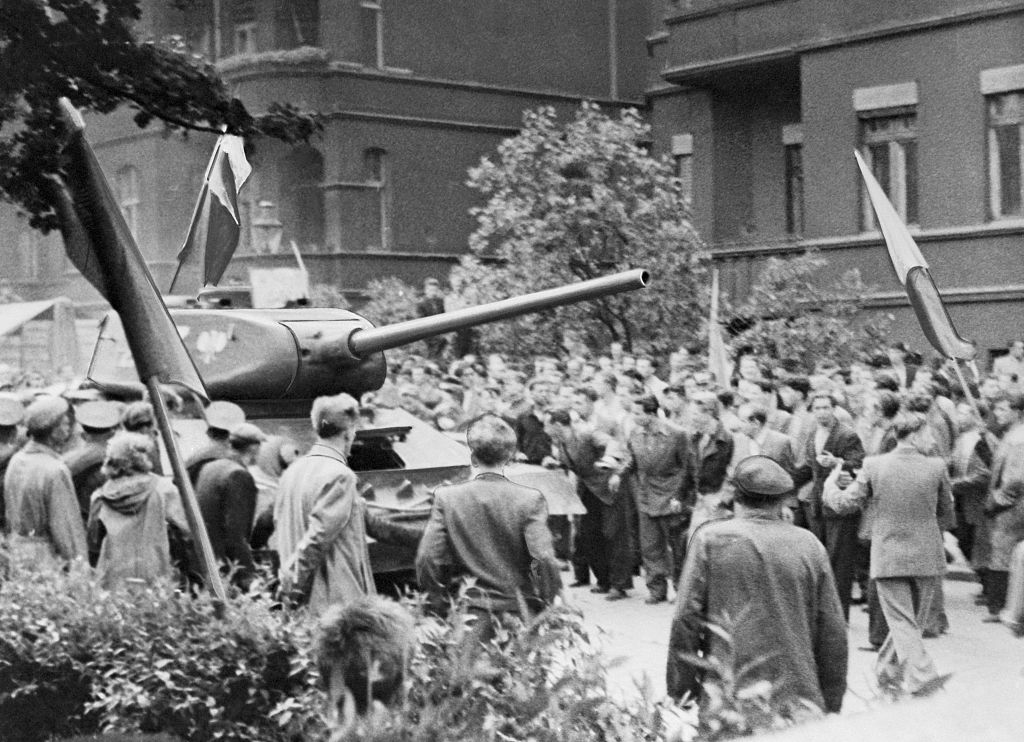
Retrospectives on events in Eastern Europe during 1956 usually focus on the Soviet invasion of Hungary. But the story of Poland’s reform movement, from its initial success to its long-term failure to transform the communist system, was equally important. (Bettmann Archive via Getty Images)
In June 1956, a delegation of renowned British left-wing economists, including Joan Robinson and Maurice Dobb, traveled to Poland to learn about its socialist transformation. The newly installed socialist government had driven through a program of economic modernization, as the country industrialized and urbanized, and free universal health care and education were being provided for the first time.
While visiting the city of Poznań, they expected to admire the material achievements of the new Polish People’s Republic (PRL). Instead they witnessed Polish soldiers manning Soviet tanks as they put down a workers’ revolt. Living standards had not kept up with industrial expansion, and a wave of strikes and demonstrations broke out.
Government repression left an estimated fifty-seven people dead — the largest single such action in the PRL’s history. The delegation left with many of its illusions shattered, as Poland sank deeper into an existential political crisis.