Democrats Did Their Best Bernie Impression in the Midterms
Put their 2026 midterms side by side with previous campaigns, and it’s clear: Democrats won in red states by sounding less like Democrats and more like Bernie Sanders.
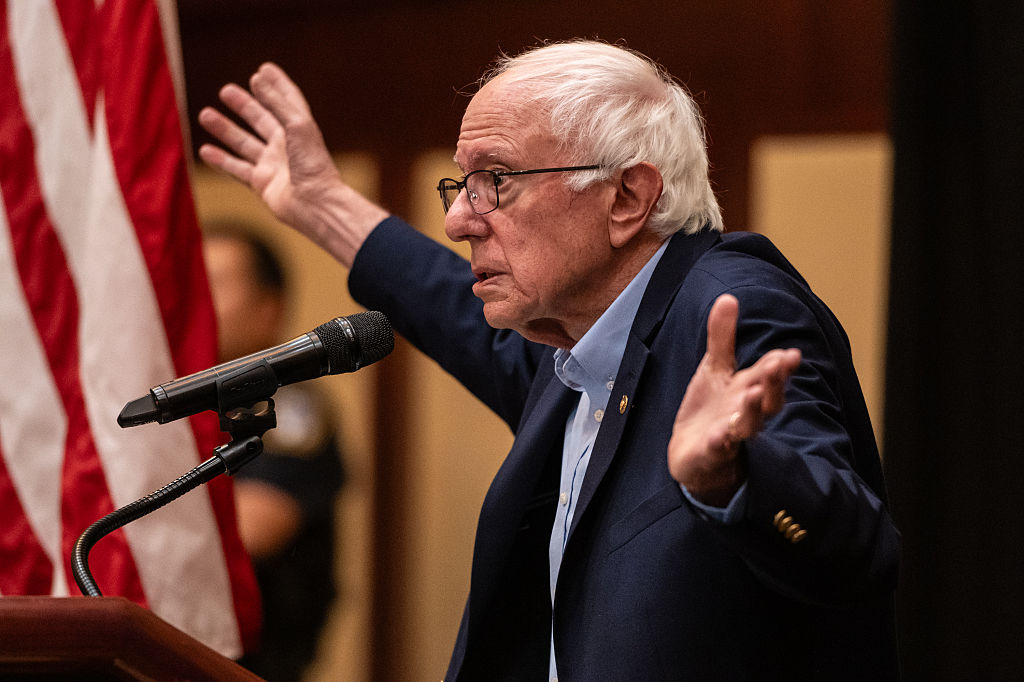
Democratic moderates have tacitly accepted what the Left has said for years: the Bernie Sanders pitch — of a corrupt, rigged system pitting billionaires against working Americans — has broad appeal that cuts across geographic, racial, and even partisan lines. (Tom Baker / Getty Images)
The 2026 midterms saw historic gains for socialists and progressives. So, perhaps unsurprisingly, the Democratic Party’s corporate wing is hurriedly spinning the result as a victory for centrists and “moderates.”
Largely lost in this is the way that the Left has transformed what it actually means to run as a Democratic moderate or a centrist. Because looking at this year’s campaigns, there is no doubt that even the most uninspiring “moderate” candidates were taking several pages — whole chapters, really — from the books of Bernie Sanders, Zohran Mamdani, and Alexandria Ocasio-Cortez.
It’s worth recalling that before 2025, standard Democratic campaign rhetoric was all about “defending democracy,” railing against extremism and authoritarianism, and advocating for abortion rights — all good things on their merits, but (with the exception of abortion rights) largely abstract ones that are not as animating or as high a priority for the majority of voters as their basic pocketbook concerns.
Just look at former President Joe Biden’s big kick-off speech for his reelection campaign, which was almost completely devoid of an economic message but heavy on talk of “MAGA extremists” and the “soul of America.” In fact, the absence of an economic message was a constant left-wing criticism of the party through the Biden era, including from this very magazine.
This has now completely shifted. While Democratic candidates in 2024 ran by far most of their TV ads on abortion, with immigration coming a distant second, this year, the overwhelming focus of their ad spending was “affordability,” dropping $401 million on the topic — a full quarter of their $1.5 billion total spend.
And where did the “affordability” frame come from? Well, both Democratic and Republican members of Congress happened to start spamming that word in their emails to constituents right after socialist Zohran Mamdani won the New York City Democratic primary with a campaign that put affordability at its very center.
But it’s more than just coming up with a pithy new word describing voters’ struggles with the economy. A number of the moderate candidates who won in red states sounded oddly like Bernie Sanders, railing against billionaires and the ultrarich, the corrupting influence of money in politics, and swearing off corporate money.
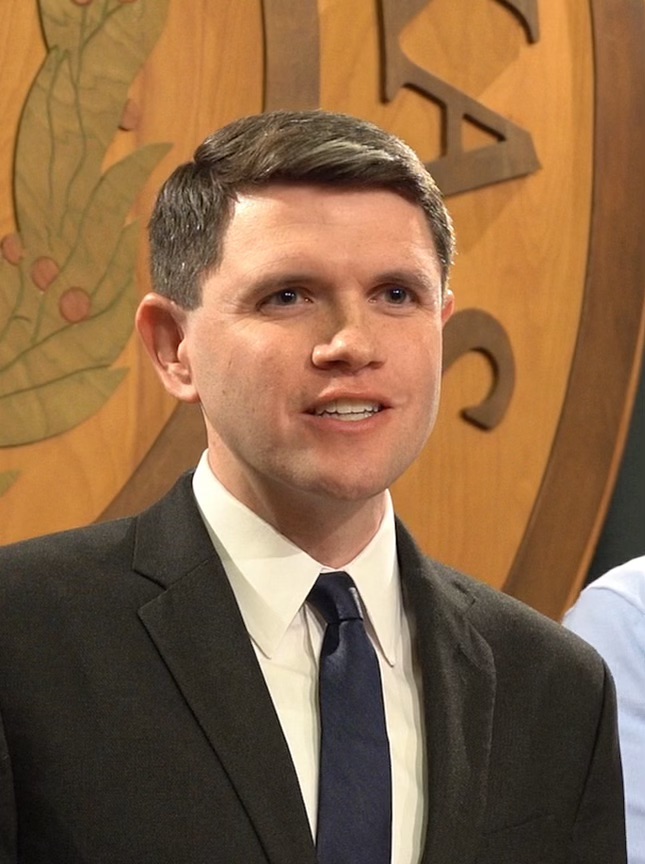
The clearest example of this was Texas Senator-elect James Talarico, who said that the fundamental divide in US politics was “top versus bottom,” called billionaires “the only minority destroying America,” charged that “for fifty years, billionaire megadonors have been buying politicians” like his opponent who then “rig the rules of the economy,” and who said that “we already have class warfare in this country” in the form of “the billionaires waging war against the rest of us” — a line almost directly borrowed from Bernie Sanders. He was rewarded for it by winning by one of the biggest margins of the night and doing it in one of the reddest states in the country.
The corporate center has tried to square this by simply retconning Talarico as one of them, a moderate, as Matthew Yglesias dubbed him. They point to the fact that he moved away from some of his support for trans rights, embraced an “all-of-the-above” energy policy, and eschewed Medicare for All in favor a public option (though the idea that’s a “centrist” or “moderate” policy would be surprising to anyone with a memory longer than five or six years).
But even if Talarico wasn’t viewed by nearly half of all Texas voters as “very liberal” on the eve of the election (and as “somewhat liberal” by a further 27 percent), this is a pretty hard sell.
To see why, look at Colin Allred. Just two years ago, Allred, a former NFL player, civil rights lawyer, and congressman, launched his own Texas Senate run with a campaign widely characterized as a “centrist” one against Republican Ted Cruz.
What did that campaign involve? Allred cast the GOP as having become too extreme and told conservatives who believed in the rule of law and the Constitution that they should vote for him. He proudly touted his US Chamber of Commerce endorsement. He “was unable to successfully develop” an economic message against Cruz and made abortion and reproductive rights “central to” and the “banner of” his campaign instead. During their debate, he hammered Cruz for supporting an abortion ban and being soft on the January 6 rioters, calling him a “threat to democracy” and only offhandedly mentioning he cut taxes on the rich. Again, these are all important issues but were unconnected to voters’ economic struggles.
The result: Cruz won by 8 points, nearly quadrupling his winning margin from six years earlier.
Going Red in Red States
This was not something unique to Texas and Talarico’s “moderate” campaign there. It was the case in every red state that Democrats just won a Senate seat in.
Take a look at Annie Andrews’s campaign that made her the first Democrat elected to a South Carolina Senate seat in twenty-eight years. Andrews hammered her initial opponent, the late Lindsey Graham, for “sell[ing] out to big money” and for being “willing to take food off our kids’ plates” and gut Medicaid “just so he can deliver tax cuts to billionaires,” and called on him to refund donations from Jeffrey Epstein–linked billionaires. She swore off “corporate PAC money” and pledged to “rein in the influence of corporations and billionaires in our elections.”
When Graham died and was replaced by his sister, Darline, Andrews hammered her for the same thing. Andrews called her “handpicked and bought by big corporations,” attacked her for doing the bidding of a data center industry spending millions of dollars of dark money to get her elected, and pointed to the $27 million that “outside Super PACs” had spent to support her. She won by nearly 5 points.
This was a very different campaign than the one former corporate lobbyist Jaime Harrison ran against Lindsey Graham six years ago. Since Harrison was relying on corporate bundlers and billionaire donors to raise obscene amounts of money to outspend Graham, he couldn’t and didn’t launch any of these attacks — in fact, Graham turned it around on him, complaining that outside dark money was flooding in to support the Democrat. Harrison’s attacks on Graham were focused on the idea that voters couldn’t trust him, because he had gone back on his word in supporting Donald Trump’s 2020 Supreme Court pick. He lost by 10 points.
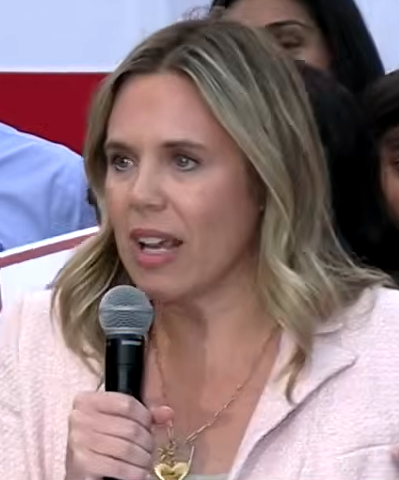
Or look at Josh Turek, who won Iowa by four points against GOP candidate Ashley Hinson. Turek constantly talked about how Washington was full of millionaires “looking out for billionaires” and that he was “not one of them,” nor did he take corporate PAC money or was “owned by billionaires” (even as he quietly did take money from some billionaires). Iowa’s Republican senators and, he implied, his opponent, were “just looking out for billionaires and large corporations.”
During a debate, in attack ads, and in a Des Moines Register op-ed, Turek took aim at Hinson’s personal wealth, complaining that she had “gotten richer in her time in Washington” while slashing social spending on working-class Iowans, slamming her for her stock ownership, and saying that “we have a corruption crisis that’s leading to an affordability crisis because we’re sending people like Ashley Hinson up to DC” to line their pockets.
Not even Sanders went this hard against his wealthy opponents.
Then look at Michael Franken’s campaign for an Iowa Senate seat four years earlier. Though Franken prominently swore off corporate PAC donations, there was no talk of billionaires or wealth inequality. Franken appealed to “that middle segment who want logical, pragmatic, smart, dedicated, national servants to work for them,” and ran on a message that “we need to put country over party” and “people over politics.” He jabbed at his opponent’s age and long tenure in office, framed himself as defending democracy and minority rights, particularly those of women, whose right to an abortion he frequently brought up. And he ended up losing by 12 points.
Over in Mississippi, where prosecutor Scott Colom eked out a shock win to become the state’s first black senator, he did it by similarly assailing his Republican opponent Cindy Hyde-Smith’s donations from “millionaires and billionaires” out of state and accusing her of throwing tens of thousands of Mississippians off their health insurance “to look out for people in California and New York,” specifically “billionaires and millionaires” there, by giving them a “billionaire tax break.” He ran on raising taxes on the rich and getting rid of corporate subsidies for billionaires, and hit his opponent for staying silent on data centers being pushed by “AI billionaires” while being backed by a pro-AI super PAC.
This did not happen two years earlier, when Ty Pinkins (who ran, to some controversy, as a third-party candidate this year) ran for the other Mississippi US Senate seat, once again eschewing any kind of bold economic message in favor of warning that “our very democracy is being threatened” by people attacking its “institutional safeguards,” in his announcement. Pinkins said his platform revolved around the vague motto of, “You talk, I listen, we do,” which he explained (in even vaguer terms) meant, “I can listen and hear what’s important to their communities,” and then “do what’s necessary to move these communities and our state forward.” That campaign lost by nearly 30 points.
A particularly instructive example is Sherrod Brown in Ohio, who lost reelection to his Senate seat by nearly 4 points in 2024, then won the other Senate seat this year by just under 5 points. Despite a long-standing and deserved reputation as a populist, Brown said very little about millionaires and billionaires two years ago, other than that they should “pay their fair share” into Social Security — even as they were spending massive amounts to defeat him, which they did.
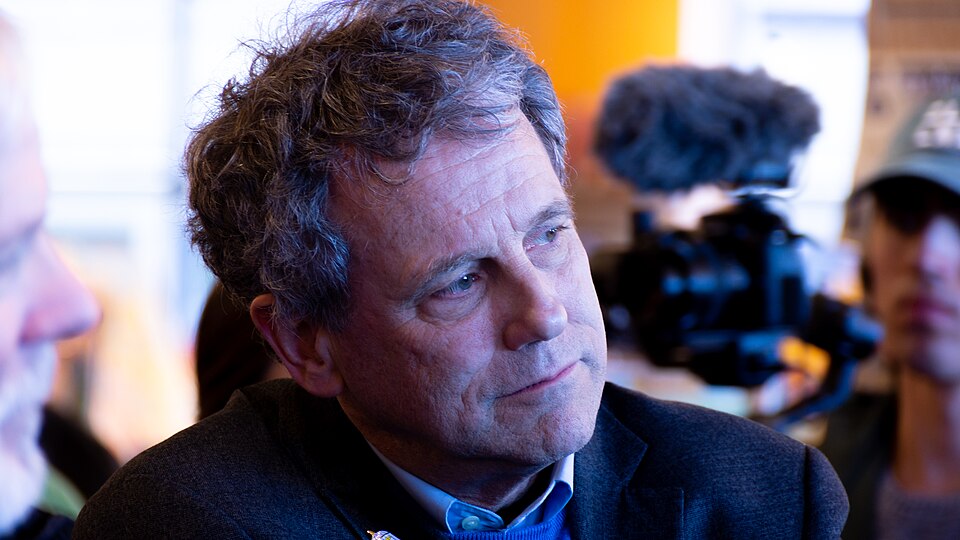
In 2026, more or less the official motto of Brown’s campaign was “Workers Before Billionaires,” a phrase he put in press releases, merchandise, tweets, Substack posts, reels, TikToks, and video after video. Compare his demure response two years earlier to a question about Republicans backing personally wealthy candidates — “That’s who they are . . . I guess I’m not surprised by that” — to what he said about his 2026 GOP opponent, Jon Husted: “The disdain, the contempt they have for work and for workers tells you everything.”
This time Brown, who called for a tax hike on billionaires, went in on Husted’s connection to the ultrarich and what the campaign characterized as his “corruption”:
“Clevelanders have seen time and time again how Husted bows down to billionaires and corporations while leaving hardworking Ohioans behind.” (August 29)
“Jon Husted’s for sale and the billionaires and corporations pouring millions into this race know it.” (September 21)
“Ohioans have watched Jon Husted put billionaires and corporations before working families time and time again.” (October 3)
“From Elon Musk to Donald Trump, billionaires are spending hundreds of millions of dollars against me because they know they can buy Jon Husted’s votes.” (October 29)
For good measure, Brown ran at least three separate TV ads hitting Husted for taking more money from Les Wexner, the disgraced Epstein-connected Ohio billionaire, than anyone else in Congress.
It is hard to make the case that nothing has changed when the same candidate ran a completely different campaign just two years later.
Finally, take a look at North Carolina, home to the second largest US financial center after New York, and where former governor Roy Cooper beat the Republican candidate by nearly 20 points. “Time to elect a senator for everyday people, not billionaires,” Cooper said after winning the primary, a theme he came back to over and over again, whether saying that “we don’t have the billionaires they do,” that his opponent was “fighting for the billionaire friends he made while working as a Big Oil and utility company lobbyist in DC,” or hitting Trump’s bill “that gave tax cuts to billionaires” and had “driven healthcare premiums up.”
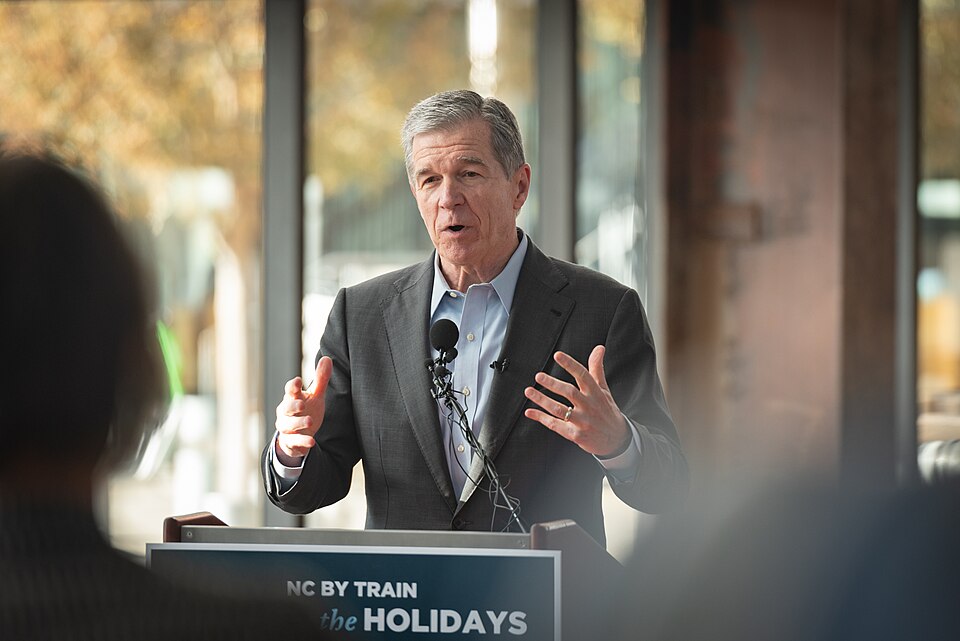
Again, Cooper has a well-established reputation as a moderate, but this kind of rhetoric simply bore no resemblance to the Senate campaign run by another moderate, former state Supreme Court Chief Justice Cheri Beasley in 2022. Beasley centered her campaign on abortion rights and health care generally, and talked about diversity and reforming the criminal justice system to fix the “disparities” that exist within it while touting her support from law enforcement. There was no talk of billionaires or dark money, since Beasley herself was backed by twenty-three billionaires and won her primary by being boosted by various out-of-state PACs. She lost by 3 points.
This is borne out by research by Eric Blanc. Going through candidate websites in 2024 and 2026, he found that while billionaires were referenced in only 19 percent of candidates’ websites two years ago, this year they featured in 78 percent. Meanwhile, research by the Center for Working Class Politics found that less than 20 percent of the candidates in 2024 attacked corporations, billionaires, or Wall Street for their role in the affordability crisis.
Admitting Defeat in Victory
The fact that these candidates used populist rhetoric doesn’t necessarily mean they are populists, or even progressive. A number of these candidates have taken money from the billionaires they decry, including Talarico, and did not necessarily run on very ambitious policies. Meanwhile, Cooper is a multimillionaire himself, and like several others, did not run on taxing the rich, for all the class-war-style rhetoric that was thrown around.
But it does mean that Democratic moderates have tacitly accepted what voices on the Left have been saying for years, which is that the Bernie Sanders pitch — of a corrupt, rigged system pitting billionaires and corporations against working Americans — has broad appeal that cuts across geographic, racial, and, yes, sometimes even partisan lines.
Whatever they may tell you now, centrists did not always feel this way. Third Way cofounder Matt Bennett, for instance, was one of the corporate centrists insisting that there was nothing remarkable about any of this, because Sanders was not “the first Democratic (adjacent) candidate to use populist rhetoric in the modern era.” This will be news to Third Way circa 2016, whose president celebrated Sanders’s loss in the Democratic primary that year, because if “liberal populism doesn’t win Democratic primaries,” then it can’t “be the path back for a party” in a general election, and showed that “voters are angry, but they don’t want to focus mainly on billionaires.”
Likewise, Matthew Yglesias today may mock clueless young people thinking “Bernie Sanders invented the idea of campaigning on economic fairness themes.” But back in 2016, he listed Sanders’s plans to “soak the rich to a much greater extent” as one of the supposedly risky, radical ideas that made “the vast majority of the party’s elected officials and interest group leaders” worry about him. Stances like that were “not popular,” Yglesias wrote, and made him unelectable, compared to Hillary Clinton’s “relatively modest, overwhelmingly popular tweaks to the tax code.”
Something interesting is happening here. For years, frustrated socialists and progressives have been arguing that opposition to billionaires, soaking the ultrarich, and getting money out of politics are the centrist positions: that Americans across all walks of life — white or black, college-educated or not, liberal or conservative, in blue, red, or purple states — were pretty united on this, regardless of their exact views on things like immigration, guns, or trans kids in sports. Whatever the pundits are saying, centrist candidates seem to have finally acknowledged that’s the case.