Equality Is About Who Rules
What do we actually mean by “equality”? Few thinkers have answered that question better than Elizabeth Anderson: not identical outcomes but a society where no one gets to dominate anyone else, including at work.
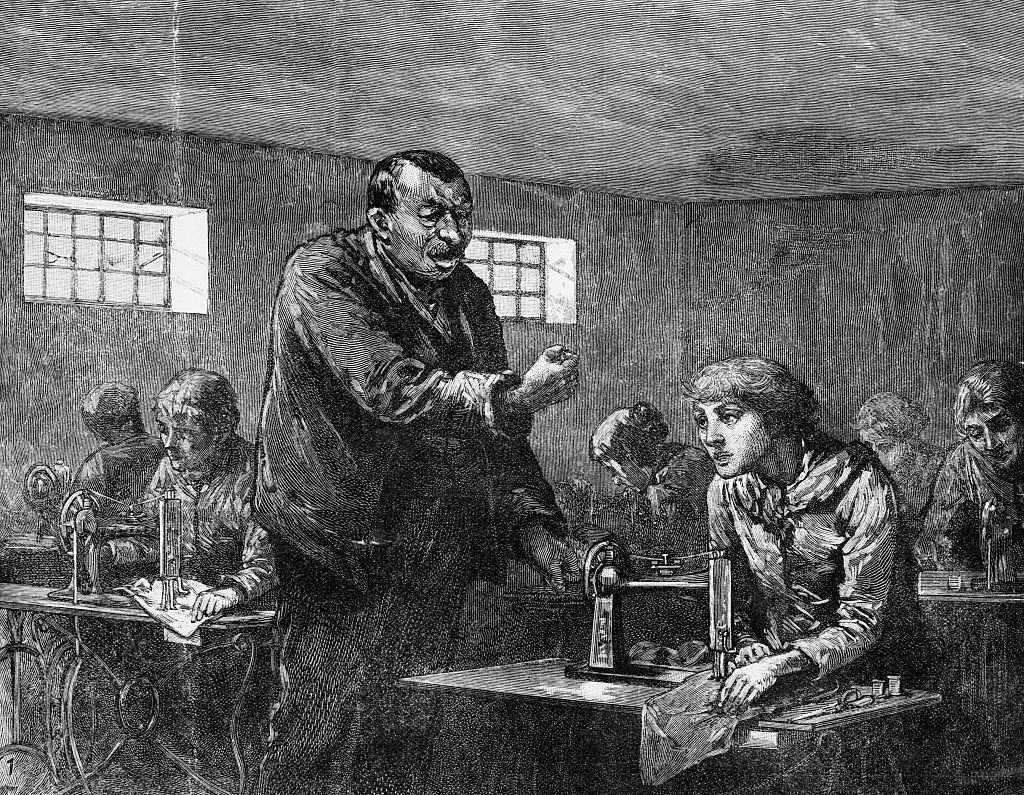
Your boss is an unelected ruler you can’t vote out. Elizabeth Anderson thinks egalitarians should treat that as the scandal it is. (Bettmann Archive via Getty Images)
There is a complex debate about the extent to which socialists prioritize equality above the full flowering of each person’s individuality. But you’d have to be quite the contrarian to deny that socialists take equality very seriously; perhaps more seriously than any other major political ideology. Prominent socialist thinkers like G. A. Cohen and Thomas Piketty have dedicated much of their work to defending the philosophical and economic merits of egalitarianism. Socialist Martin Luther King’s “I Have a Dream” speech put equality at the core of his vision: “that one day this nation will rise up and live out the true meaning of its creed: ‘We hold these truths to be self-evident, that all men are created equal.’”
That said, the commitment of socialists and other egalitarians to equality can often seem frustratingly vague. It invites accusations of ill-defined “social justice” advocacy or even pursuing the much dreaded “equality of outcomes” through a Harrison Bergeron–like willingness to cut everyone down to size. Of course, many of these charges are lobbed in bad faith, and even the more refined versions ignore how other core principles — like liberty or order — are equally contestable and vague until explicitly defined. But having a firmer grasp on what we mean by equality and what we want would help the Left understand itself better.
Equality of What?
Few living thinkers have done more to answer this question than University of Michigan philosopher Elizabeth Anderson. A former doctoral student of John Rawls, Anderson made her name in the 1990s criticizing contemporary egalitarian philosophy and developing her own version of relational equality. More recently, Anderson has become a vigorous proponent of workplace democracy, contending that there is something deeply tyrannical about the forms of work that exist today. Her most recent book, Hijacked: How Neoliberalism Turned the Work Ethic Against Workers and How Workers Can Take It Back, argues for rehabilitating the tradition of social democratic and socialist political thought as a counter to the Right’s moralizing about work.