Why Equality Is Better for Everyone
More unequal societies are less trusting, more violent, less healthy, and more stressed.
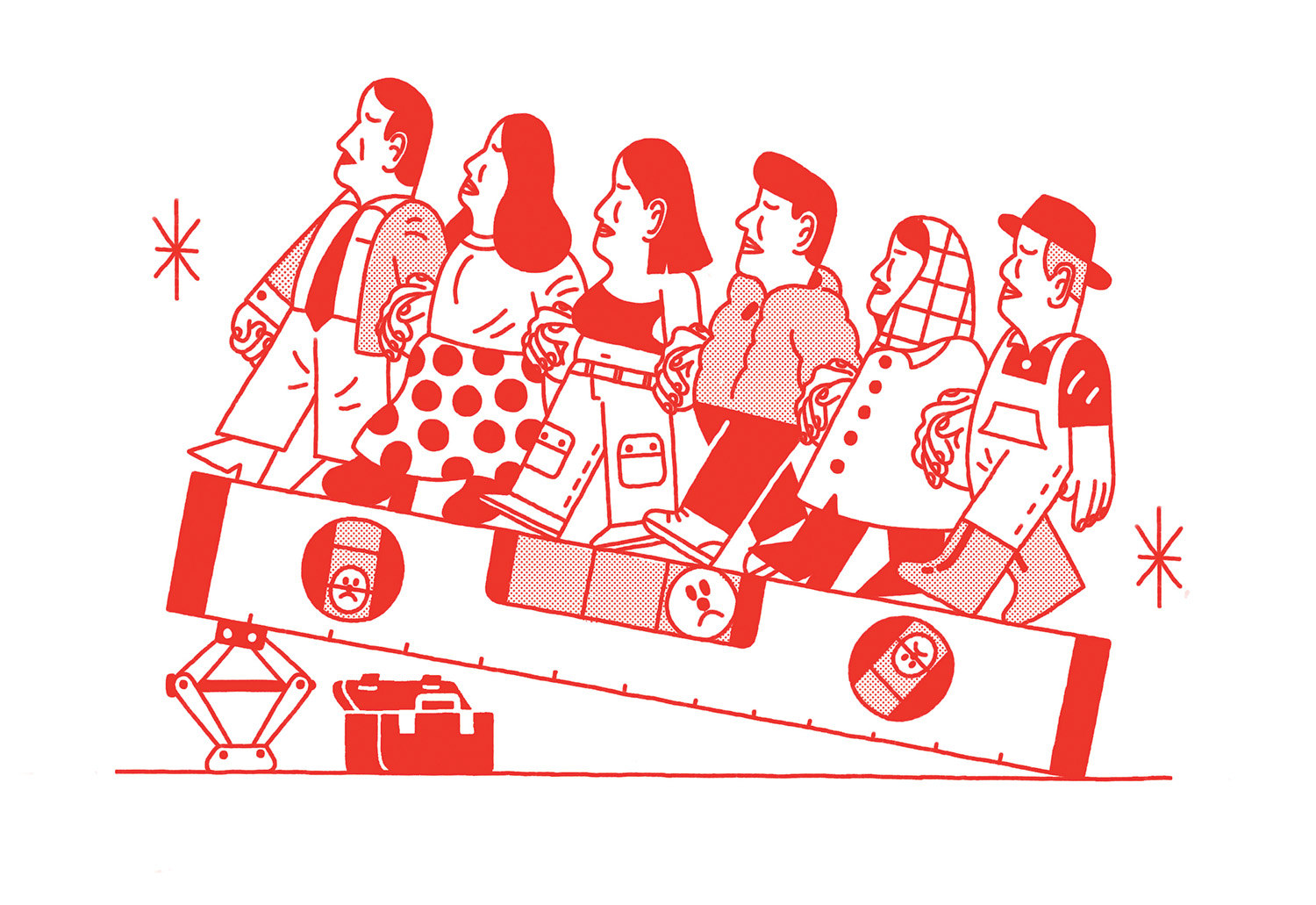
Illustration by Leonardo Yorka
When asked what is so wrong with inequality, many socialists say something about how it’s unethical that some people should have so little while others have so much. Others describe how the lavish lives of the rich are directly predicated on the work of those at the bottom. Some point to absolute levels of impoverishment and the material suffering that comes along with it. In general, most criticisms of economic inequality are based on either conceptions of fairness or concern for the suffering of the unfortunate.
The 2010 book The Spirit Level: Why More Equal Societies Always Do Better argues that national levels of income inequality are not only powerfully linked to a whole host of measures of well-being but that this inequality affects people across the income distribution — including the rich — in a deep and personal way. The book’s authors, Richard Wilkinson and Kate Pickett, argue that inequality itself is what is hurting people. Put another way, great social distance causes great individual and social harm.
Their story begins by looking at average national incomes as a proxy for material well-being. Across the world, as societies get richer and average incomes go up, people live longer, healthier lives and experience fewer negative social outcomes like homicide, teen pregnancy, and illiteracy. However, after a certain level of development is reached — roughly $20,000 GDP per capita — this relationship between average income and well-being begins to break down. Instead, income equality becomes the best predictor of a healthy society.