France’s Protests Fuel a Wider Fight Over Europe’s Future
European authorities want France’s next government to cut welfare. It’s a stand for the same budget orthodoxies that have fueled current protests, and that have collapsed support for the liberal center ground.
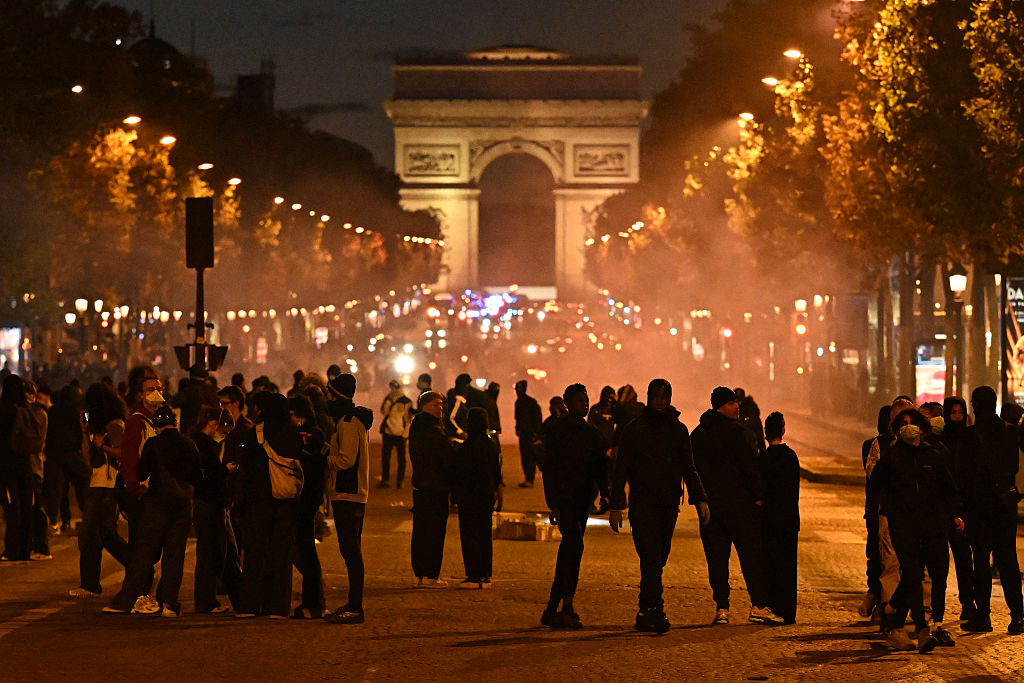
Jean-Luc Mélenchon’s election campaign hopes to channel the energy of protests into a rebuilding of the French social model. Any such change requires a clash with the European budget dogmas currently pressing for further cuts. (Guillaume Saligot / AFP via Getty Images)
The social unrest currently gripping France is in many ways a national phenomenon. Frustration with a stretched education system boiled over in the form of campus blockages and marches beginning late last month. By mid-October, students were joined by broader swaths of the population fed up with high gasoline prices, sticky inflation, and declining real wages.
There’s also little new in the violent police response that has shocked protesters and observers alike, both in France and abroad. Emmanuel Macron’s allies above all want to protect the president’s agenda of pro-business tax cuts, an often-elided factor in the country’s fiscal crisis. France’s state deficit is expected to reach 5.4 percent of GDP in 2026, the highest level in the eurozone, sending tremors in bond markets and leading to calls for drastic cuts to public services. On October 26, the government made its first overtures toward the students, hinting at the possible replacement of the reviled university selection platform Parcoursup, caps on classroom sizes, and state support for building renovations.
But shared European realities are also driving the anger. Spain’s recent demonstrations over the cost of housing pushed Prime Minister Pedro Sánchez to call snap elections for late November. Meanwhile, youth protests have disrupted cities in Italy, Belgium, and Greece, part of what some commentators are calling a “Gen Z” revolt against economic insecurity, the uncertainty surrounding the rise of artificial intelligence, and the withering political response to climate change.