The US Is Starving Cuba. Will It Invade Too?
Ten months into a US fuel blockade, Cuba’s hospitals, power grid, and economy are buckling, and the threat of invasion has become a midterm talking point in Florida. But the island hasn’t broken. That may make Washington more dangerous, not less.
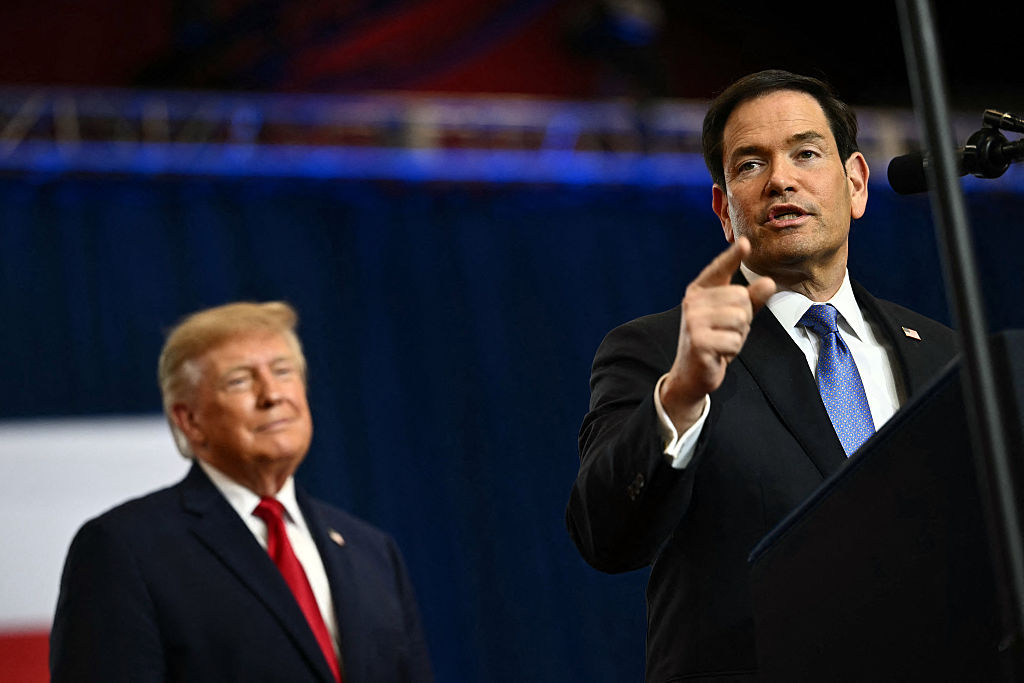
Marco Rubio is publicly recruiting for the CIA on X, and Donald Trump says he’ll “take care of Cuba” on the way back from Iran. The administration is carrying out a slow-motion siege of the island. (Kent Nishimura / AFP via Getty Images)
On September 25, CBS News announced that it had obtained “exclusive new information” regarding potential US military action against Cuba. According to an Army Reserve memo reviewed by the network, the Pentagon was looking at the possibility of mobilizing police forces, medical personnel, and other units to support such an operation. Vague on details, the conveniently timed piece appeared suited to coincide with Donald Trump’s speech at the United Nations three days prior, where he asserted that his administration was seeking a “fundamental change in the situation” with the Cuban government, which is “failing like never before” and “will fall.”
The very night of its report, however, CBS published another article effectively walking it back, quoting a defense expert who claimed that the memo in question should be viewed as a routine planning exercise — one with electoral overtones. “It may be aligned with the interest in trying to inspire the South Florida vote to rally around the administration,” said Florida International University’s Brian Fonseca, “and not necessarily fall into the trap of mismanaged expectations.”
Nearly a month later, and with no invasion in sight, the Florida state government waded still further into pre-electoral waters, issuing an arrest warrant against former President Raúl Castro for his purported responsibility in the 1996 downing of two “Brothers to the Rescue” aircraft. Castro was the defense minister at the time. Essentially a copy-paste of a federal indictment unsealed in May, the announcement came some thirty years after the events in question but a mere two weeks before unusually competitive midterm elections, where even some safe GOP seats in Florida, like that of Cuban American hardliner Maria Elvira Salazar, are suddenly at risk.