End the Blockade on Cuba

As a Cuban American traveling with a recent aid convoy, I witnessed the daily hardship sanctions produce. Washington must lift its devastating blockade.
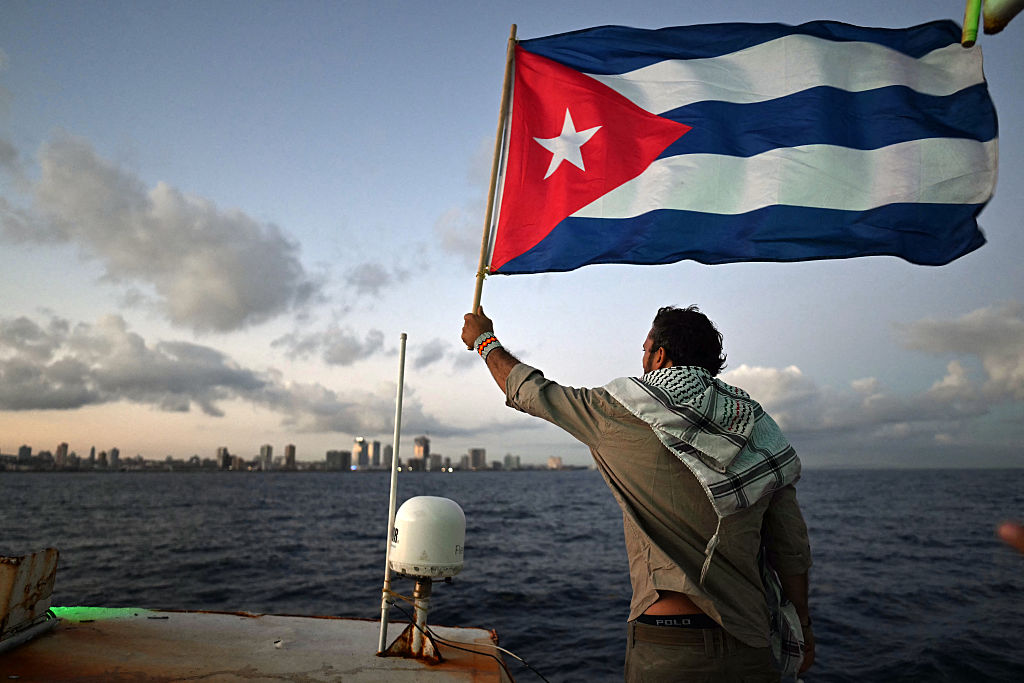
As a Cuban American, I went to Cuba with an aid convoy and saw what US policy looks like up close: blackouts, avoidable hardships, and a country being squeezed by its massive neighbor. (Yuri Cortez / AFP via Getty Images)

This past weekend, I traveled to Cuba with the Nuestra América Convoy alongside a delegation of Cuban Americans to deliver aid and stand in solidarity with our fellow Cubans as a US-driven fuel blockade pushes the island deeper into crisis.

We brought critical medical supplies to Hospital Hermanos Ameijeiras, one of Cuba’s most important hospitals, where doctors and nurses continue to perform miracles with dwindling resources. We delivered food directly to families in Parque Maceo, where shortages have made even basic necessities difficult to secure. And we partnered with Cuban LGBTQ organizers to distribute aid.

These moments of connection and care are what stay with you. But so does the reality that makes them necessary.

During our trip, we experienced the island plunged into darkness following a collapse of the power grid. Our friends and families were left without light, without refrigeration, without any reprieve from the heat. The silence that followed was striking. It forced a confrontation with the scale of the crisis that no statistic or headline can fully capture.

This is what scarcity looks like, in its lived form.

It is easy, from the outside, to reduce Cuba’s situation to politics as usual — to flatten it into a debate about ideology or governance. But on the ground, the picture is far more human and far more complex. We spoke with Cubans of all political perspectives. Many were candid, even critical, about their government. Those conversations were nuanced and often deeply personal.

But there was also a shared throughline: a fierce commitment to sovereignty and independence. Regardless of political differences, there was a broad understanding that the current crisis is caused in large part by external pressure imposed by the United States. Cubans want the ability to determine their own future, without being strangled in the process.

That perspective is often missing from conversations in the United States.

As Cuban Americans, we occupy a unique and sometimes uncomfortable position in this dynamic. Many of us were raised in communities where returning to Cuba is still seen as taboo, even as betrayal. That stigma, rooted in decades of pain and displacement, continues to shape how we relate to the island and to each other.

But it is precisely because of that history that this moment demands something different from us.

We are told that US policy toward Cuba reflects the will of Cuban Americans. That claim is repeated so often that it is treated as fact. But it obscures a more complicated reality. There are millions of Cuban Americans in this country — and we are not monolithic. Increasingly, many of us are rejecting the idea that policies of isolation and economic pressure speak for us.

On this trip, that contradiction became impossible to ignore.

The crisis in Cuba is not simply about a lack of fuel, though that alone is devastating. It is about everything that follows. When fuel is scarce, transportation slows or stops. Food cannot be distributed efficiently. Hospitals struggle to maintain operations. Garbage goes uncollected. The effects compound, touching every aspect of daily life.

What might look like dysfunction from afar is often, on closer inspection, the result of material constraints.

And yet even in the midst of these challenges, there is something profoundly moving about what persists. Cuba’s social fabric remains strong. There is a deep sense of collective responsibility, a commitment to care that shows up in small but meaningful ways — neighbors sharing food, communities organizing support, artists and activists creating spaces of joy in the face of hardship.

This is the Cuba that is often overlooked: not a caricature, not a talking point, but a living, breathing society grappling with immense challenges while holding onto its humanity.

None of this means ignoring Cuba’s internal problems. Like any country, Cuba faces serious political and economic issues. Those debates belong to Cubans themselves, and they are already happening. But what is too often excluded from US discourse is the role that American policy plays in shaping the conditions under which those debates unfold.

A policy that restricts access to fuel, limits imports, and punishes economic engagement does not create the conditions for openness or reform. It creates scarcity. It creates hardship. It narrows the space in which people can imagine and build alternatives.

If the goal is a better future for Cuba, this approach is not just ineffective — it is counterproductive.

We have seen glimpses of another path before. Periods of limited engagement between the United States and Cuba, however incomplete, led to increased economic activity, greater exchange, and a sense of possibility on the island. Those moments suggest that a different relationship is not only possible, but beneficial.

What is lacking is the political will to pursue it.

We left this trip with deep sadness at the situation in Cuba. It is impossible not to, after witnessing the daily realities that so many are navigating. But we also left with a renewed sense of purpose.

The policies contributing to this crisis are not inevitable. They are choices. And as Americans — especially as Cuban Americans — we have a responsibility to challenge them.

That begins with telling the truth, even when it complicates familiar narratives. It means rejecting the idea that cruelty and deprivation are acceptable tools of foreign policy. And it means insisting on a vision of US-Cuba relations grounded in dialogue, respect, and mutual prosperity.

For too long, the loudest voices shaping this policy have not represented the full spectrum of our community. That is beginning to change.

More and more of us are speaking out, organizing, and saying clearly: this is not in our name.

Cuba’s future should be determined by Cubans. Our role is not to dictate that future but to remove the barriers that prevent it from unfolding on its own terms.