The Political Economy of Cognitive Dissonance
Cognitive dissonance helps explain why people often turn away from problems they feel powerless to change: denial takes hold. That denial can weaken the solidarity required to change the conditions that leave people feeling powerless.
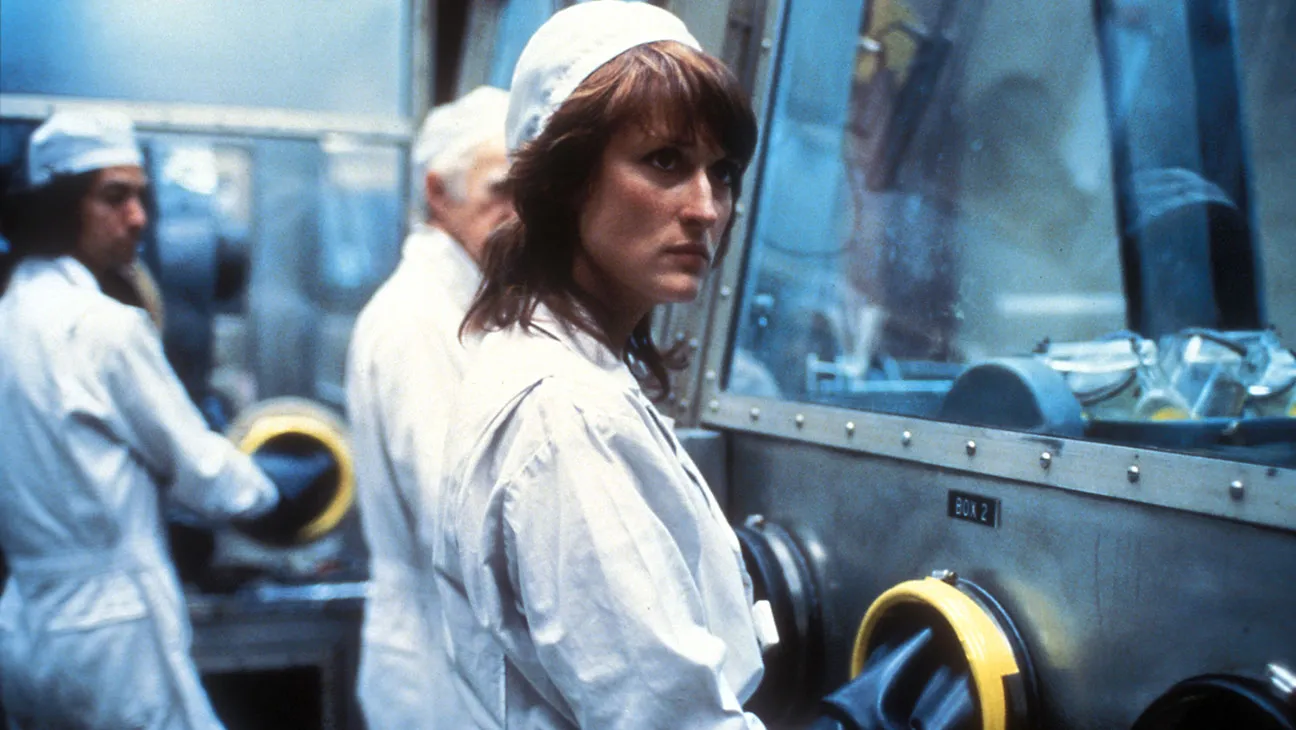
Anyone who has worked in struggles over unsafe working conditions will recognize the dynamic depicted in the 1983 film Silkwood. (ABC Motion Pictures)
Silkwood, a 1983 dramatization of the life of worker-activist Karen Silkwood, starring Cher, Kurt Russell and Meryl Streep, is the best and probably the only Hollywood movie about occupational safety and health. It tells the story of the transformation of Silkwood from a carefree worker in a Kerr-McGee nuclear processing plant into a soberly effective opponent of corporate malfeasance. The focus is on her, but the changing attitudes of her coworkers play an important supporting role.
A wonderful detail occurs early on, when Silkwood, showing her disdain for even the minimal safety precautions in the plant, sashays up to a radiation monitor designed to flag excessive exposure and briefly flutters her hand in front of it. Later the same device will trigger intense, terrifying experiences for her. Spurred by officials of her union, the Oil, Chemical and Atomic Workers (OCAW), Silkwood begins to recognize that the dangers in a production system she first viewed as routine are criminally excessive.
The other workers’ attitudes are mixed. Most of the workers at a union meeting with its safety experts appear to follow Silkwood’s lead, but several others, if anything, become even more accepting of the risk. OCAW wins an election to avoid decertification, but the 80–60 vote shows a substantial minority do not want to rock the boat over radiation hazards.