To Make Sense of Modern China, Look to Mao Zedong’s Long March to Power
In the 1920s, China’s Communist Party retreated from the cities to the countryside to wage a protracted guerrilla war. This long separation from the Chinese working class fostered an autocratic culture that went on to shape the party’s rule over China.
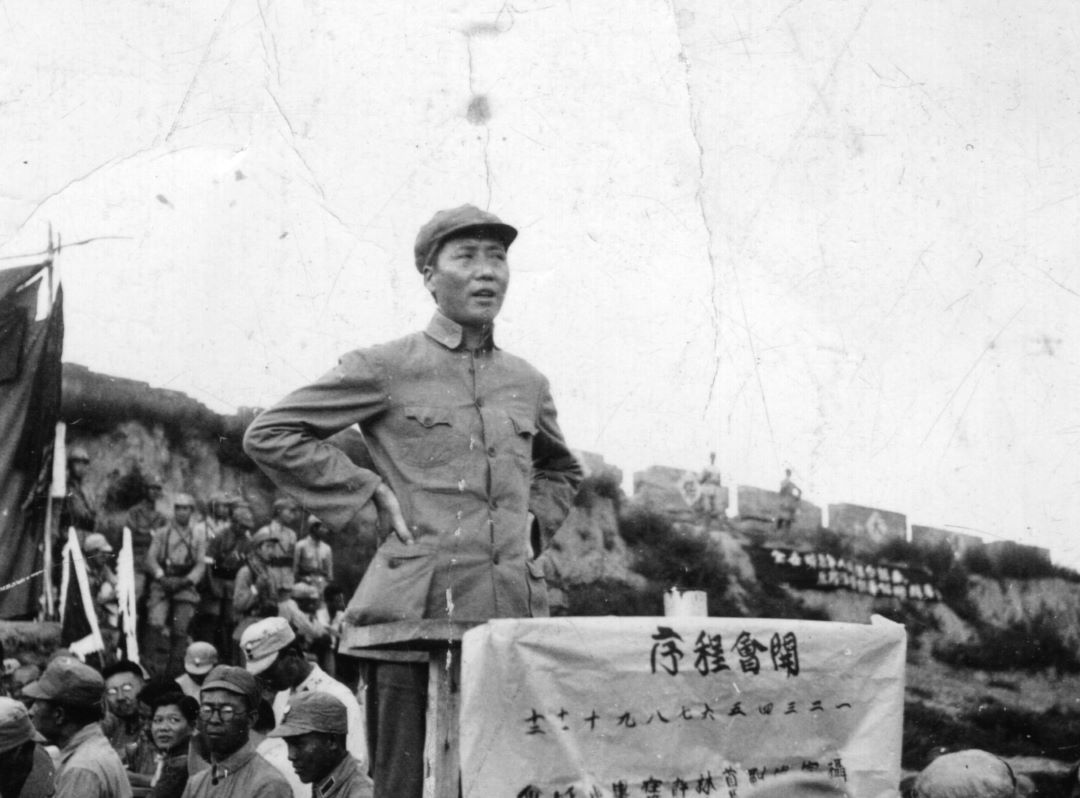
Chinese Communist leader Mao Zedong addresses a meeting calling for even greater efforts against the Japanese, at the Kangdah (Anti-Japanese) Cave University in 1938. (Hulton Archive / Getty Images)
For many people on the Left, China’s political and economic nature remains something of an enigma. Rising tensions between China and the United States have given the debate greater political importance and urgency. This rivalry will define the remainder of the twenty-first century, forcing the Left to adopt a clear position. Should it take one side or the other in this contest — or line up with neither?
The question of China has persistently bedeviled the global left. Socialists have had to analyze a series of challenging events from the defeat of its first revolution in the late 1920s right up to the present day. Throughout all the vicissitudes of the period since 1949, the Communist Party of China (CPC) has remained in power. With Xi Jinping’s effective induction as general secretary for life after the abolition of term limits, the party has entered a third period in its history after those inaugurated by Mao Zedong and Deng Xiaoping.
For all the changes it has undergone since taking power, the CPC still has its organizational roots in the movement that waged a decade-spanning guerrilla war. Mao Zedong Thought, a collection of essays written by the Chinese Trotskyist Wang Fanxi in the early 1960s, sheds fresh light on how the CPC established its control over China under Mao’s leadership more than seven decades ago. The first English translation of this book should bring a vital perspective on the CPC’s history to a new audience.