A Portrait of How Workers Build a Strike

Who Moves America chronicles the Teamsters’ 2023 near-strike at UPS. It’s a rare and moving portrait of a massive, diverse group of workers building themselves into a fighting force, who then must wrestle with a different version of victory than they expected.
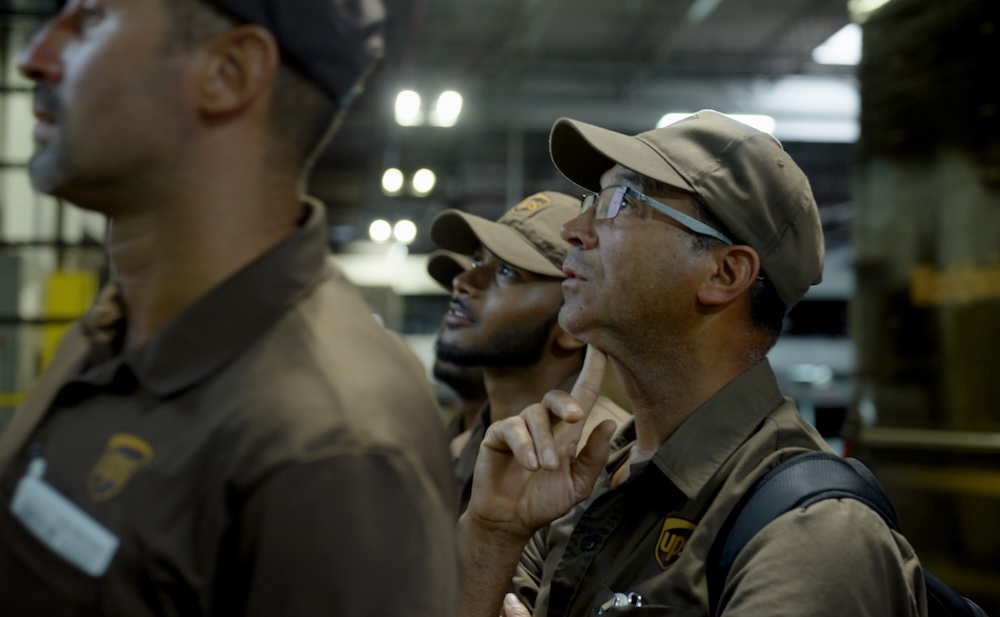
A still featuring three UPS workers from the 2026 documentary Who Moves America

The nuts and bolts of how a diverse group of workers weave themselves together to take collective action get short shrift on the big screen. The documentary Who Moves America, on the Teamsters near-strike at UPS in 2023, provides exactly that. (Sidereal Time / ITVS [lightly cropped])


I was at a Crotona Park barbecue in the South Bronx to celebrate my wife’s nephew, who was going off to a trade school after graduating high school. The family barbecue included a cross section of union members, among them electricians, hotel workers, Teamsters — not a strange amalgam, thanks to New York’s high union density. It’s often only in TV shows that you see a tight-knit group of friends from vastly different class backgrounds hanging out together. In real life, we can’t curate a social circle of people from disparate backgrounds with the same ease you assemble an eclectic wardrobe from a thrift store.

But social segregation can be overcome through political and civic institutions that turn strangers into comrades, offering an antidote to loneliness and atomization. In 1947, Life magazine photographer David E. Scherman shot a picture of a Communist Party cell at a Paris café, planning a Christmas dinner. The meeting included a classics professor, a stenographer, a salesman, a jeweler, a tailor, a schoolteacher, a metallurgist, an upholsterer, a dressmaker, and a pastry cook. The party offered a political home that brought all of them together to understand themselves as part of a unified class with a shared worldview.

Unions also bring together an unlikely assortment of people to exercise collective power in the workplace. In the new documentary Who Moves America, filmmaker Yael Bridge offers a window into the working-class culture of one of the country’s largest unions, the International Brotherhood of Teamsters, at United Parcel Service (UPS) in 2023. Bridge previously directed the 2020 documentary The Big Scary “S” Word, chronicling the rich history of the socialist movement in the United States with Sen. Bernie Sanders’ second presidential run as a backdrop, and the 2022 documentary When We Fight, about the 2019 Los Angeles teachers’ strike. In her latest film, she returns to the strike, that most potent of working-class weapons.

In the mise-en-scène of the 2023 strike wave involving Hollywood writers and actors in the summer and health care workers in the fall, 340,000 Teamsters were gearing up for a potential strike against package giant United Parcel Service. UPS Teamsters have the largest private-sector union contract in North America. Workers at UPS, behind the wheel in brown trucks and along conveyor belts in warehouses, move twenty-five million parcels a day. Their working conditions are grueling and dangerous: at the time, two drivers had died in the past year from sweltering heat. If they strike, their market leverage from moving 6 percent of the country’s gross domestic product means they can cripple the company’s profits and send shock waves across the economy.

The last time UPS Teamsters struck was in 1997; grainy home video and archival footage from that strike is interspersed throughout the documentary, and the film’s contemporary subjects — from UPS veterans who were on strike at the time to UPS workers who weren’t even born yet — reference that walkoff as a touchstone moment in their lives, the Teamsters’ history, and the recent history of the American labor movement as a whole.

A still featuring two UPS workers sitting together on a beach, from the 2026 documentary Who Moves America
The subjects of Who Moves America range UPS veterans who were on strike in 1997 to workers who weren’t even born yet. (Sidereal Time / ITVS)

Spoiler alert: The strike isn’t called. Members all across the country are chomping at the bit to walk off the job, but after the union reaches a tentative agreement with the company that even the Teamsters’ most strike-ready militants acknowledge is a much stronger pact than previous ones, the members ratify the contract by a five-to-one margin. (The five-year contract is set to expire on July 31, 2028.) The film was deprived of the sexy stuff of massive picket lines, angry workers flinging rhetorical mud (and perhaps other not-so-rhetorical physical items) at supervisors, physical confrontations with strikebreakers, and a very public referendum on corporate gluttony and working-class exploitation in a deeply unequal America. A simpler narrative of heroic workers taking on greedy bosses gives way instead to a thornier one, as workers who were charged up to strike wrestle with what it means to win the gains they were after without walking off the job.

From covering the strike, I recall workers seething in anger from the pandemic-era abuses and risks they were exposed to and wanting to stick it to management.

“I can still vividly remember getting my drivers together outside the building when the pandemic first started and the fear on their faces that somehow they could bring the virus to their children,” delivery driver Greg Kerwood, a steward in Somerville, Massachusetts, told Labor Notes at the time. “Part of what happened when people got out there with the practice pickets was they started to feel a sense of their own power,” Kerwood said. “The shackles were beginning to break. And they were starting to stand up and hold their shoulders straight and put their heads high and start to take some pride in their own self-respect in the workplace.”

That pent-up anger means the strike is freighted with high expectations, like potential to temporarily rebalance workers’ relationships to their management tormentors by striking them. “This company hates you,” Teamsters Local 804 President Vinnie Perone says in the documentary. “If they could, they would replace you with a hand-truck.”

Instead of that pined-for showdown, the film explores how workers grapple with expectations outpacing their impressive contract gains. What does it mean to win a strong contract without a strike? The strike isn’t just a weapon to force employers to concede material gains; it’s also a school in militancy and camaraderie, leaving an indelible mark on those with the battle scars to show for it.

But before reaching the peak of escalation, workers must do the nuts-and-bolts educational and political work of coming together across various divisions, the boring yet indispensable stuff that makes it possible for thousands to mass at an employer’s gates: the social bonds among workers.

How to Organize Your Union

Like the 2024 documentary Union, which chronicled the stunning organizing victory of Amazon workers at a fulfillment center on Staten Island in New York City, Who Moves America (producer Mars Verrone was involved in both films) shows what organizing looks like in practice in the buildup to a potential strike. Teamsters President Sean O’Brien makes a number of appearances, deploying tough talk against UPS that gets under corporate investors’ and executives’ skins. In the film, he’s recorded at his stately desk at Teamsters headquarters in Washington, DC, relating an anecdote of how a fellow union leader was surprised by the size of the UPS National Negotiating Committee, which was expanded by appointing rank-and-file members.

O’Brien worked hard to cultivate the air of a militant labor chief dedicated to rank-and-file action; after taking office in 2022, he traveled the country with Bernie Sanders to denounce billionaires and spoke at that year’s Labor Notes conference to rapturous applause. Since then, though, O’Brien has alienated many in the labor movement by speaking at the Republican National Convention and giving the union’s endorsement to a number of GOP candidates, even as the Republican-led House Committee on Education and the Workforce announced subpoenas of the Teamsters’ rail divisions along with leaders of the United Auto Workers and the American Federation of Teachers. Donald Trump continues to be the biggest union-buster in US history, destroying workers’ job security and right to engage in collective action.

But the film spends the bulk of its time tracking not the moves at the union’s top but the ferment below. O’Brien waged a vociferous war of words, but he is on-screen less than the Teamsters discussing the contract and developing working-class leadership across locales, from a beach in Southern California to the streets of Louisville, Kentucky, and Brooklyn, New York. We see fellow Teamsters talking at a diner across generations, dipping French fries in ketchup while chatting about how the contract could change their lives (including, one part-timer half-jokingly hopes, being able to afford a ticket to a Beyoncé concert). We see them shifting in their chairs during trainings at union halls and local sandwich shops, debating how to engage part-time package sorters in the contract campaign and where best to position picketers if and when the strike comes as well as whether the achievements in the contract are good enough to warrant a yes vote.

None of that happens spontaneously. The work of working-class organization involves weaving relationships into dense knots across lines of race and immigration status and age and job type, over and over again, forming a rank-and-file network that can take action. As longtime Democratic Socialists of America organizer David Duhalde has written, that’s largely the work seen in the film of the rank-and-file movement Teamsters for a Democratic Union. TDU members and staff led online and in-person meetings for tens of thousands of UPS Teamsters across the country. Member leaders are seen collecting strike pledge cards, explaining contract demands, answering questions, and training coworkers to carry out workplace actions to put pressure on the company.

The relationships between workers, in all their specificity, are what make a union. In the film, we meet Tim Peppers, a veteran of the 1997 strike, and Justin Alo from San Marcos, California, who is classified as a “22.4” worker, a reference to a section of a previously ratified UPS contract that created a classification of drivers who deliver packages for less pay than regular drivers with fewer contractual protections. Alo has banded together with his coworkers to hold meetings at a local coffee shop to learn about their contract and prepare for the fight with UPS. We watch him and his wife talk with quiet anxiety about saving money in case he goes on strike, and their decision to pause their autistic son’s daily therapy sessions if Alo strikes because they won’t be able to afford them. That’s the stuff of real sacrifice, multiplied an untold number of times over by every worker considering a strike.

TDU organizers helped cohere these meetings to educate members with no strike experience. Practice pickets, marching in a small circle with signs on the sidewalk front of a UPS hub, to build the muscle memory to strike and demonstrate to company managers the union’s seriousness about walking off the job, union leaders at the gates educating members about their contract and pulling previously apathetic workers into action — these are aspects of a strike readiness program the Teamsters adopted across the union. That’s a credit to TDU’s tireless work building a bench of worker leaders, and the know-how in rolling out these educational campaigns in a national contract fight, and the union adopting them, amplifying and institutionalizing their impact, even if unevenly, across the union.

Missing Their ’97?

Alo is among the newbies, but he has helped organize these social gatherings alongside other UPS Teamsters with experience in the fifteen-day 1997 strike. That strike was transformative, reducing the reliance on subcontractors and boosting wages. But it also contained a concession: a five-year contract term, instead of three or four years. Now that the contract terms are longer, workers have fewer opportunities to strike than earlier generations did.

As workers debate whether to ratify their tentative agreement, a worker in California compares the momentum they built up to a wind-up toy car whose wheels are charged up but never allowed to take off. Workers wonder if, by not striking, they’ll miss out on the transformative experience their coworkers had in 1997, especially as the institutional memory fades once veterans of that strike begin to retire.

Former package-car driver and TDU cochair Antonio Rosario says that during the 1997 strike, he was a knucklehead who was schooled by old-timers; the union saved his life from a potential life of crime and drugs. We watch him play handball, the poor man’s tennis, with his kids in Brooklyn. We see him at the entrance to the UPS hub, chatting workers up and slapping flyers into people’s hands, marching in a circle during practice pickets — a regular worker turned organizer.

A still of three UPS workers praying together as a strike vote looms, from the 2026 documentary Who Moves America
Three Teamsters pray together as the strike vote looms. (Sidereal Time / ITVS)

In Louisville, Kentucky, two young black workers mirror Rosario’s early experience as a part-timer in the 1990s; they are going to college while juggling a job at UPS. “You know how many times I passed by this in my life and never knew,” Nailah Webber says to her friend Angel Baduo as they drive past their union local. We watch them pray in a kitchen as the strike vote looms. They are stand-ins for the vast majority of workers in the country who have little experience or understanding of what it means to be part of a union but whose lives would be vastly improved by joining or organizing one.

At my own family barbecue, a family friend who’s a Teamster spoke to my nephew about his union options. His uncles told him about jobs that would be represented by the International Brotherhood of Electrical Workers, the Communications Workers of America, and others. We told him about how important job security was in this job market, and how the best way for him to have a future was to take his trade certification and enter a union apprenticeship program. He nods and asks questions as other family members gather around him, chiming in about their union experiences.

I remember all the anecdotes I’ve heard from fellow workers about their journeys into the union world. “If you notice, back in the ​’80s and ​’90s, most UPS drivers had pretty big arms,” Rosario told me in 2025, ​“and that was from turning that damn steering wheel,” before power steering was introduced. At Crotona Park, we are adding to that knowledge base across sectors, weaving and reweaving stories that add up to worldview and a potential class politics.

The majority action necessary for a successful strike demands unity and camaraderie. As A. J. Muste once wrote, “the trade union seeks to combine within itself two extremely divergent types of social structure, that of an army and that of a democratic town meeting.” In the lead-up to a strike, these divergent forms can temporarily work together through the picket line discipline of the union as a combat organization and the union hall as a democratic town meeting where workers deliberate about their contract demands. Who Moves America takes us to the lower frequencies where workers educate each other on what it means to move like a class.