The Border in Ceuta, Spain, Is Anything but Permissive
When 50,000 people briefly crossed into Ceuta in North Africa, many pundits damned the lax Spanish line on migration. In truth, the hardening of the border around Ceuta since the 1990s has made such desperate attempts to storm the barrier more common.
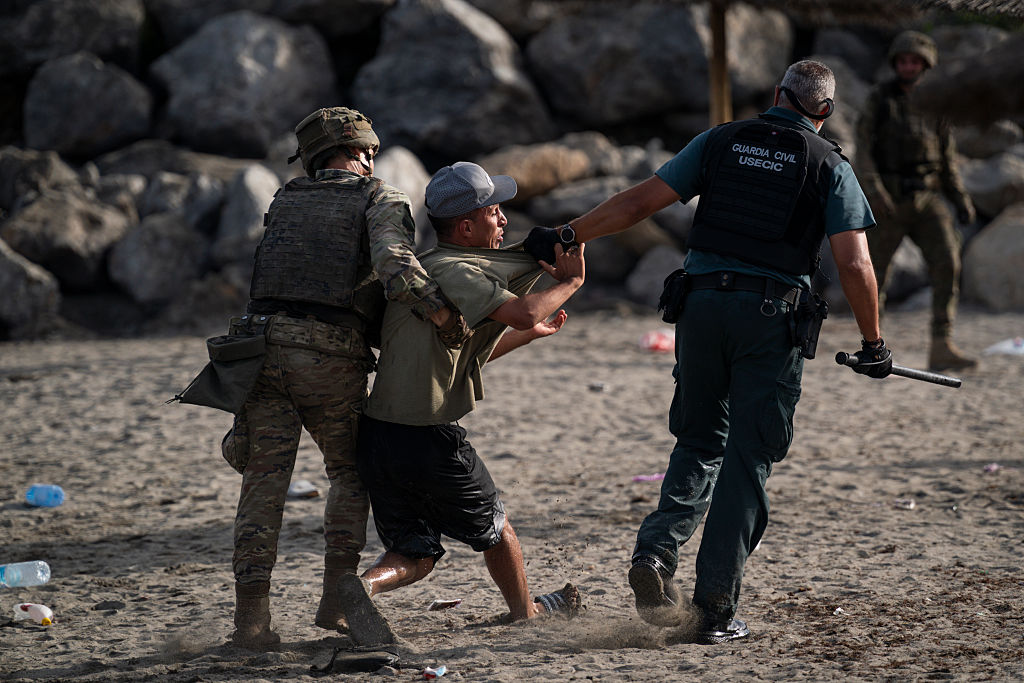
US and Israeli right-wingers gleefully mocked Spain’s government over the mass crossing of the border at Ceuta. Yet amid all the talk of weaponized migration, one element was widely overlooked: the fate of the dozens of migrants killed at the border. (Adri Salido / Getty Images)
European Union authorities are currently deciding on images for their new banknotes. One worthy candidate for representing today’s Europe might be bodies in the water.
In the Spanish exclave of Ceuta last week, another seventy deaths were added to a cumulative total of 1,570 people killed in the central Mediterranean Sea this year and tens of thousands across the mass grave that Europe’s littorals and rivers have become.
The deaths at Ceuta took place as an unprecedented fifty thousand people attempted to reach the exclave (along with nearby Melilla, one of two holdouts of Spanish and EU territory on North African soil), many by swimming. Most appear to have been Moroccans escaping poverty and limited opportunities, but sub-Saharan Africans were also represented (refugees from the Sudan war are often found on this route).