The Jeju Massacre Was a Hidden Crime of America’s Cold War
In 1948, a US-sponsored dictatorship in South Korea launched a brutal campaign of repression on the island of Jeju. Having killed up to 30,000 people — one islander in ten — Washington’s Korean clients covered up the evidence of the crime for decades.
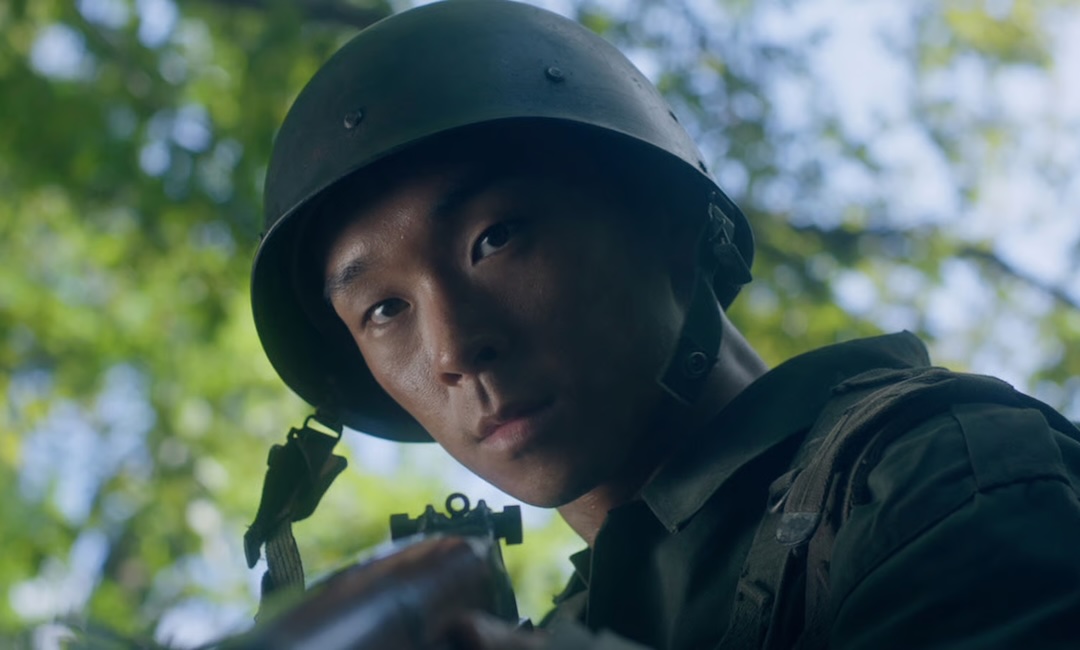
The Korean movie Hallan dramatizes a massacre that the US-backed South Korean dictatorship carried out in 1948. Up to 30,000 people were killed on the island of Jeju as part of a bloody counterinsurgency operation that was made in the USA. (Triple Pictures)
South Koreans tend to memorialize the tragedies of their modern history by date. The Korean War is 6.25 for June 25, 1950, the day it broke out; the Gwangju Uprising is 5.18, for May 18, 1980, when a ten-day popular revolt began before the military drowned it in blood.
The same kind of shorthand exists elsewhere in East Asia — 6.4 for the Tiananmen massacre of 1989 and 3.11 for the Great East Japan Earthquake of 2011 — but nowhere is it as deeply embedded in collective memory as in South Korea.
Each pair of digits separated by a dot compresses, and even conceals, the memory of mass death and the story behind it. About three million civilians were killed in the war South Koreans call 6.25. The number of civilians felled by government bullets in Gwangju or at Tiananmen remains contested, while the full nuclear toll of Fukushima may not be known for many more decades.
To many South Koreans, 4.3 is another such numerical memory, the oldest of them all, predating and outlasting 6.25 and the founding of the republic itself. It refers to April 3, 1948, the moment when protests on Jeju Island prompted a counterinsurgency campaign of extraordinary brutality and swiftness.
Over the following six years, 25,000 to 30,000 civilians were killed — one islander in every ten. South Korea’s largest and most gorgeous island was, in the exact and original sense of the word, decimated.
Hallan
For more than four decades of dictatorship, from the 1950s to the late 1980s, the massacre remained virtually unknown on mainland South Korea. Every year, a fresh army of newlyweds and tourists landed at Jeju’s airport, built atop a mass grave of victims, to enjoy a scenic subtropical island where winter snow still shrouds palm trees. Only after democracy was restored in the 1990s were the mass graves excavated and an official inquiry launched.
The 4.3 massacre came to the attention of a wider English-speaking readership in early 2025 when Han Kang’s We Do Not Part appeared in English on the heels of her Nobel Prize in Literature. Han is a chronicler of pain, capable of casting light on the universal dimensions of historically rooted personal traumas through the suffering of individual protagonists. Almost invariably, her work depicts individual anguish infused with the repercussions of historical violence, from the 4.3 massacre in We Do Not Part and the Gwangju Uprising in Human Acts to the more oblique echoes of the Vietnam War in The Vegetarian.
Hallan, a Korean independent film that had its US premiere at the New York Asian Film Festival last month, is a cinematic inversion of We Do Not Part. Han’s novel keeps the massacre at an archival distance through a survivor’s lifetime of documents and newspaper clippings, uncovered by the next generation. The film stands inside the event itself, with a mother and her six-year-old daughter fleeing the killings. The mother of Han’s protagonist chronicled what she had lived through in the hope it would someday come to light. The film shows what there was to remember, before the memory had found a home.
Set on Jeju in 1948, the second year of the six-year massacre, barely three years after liberation from Japanese colonial rule, Hallan confers moral authority on neither armed side: not the left-wing guerrillas who fled into the fastness of Mountain Halla and not the Korean constabulary that hunted them, with the benefit of US training and advice, and outgunned and outnumbered them badly.
Like many other islanders, protagonist A-jin and her daughter Haeseng were caught in the middle of spontaneous protests over economic hardship tinged with aspirations for national sovereignty that were met with deadly suppression before evolving into a form of internecine violence and ultimately a massacre. As the situation evolved, it became increasingly detached from the populace and increasingly deadly to it.
General Strike
In August 1945, Koreans received their liberation and their partition in the same month. They had longed for an independent, sovereign state. Instead, the United States and the Soviet Union carved the peninsula in two as they divided the postwar world.
Their respective militaries ruled what would become North and South Korea for three years before installing their respective protégés in power: in the North, Kim Il-Sung, an anti-Japanese guerilla leader who sat out World War II after fleeing to Soviet Russia from the Manchurian theater; in the South, Syngman Rhee, a longtime independence campaigner and a Presbyterian who had taken refuge in the United States.
In the South, the lives of working people deteriorated in many respects, in some cases becoming even harder than in colonial times. The US military government’s mismanagement of the economy sent rice prices soaring while the return of tens of thousands of Koreans from overseas flooded an already fragile labor market.
The People’s Committees, an autonomous body that had sprung up across the country to fill the administrative vacuum left by the Japanese withdrawal, came into conflict with the US military government. Instead of dismantling the colonial state, the occupation authorities largely repurposed its administrative apparatus, staffing it with the same Korean bureaucrats and police officers who had served under Japanese rule.
On Jeju, these grievances erupted into mass protests on March 1, 1947, the anniversary of the nationwide campaign against Japanese rule in 1919. During the demonstration, a mounted police officer rode over a child, further inflaming the protestors. Police then opened fire on the crowd, killing six civilians.
Less than two weeks later, on March 10, much of the island ground to a halt as workers launched a general strike, joined even by local cops and low-ranking civil servants. The US military government swiftly crushed the strike, bringing in officials from the mainland to replace much of the island’s bureaucracy and deploying additional constabulary and police troops. It also relied on far-right youth organizations from the mainland to terrorize the island’s inhabitants.
Taking Up Arms
By April 1948, the island’s communists came to believe the time was ripe for an armed uprising. It may have been a premature decision. The general strike had ended in defeat, and much of their underground network was destroyed in the process.
However, they believed conditions both on Jeju and across the peninsula had grown dire enough to justify taking up arms. Far-right reactionaries were terrorizing the island, and an election scheduled for the next month threatened to establish a separate South Korean state, turning what had been promised as only a temporary partition into a permanent one.
On April 3, 1948, about 350 communist guerillas rose up, raiding twelve police stations and the barracks of far-right groups from the mainland. The bloody fight escalated into a vicious cycle of brutal retaliation, with violence increasingly taking the form of a personal vendetta. Although state forces and far-right militias carried out the overwhelming majority of the violence, left-wing guerrillas also committed atrocities, including the killing of the families of police officers and soldiers, whose relatives and comrades often responded with retaliatory attacks against guerilla families.
Yet the insurgency could have ended at an early stage. During May, about ten days ahead of the national elections, the US military government and the guerilla group began dialogue over a possible ceasefire. However, far-right terrorists torched a village, blaming guerillas for the fire, to break up the negotiations.
In response, the US military government carried out a large-scale sweep against the insurgents, who retaliated in kind. Through a combination of coercion and persuasion, guerillas drove thousands of villagers from their villages deep into Mount Halla, successfully disrupting the election on Jeju.
Draining the Sea
The standoff might still have been defused if the US military government had not singled out Jeju as a “red island” and treated much of its population as communists or communist sympathizers. In October 1948, seeking to crush already weakened guerilla units, the US military ordered that anyone found outside a five-kilometer coastal zone be treated as a guerilla, regardless of age or sex. Many, including children and the elderly, were summarily executed, while others were rounded up and brought before military tribunals that offered little semblance of due process.
This became one of the earliest scorched-earth operations under the emerging rationale of the Truman doctrine of 1947, whose declared aim was to contain Soviet communist expansion. Harry Truman’s generals in South Korea and their Korean junior associates appeared to embrace their own interpretation of Mao Zedong’s famous metaphor on guerilla warfare: “The guerilla must move amongst the people as fish swim in the sea.”
To annihilate a guerrilla force that never numbered more than three hundred fighters at its peak, the US military government and the subsequent South Korean government deployed a motley force of five thousand soldiers, police officers, and far-right paramilitaries, ultimately wiping out an estimated 10 percent of Jeju’s population — as if they were draining the sea to catch a few fish.
In Hallan, A-jin and Haeseng find themselves caught at the edge of the five-kilometer coastal zone. A-jin’s mother-in-law has been executed with other elderly villagers by soldiers motivated by their assigned kill quotas. Later, while searching for Haeseng after the death of her grandmother, A-jin encounters a band of guerillas who hide the truth about her husband’s death: they had summarily executed him for abandoning their hideout.
The idea of “a better world” as preached by the partisans no longer holds any appeal for A-jin. Her vision of “a better world” has become far more modest yet no less unattainable: a world where her daughter can learn to read and write so that one day she may record, in her words, what they endured in 1948.
In her feature debut, director and screenwriter Ha Myung-mi has weaved sadness, desperation, tension, and courage into the stunning late-summer beauty of Jeju. Kim Hyang-gi, best known internationally for her role in the cult favorite Along With Gods series, plays the young mother with a blend of strength and vulnerability.
The two protagonists are composite characters drawn from 4.3 and Women, a five-volume collection of interviews of female survivors published by a Jeju-based nonprofit research institute, according to director Ha. English-speaking viewers with no knowledge of Korean are not the only ones who have to rely on subtitles: Hallan is so rich in the Jeju vernacular that even native Korean speakers required subtitles when it was premiered in Seoul last year.
To Name 4.3
Jeju activists and scholars have spent more than five decades campaigning to bring the truth of 4.3 to light. One of their great accomplishments has been to unite islanders around the memory of atrocities instead of dividing them over who was to blame.
Bereaved families of partisans and local police and soldiers have since reconciled, moving beyond the past in which they held one another responsible for the deaths of their next of kin. Together they now pay their respects at each other’s family graves each year — a meaningful ritual in South Korea, where regular visits to ancestral graves remain an important part of remembrance.
Nevertheless, Jeju islanders still call it simply 4.3. Any available label falls short of defining what happened. It was not an “incident,” a word too small to capture the scale of the killings. It was not an “uprising” because only a fraction of population directly took part. Nor was it a conventional “insurgency” given the movement’s limited organization. Yet even the term “massacre” cannot fully capture what really happened.
From 4.3 to the Korean War, much of the first postwar decade was marked by some of the bloodiest and most turbulent years in the country’s modern history — years that many Koreans remember through a series of dates. What remains clearest to many of them is that the violence could have been far less devastating and far less prolonged had Korea’s future been left fully in Korean hands, without the rampant US intervention that began on Jeju.