How Korea Became a Forgotten War
During the Korean War, the United States inflicted unimaginable horrors on the Korean people. Yet today Americans know almost nothing about their government's role in war crimes and atrocities.
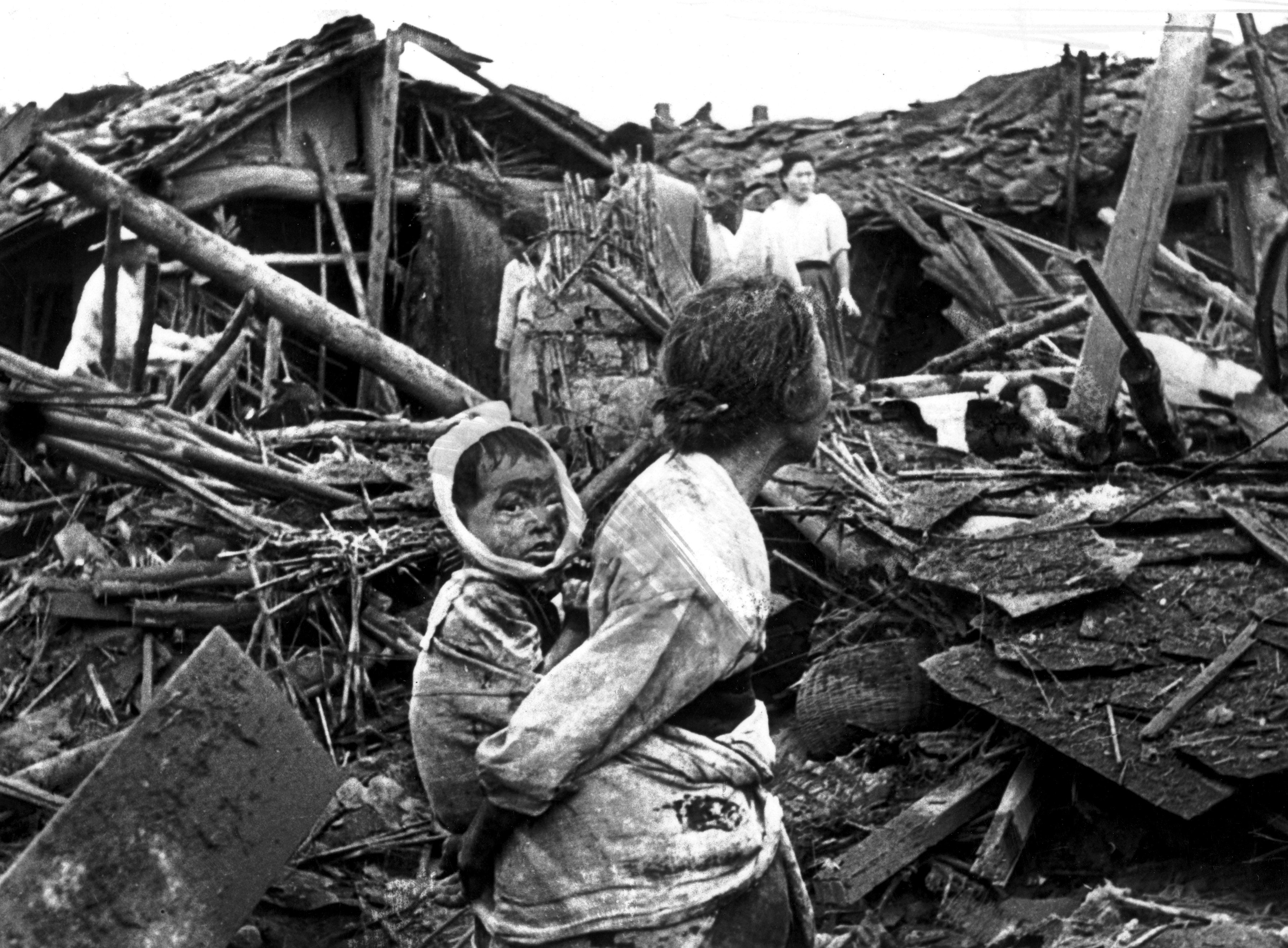
An elderly woman and her grandchild wander among the debris of their wrecked home in the aftermath of an air raid by US planes over Pyongyang. (Keystone / Getty Images)
The conflict in Korea was the first “hot war” of the superpower confrontation between the United States and the Soviet Union. It was the first time — and, to date, the last time — that armies from the United States and the People’s Republic of China confronted each other directly on the battlefield. It left the two Korean states devastated, with millions of casualties and tremendous material destruction. The scars of the conflict are still very much in evidence today.
However, despite having played such a massive role in the Korean war, the United States has largely forgotten about it seventy years later. Korea has never occupied the same place in US public history or popular culture as Vietnam or, more recently, Iraq. Jacobin’s Daniel Finn spoke with historian Owen Miller about the legacy of the Korean war and the reasons for this amnesia.
This is a transcript from an episode of Jacobin Radio’s Long Reads podcast. You can listen to the episode here.