Centrists Despise Hasan Piker More Than They Want to Win

Democratic Party centrists’ well-funded and single-minded war on socialists is leading them to take increasingly contorted, absurd positions against figures like leftist streamer Hasan Piker.
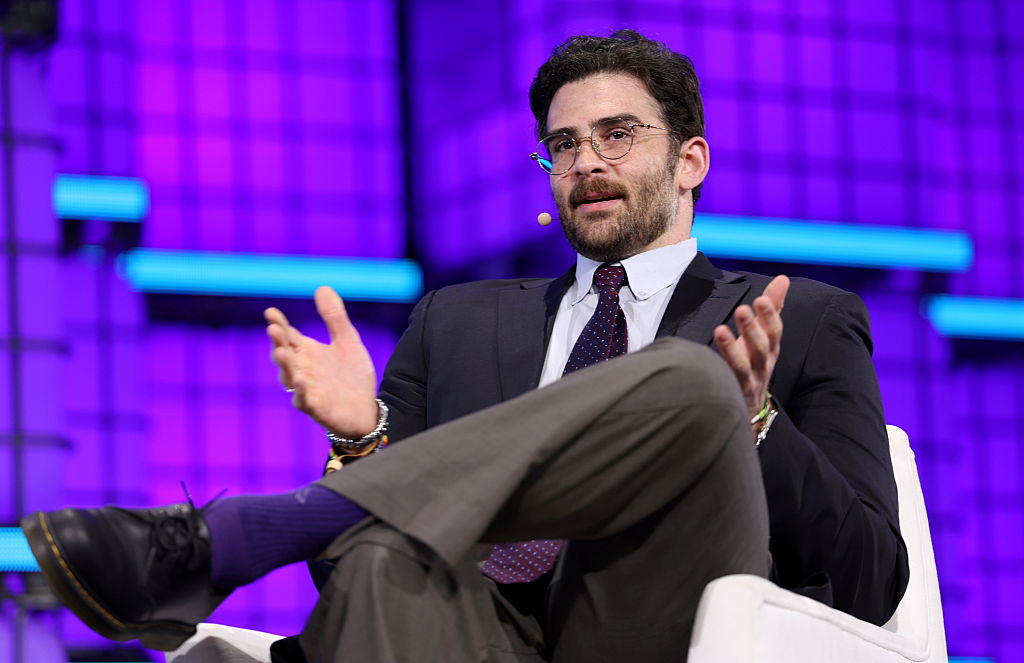
Hasan Piker during day two of Web Summit Vancouver 2026 at Vancouver Convention Centre in Vancouver, Canada.

Centrists are sabotaging the Democrats with their raging hatred of Hasan Piker and the Left. (Florencia Tan Jun / Web Summit via Sportsfile via Getty Images)


The Democratic primary might be over, but the Michigan Senate race is somehow still the leading theater in the ongoing civil war for the Democratic Party’s future — and an instructive case study in how the party’s left-averse centrists plan to maintain a grip on the party’s future at a time when their voter base is moving away from them.

Three weeks after the Democratic primary was settled and progressive insurgent Abdul El-Sayed won the party’s Senate candidacy over his centrist, Israel lobby–backed opponent, there is yet another Hasan Piker news cycle gumming up the race. This time, Piker is being accused of threatening or calling for violence against Jews, specifically for showing an image of the pro-Israel Michigan State Senator Jeremy Moss and then warning that if American Jews continue to tie themselves to Israel, “eventually someone’s going to come around and take action, not against the State of Israel, mind you, but against American Jews.” El-Sayed has already publicly disavowed the comments and distanced himself from Piker.

A host of centrist Democrats who both have it in for Piker and were distinctly unenthused about El-Sayed in the first place have turned the comments into a controversy, given El-Sayed’s earlier decision to campaign with the left-wing Twitch streamer. It’s quite a twist in the race: even with the primary over and the party’s voters now focused on beating the hard-right Donald Trump loyalist on the Republican ticket, Mike Rogers, the party’s centrists are still effectively attacking their own candidate.

The clip that they and others are responding to is, not surprisingly, deliberately edited to make Piker’s remarks sound as offensive as possible. In a longer, unbroken video of what Piker said, he’s specifically responding to two things: a user who describes themselves as an “anti-Zionist Jewish person” struggling to change the minds of others at their temple, and the news that Moss was withholding his backing for El-Sayed until he fulfilled the nebulous condition of “demonstrat[ing] some serious outreach to Oakland County’s Jewish community.”

Here is a fuller transcript of Piker’s remarks:

Look, the anti-Zionist Jews in my community, you have a very tough job ahead of you, where you have to go back to your communities and try to get your elderly relatives to understand that this connection between Israeli and Zionism that is expressed over and over again through a lot of these Jewish institutions . . . is teaching people the idea that Jews are monolithic. And this is a dangerous, a very — look, it’s a very dangerous mode of propaganda. And you wanna know why? Because people don’t f-ck with Israel any longer. And if Jews in America keep putting this idea out there that they are singularly invested in Israel, eventually someone’s going to come around and take action. Not against the State of Israel, mind you, but against American Jews. . . . 

Now, is Oakland County’s Jewish community in unison making this demand of Abdul El-Sayed? No, of course not. But if there isn’t opposition from Jewish figures in this community that are loud about the divergence between this representative and their own desires, then the media narrative will set in, even if they don’t realize this media narrative presents Jews as single-minded and singularly invested in the continuation of the Israeli apartheid. I don’t know how many different ways I can explain this. I don’t know how people don’t recognize how dangerous this predicament is, how dangerous this is for Jews. You’re running around basically tying your entire identity to a country that inevitably will be seen as Jewish ISIS, and you’re saying, “As Jews, this is all we care about.” You’re making antisemitism worse.

It’s an extreme stretch to describe Piker’s remarks as an incitement of or justification for violence and bigotry against Jews. The basic point he’s making — that the tendency by pro-Israel voices to conflate Jewishness with lockstep support for Israel makes Jews less safe — has been made by a number of Jewish voices, including Ezra Klein at the New York Times, David Klion at the Nation, Norman Solomon at the Guardian, union organizer Molly Kraft, and Hannah Arendt nearly eighty years ago.

This controversy also comes as El-Sayed’s Republican opponent, Mike Rogers, is getting a free pass, from both El-Sayed’s centrist Democrat critics and the national media, for surrounding himself with a panoply of unsavory characters: a campaign campus coordinator who promotes white supremacists and joked about expelling Jews to North Korea; another member of his student outreach team who defended young Republicans who had been caught making racist jokes and saying they “love Hitler”; and a “Faith Coalition Leadership Team” made up of homophobic extremists, an anti-Muslim bigot, and one pastor connected to a church sex abuse scandal.

It’s a remarkable scenario for Democrats concerned with bigotry to entirely ignore these distasteful and alarming associations held by a member of the opposing party and focus their attacks on their own candidate instead. It’s a sign of the importance that centrists see in winning what they view as an intraparty “civil war.” It’s a fight they seem to see as more important than winning a Senate race and control of Congress.

What Is Driving This?

El-Sayed’s primary win was a shock to the system for Democratic centrists, involving not just the victory of a pro-Palestine, Medicare for All–supporting progressive in a key battleground state but also one in which the Democratic Socialists of America (DSA) didn’t endorse yet played a key role. This put establishment Democrats in a bit of an awkward position: they have long claimed the Left habitually refuses to “vote blue no matter who” come the general election and so pave the way for GOP victories. This wasn’t actually true, but it’s been one of the Democratic center’s most reliable go-to attack lines against their left flank.

With the tables now turned and party centrists needing to “vote blue no matter who” and swing their support behind a progressive candidate to stop the Trump-backed Republican, a number of establishment Democrats — including El-Sayed’s centrist opponent in the primary — have backed the Democrat. But not all.

One, Michigan Rep. Hillary Scholten, had preemptively refused to back El-Sayed against his Republican opponent before he’d even won the primary, and she now continues to do so, despite being called out for it by one of El-Sayed’s own former rivals. Days after his win, Third Way — a Wall Street–funded organization that advocates for Democrats to adopt Republican economic policies like cutting Medicare and Social Security — announced a $15 million campaign to attack both DSA and candidates who worked with the group, even if it meant costing the Democrats swing seats. They specifically name-checked El-Sayed as one of their targets.

Meanwhile, the week before this saw several stories about prominent Democrats publicly abandoning the “vote blue no matter who” ethos. A group of prominent Michigan Democrats announced their support for El-Sayed’s GOP opponent for purely factional reasons. “If El-Sayed were to win the general election in this important swing state, we fear the far left and anti-Jewish elements in the Democratic Party would become dominant, including in the imminent 2028 presidential race,” they wrote, not long after the news that some Democratic bundlers are raising money for his Republican opponent.

Several other Democrats have similarly publicly refused to back El-Sayed, including Moss, the state senator demanding El-Sayed make “outreach” to his local Jewish community. (It’s worth noting that El-Sayed has the support of a number of prominent Jewish figures and groups both in the state and outside of it).

So there are two things happening here. One is that, through this controversy, centrist Democrats have shifted the conversation away from the news that some of their own are willing to hand a battleground state to Trump to keep the party from moving leftward. This was the exact line of criticism Piker was making in the remarks that spawned this controversy, accusing Democrats like Moss of threatening to help Rogers win unless El-Sayed reversed his broadly popular position on US policy toward Israel.

“They want Abdul to take a less popular and immoral position, a position that he does not hold,” Piker said about Moss’s demand. “We should not let these people forget these shameless positions that they are holding on to in this pivotal moment, where the Senate majority hinges on this seat.”

This is obviously an inconvenient topic for Democratic centrists, who don’t want voters to remember their party disloyalty if El-Sayed does end up losing. So in a bit of political judo, they’ve cleverly turned Piker’s criticism along these lines into a news cycle about him allegedly inciting violence against Jews — a news cycle that, as a bonus, also hurts El-Sayed’s campaign, while seeming to leave centrists’ fingerprints off it.

The other is that this comes less than three weeks after Third Way’s announcement that it was now devoting itself to “discrediting” the Left and targeting El-Sayed in particular. One of the corporate Democrats who accused Piker of “inciting violence against American Jews” and helped drive this news cycle, Rep. Josh Gottheimer, was formerly named an honorary cochair of Third Way. He was described by Politico earlier this year as saying he was “ready to play Whac-A-Mole to beat back forces who would pull the party hard left,” and as someone who “sees himself as uniquely positioned as a bulwark against the party’s leftward impulses.” Watching all this happen right on cue, Third Way’s cofounder has publicly taken a victory lap.

This might seem odd. After all, sabotaging El-Sayed’s campaign would be overwhelmingly contrary to the interests of these Democrats’ own voters, who are terrified of Trump and want their party to have a Senate majority. But El-Sayed losing would reap benefits for them as an ideological faction, at a moment when they feel the party slipping away.

It would allow them to resume casting progressives as the party’s biggest electoral liability and help Democratic voters forget that party centrists handed Trump the presidency twice. If they create the perception that El-Sayed lost because of Piker, it would help “discredit” the broader socialist Left that Piker comes out of in the eyes of these voters, just as Third Way is planning. And last, it would keep out a progressive who could tilt the whole Senate’s political center of gravity leftward, and instead install a right-wing candidate who has far more ideologically in common with them, in terms of both his lockstep support for Israel and his corporate-friendly politics.

This might seem surprising. But it’s worth remembering that, as reported by Amie Parnes and Jonathan Allen in their account of the 2020 election, centrist Democrats were seriously unsure who they would vote for if that year’s race boiled down to Trump and Bernie Sanders, because “their fears of losing their party to socialism competed with their fears of Trump winning a second term.”

Most everyone involved in the Democratic Party considers the Michigan Senate race a high-stakes election. But many rank-and-file Democratic voters likely don’t realize the stakes are very different for their party’s centrist wing — for whom the most perilous outcome might be their party actually winning in November.