Let’s Compare Hasan Piker’s Comments to Elite Centrists’
Statements far more reprehensible than anything Hasan Piker has said are regularly written and spoken by prominent liberals in respectable outlets. But because war and Islamophobia are acceptable in elite Democratic circles, they don’t raise an eyebrow.
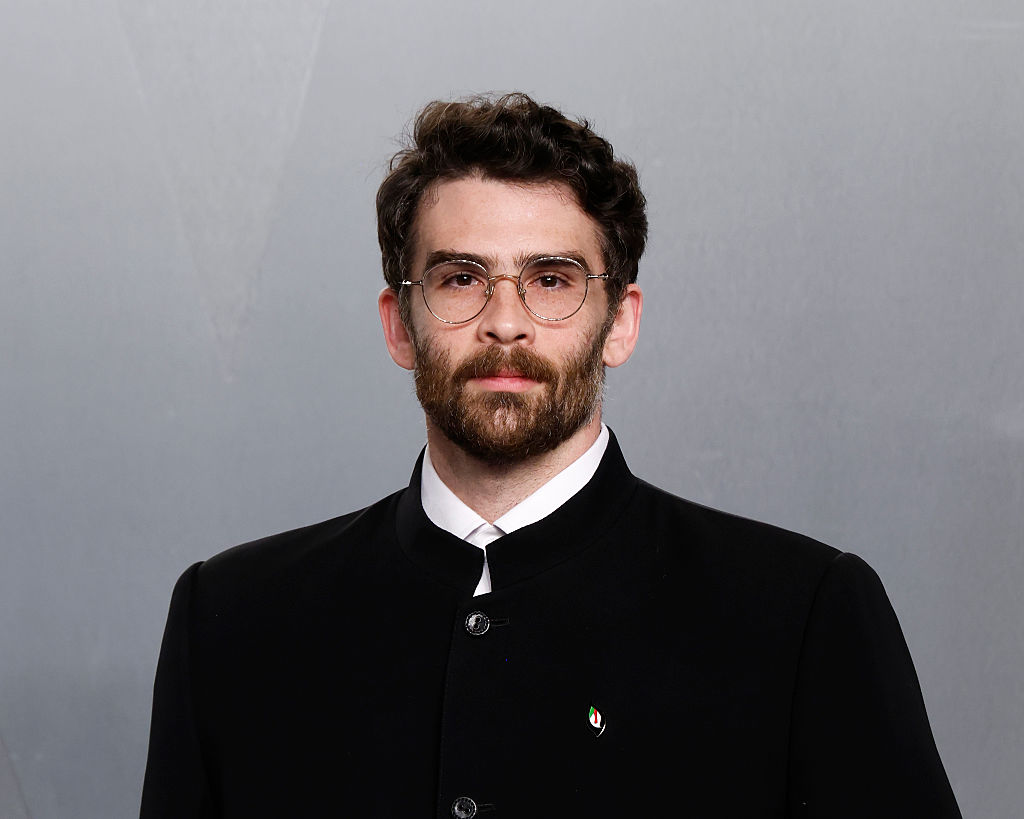
Elite centrists regularly utter ghastly statements dehumanizing Palestinians and other victims of imperial violence. But unlike Hasan Piker, they are defending the imperial status quo, so their fellow elites don’t bat an eye. (Taylor Hill / FilmMagic)
There’s a lot going on right now: a war that threatens to plunge the entire globe off an economic cliff; a small group of the ultrarich hoarding ever more wealth as economic misery piles up for the rest of us; an unprecedented, multipronged assault on free speech and the press; and the president’s mounting efforts to take over and rig future elections; to name a few.
But that’s not what’s on the Democratic establishment’s mind. If you’re a corporate Democrat, the most important matter in the world right now is a Twitch streamer.
After bleating for more than a year that they desperately needed “a Joe Rogan of the Left,” centrist Democrats are now predictably melting down over the prospect that they might actually get one. For weeks now, the party and its various media arms have been screeching about the growing popularity of socialist Twitch streamer Hasan Piker, and that his various public statements — that “America deserved 9/11,” that shoplifting and other types of theft are no big deal or even “cool,” that Americans “understand” why a rapacious health insurance CEO was murdered, as well as his being an apologist for authoritarianism and human rights abuses and supposedly holding bigoted views — are beyond the pale and disqualify him from being a prominent voice in Democratic politics.
But it’s actually so much worse than that. Jacobin has identified at least fifteen other appalling, sometimes bigoted statements that seem to have escaped notice:
“It is possible to kill children legally.”
“This is war. It is combat. It is bloody. It is ugly, and it’s going to be messy. And innocent civilians are going to be hurt going forward.”
“Some of these people [killed] are entirely innocent non-combatants, including children. This is an unspeakable tragedy. It is also one of the unavoidable burdens of political power.”
On assassinating a sixteen-year-old boy: “I would suggest that you should have a far more responsible father if they are truly concerned about the well being of their children.”
“A fascist Russia is a much better thing than a Communist Russia.”
“If the poorest [African] families spent as much money educating their children as they do on wine, cigarettes and prostitutes, their children’s prospects would be transformed.”
“Sweatshops that seem brutal from the vantage point of an American sitting in his living room can appear tantalizing to a Thai laborer getting by on beetles. . . . Looking back, our worries [about sweatshops] were excessive.”
On more than 1,100 Bangladeshi workers crushed to death in the collapse of an unsafe factory building: “Foreign factories should be more dangerous than American factories.”
“The Arab world’s problems are a problem of the Arab mind.”
“[Migration] went too far, it’s beeen disruptive and destabilizing.”
On Egypt’s former bloodstained autocrat: “I really consider President and Mrs. Mubarak to be friends of my family.”
“Xi Jinping is not a dictator” and Chinese people “don’t seem to want” democracy.
On the brutal tyrant who took power in Saudi Arabia in 2017: “The most significant reform process underway anywhere in the Middle East. . . . It’s been a long, long time, though, since any Arab leader wore me out with a fire hose of new ideas about transforming his country. . . . Perfect is not on the menu here.”
On the electoral success of a prominent Jewish politician: “I’m reading last night about the fall of France [to Adolf Hitler and the Nazis] in the summer of 1940, and the general, Reynaud, calls up Churchill and says, ‘It’s over.’ . . . So I had that suppressed feeling.”
On Hillary Clinton: “Is she hemmed in by the fact that she’s a woman and can’t admit a mistake?”
Okay, you got me. Some of the more keen-eyed among you have already realized Hasan Piker didn’t say any of these things.
The first quote is from the Atlantic, about Israel’s unprecedented and deliberate murder of children in Gaza, from the same author who last week blubbered over what Piker’s rhetoric about stealing meant for the nation’s “moral code.” Quotes number two and three are also about Israel’s slaughter of Palestinian kids, only from former State Department spokesperson John Kirby and now Editor in Chief of CBS News Bari Weiss. The fourth one is Barack Obama’s former press secretary Robert Gibbs justifying his boss’s assassination of the innocent teenage (and US citizen) son of an accused terrorist he had already killed. The next three are all from longtime New York Times columnist Nicholas Kristof.
Quote number eight is liberal blogger Matthew Yglesias, one of the previous Democratic administration’s most frequently read pundits. The ninth is another near-decade-long New York Times columnist, Bret Stephens, albeit at his previous perch at the Wall Street Journal. The next two are former Democratic nominee for president Hillary Clinton. The twelfth is former New York City Mayor Michael Bloomberg, at one point viewed by Democratic insiders as the best bet for their party’s nomination. Quote number thirteen is Thomas Friedman, yet another prestigious New York Times columnist. And the last two are former MSNBC (now MSNOW) anchor Chris Matthews, who held on to his position of influence long after he said both of those things.
All of these quotes are much worse than defending shoplifting, and they come from figures with perches at some of the most important institutions in American politics and journalism today. Meanwhile, whatever criticisms you have of what Piker says about foreign policy, you’ll be hard-pressed to find him defending the killing of civilians, let alone children, like it is routine and acceptable for many of these prominent figures to do.
In fact, going by how regularly it happens with no consequences or pushback, publicly defending war crimes specifically against Muslim or Palestinian civilians seems to be especially acceptable in elite circles. Marvel at just some of the ghastly things that have been said on this topic, to collective shrugs:
“It is customary to adopt an apologetic tone when scores of people have been killed, as they were this week in Gaza. But I will avoid this sanctimonious instinct. . . . Of course, the death of humans is never a happy occasion. Still, I feel no need to engage in ingénue mourning.” — Shmuel Rosner, writing in 2018 for the New York Times about Israel’s murder of more than two hundred peaceful protesters, forty-six of them children.
“So many Palestinians have been seized by their present blood lust. . . . It’s time to stop furnishing Palestinians with the excuses they barely bother making for themselves. . . . We understand [hatred’s] explanatory power when it comes to American slavery, or the Holocaust. . . . Yet we fail to see it when the hatred disturbs comforting fictions about all people being basically good, or wanting the same things for their children, or being capable of empathy.” — Bret Stephens, implying in 2015 that most Palestinians don’t want a better life for their kids and are incapable of empathy.
“I think we have to start asking just how inhumane it would be for Israel to just expel the Palestinians from the occupied territories.” — Matthew Yglesias, floating ethnic cleansing in 2002.
We could also just go through some more reprehensible things said by major mainstream media figures, many of them prominent liberals or in liberal-leaning outlets, about the Gaza genocide over the past two and a half years alone:
“Eradicating the engines of terror in Gaza requires attacking the places from which they operate: hospitals, schools and mosques.” — Avi Shafran in the Wall Street Journal.
“The non-combatant population in the Gaza Strip is really a nonexistent term. . . . Most of the population in the Gaza Strip are Hamas.” — former Israeli intelligence official Rami Igra on CNN’s Anderson Cooper 360°, to no pushback from the host.
“Children bloody, children’s bodies, families starving, little if any medical care, homes destroyed [in Gaza]. . . . Something that we have wondered about ever since Hamas brutally attacked so many Israeli civilians on October 7 is, what exactly did Hamas think the Israeli military would do in response to that? . . . What did they think would happen?” — Jake Tapper on CNN.
“It’s horrible, but you don’t see Israeli soldiers raping Palestinian women.” — CNN’s Dana Bash in response to a reminder that 15,000 Palestinians had been killed up to that point (for the record, you do see Israeli soldiers raping both Palestinian women and men).
“I think they have killed babies. That’s collateral damage, which is another horrible thing, but that’s part of war.” — Bill Maher, referring to Israeli soldiers, on HBO’s Real Time.
You could realistically make a list all its own of all the odious things Maher has said about Muslims and Palestinians over the months and years, the likes of which he would never dare say about another group (like, “Talk to women who’ve ever dated an Arab man. The results are not good,” or, “Am I a racist to feel that I’m alarmed by [the fact that Mohammed was the most popular British name]?”).
Or take just a sampling of things written by major mainstream media figures about various US wars:
“If we invade Iraq, we can create at least one reasonable regime in the area. If some ‘moderate’ governments get toppled (or just become outright hostile) as the worriers always worry, then we can just topple them again and set up some more supportive regimes.” — Matthew Yglesias on the impending Iraq War in 2002.
“Done right, an invasion would be the single best path to reform the Arab world.” — now CNN host Fareed Zakaria on the Iraq War that same year.
“What they [Islamic extremists] needed to see was American boys and girls going house to house — from Basra to Baghdad — and basically saying: ‘Which part of this sentence don't you understand? You don't think we care about our open society? You think this [terrorism] fantasy [you have] — we're just gonna let it grow? Well, suck. On. This.’” — Tom Friedman on the Charlie Rose Show in 2003, about whether the Iraq War was “worth doing.”
“We need to think of these deployments in much the same way we thought of our Indian Wars, which lasted roughly 300 years (ca. 1600–1890), or as the British thought about their deployment on the North West Frontier (today's Pakistan-Afghanistan border), which lasted 100 years (1840s–1940s).” — Max Boot on the wars in Afghanistan and Syria in the Washington Post in 2019.
“The first two days of the US-Israeli attack on Iran have been a striking success. . . . The biggest mistake President Trump could make now would be to end the war too soon.” — the Wall Street Journal editorial board this past March 1, one day after the US military killed more than 120 school girls in a triple-tap strike.
So there you go. Calling for war and ethnic cleansing, celebrating invasions, excusing or even justifying the slaughter of children — all totally acceptable to do in the elite circles that corporate Democrats run in, and which you will regularly find in the pages and airwaves of respectable, mainstream liberal outlets. But jokily riffing about shoplifting is simply going too far.
Reasonable people can disagree with or be put off by things Piker has said or positions he’s taken. In fact, it would be surprising if they weren’t: Piker, like Rogan, is first and foremost an entertainer whose willingness to be outrageous is a key part of his persona. There are certainly plenty of things that Piker’s said in the tens of thousands of hours of public airtime he’s logged over the past six years that I would not cosign.
But that’s plainly not the reason for this tedious uproar. We know it isn’t, because of the scores of commentators and political figures who remain in the good graces of the Democratic establishment despite saying things that are not identical to but often far, far worse than anything Piker’s said — let alone actually doing things that have caused untold death and misery to millions. We also know it isn’t because centrist Democrats who tut-tut at Piker, like Elissa Slotkin, still eagerly get in line to yuk it up with Bill Maher — who, just like Piker, once made an offensive statement about September 11 that he later apologized for (besides his virulent, open racism toward Arabs and Muslims).
No, this is about a sick political establishment that constantly bemoans political violence but is so deeply suffused with the most extreme forms of it that openly calling for and defending mass murder via the US or Israeli military doesn’t even raise an eyebrow. And it’s about the ongoing factional war within the Democratic Party, which is seeing its discredited and widely hated corporate establishment once more play the move it always goes back to when it feels its control wavering: cancel culture and language policing.
Almost exactly a year ago, a well-funded group of Democratic strategists pronounced they were going to end “the current didactic, hall monitor style of Democratic politics that turns off younger audiences,” only for the party to spend a month now wagging their finger at a famous influencer wildly popular with young people. Corporate Democrats just can’t help themselves. But then again, at this point, it’s all they’ve really got left.