Right-Wing Populism Did Not Kill Neoliberalism
Neoliberalism’s defining feature was always the insulation of capital from democratic control. Trumpism’s break with free trade has changed the rhetoric. But the underlying economic order remains intact.
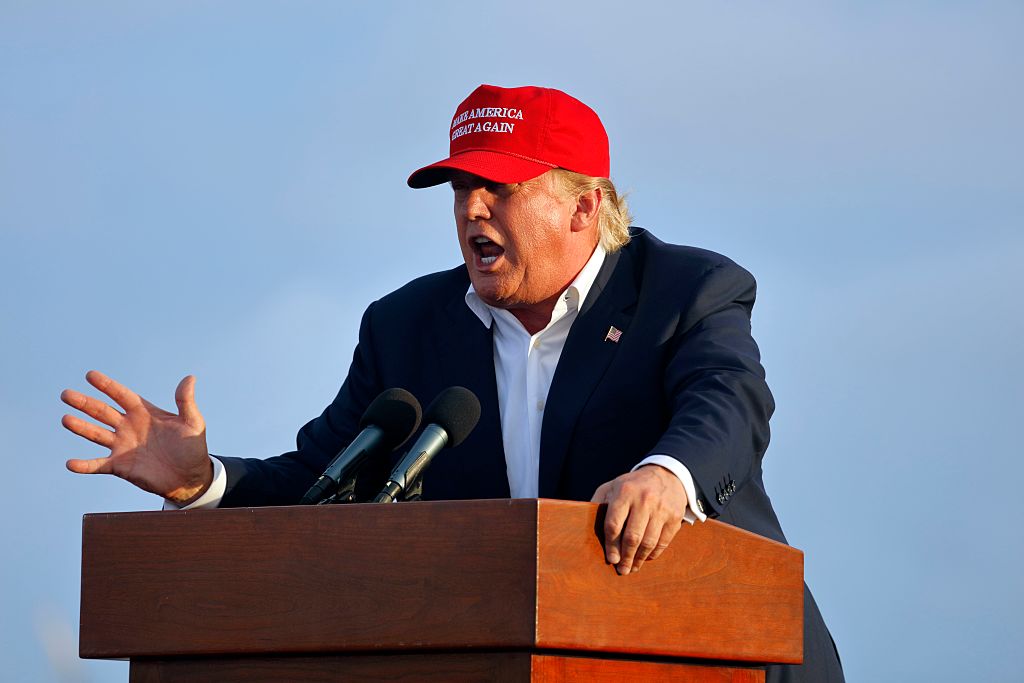
Right-wing populism presents itself as a revolt against the establishment, but the core of its economic vision remains unchanged: capital is insulated from democratic demands, and workers are disempowered. (Joe Sohm / Visions of America / Universal Images Group via Getty Images)
Neoliberalism often hides in plain sight. Its defenders rarely identify as neoliberals. Philip Mirowski described it as the movement that dared not speak its own name. Its advocates often suggest that it never existed, except as a term of abuse invented by the Left. Branko Milanovic has recently gone further, arguing that neoliberalism is dead. The era of globalization built on cosmopolitanism and international competition has given way to a more protectionist and nationalist world. But the mistake is to identify neoliberalism with globalization or free trade. These were policy instruments, not its defining feature. Its defining characteristic has always been the subordination of democratic politics to market rationality and the institutional insulation of capital from popular demands. Seen in this light, the rise of right-wing populism marks not the end of neoliberalism but one of its latest transformations.
Milanovic is right that the old language of free trade and cosmopolitan integration no longer describes the behavior of the major powers. The United States and Europe now use tariffs, subsidies, sanctions, industrial policy, and geopolitical controls with an openness that would have seemed unusual a few decades ago. The political backlash against deindustrialization, inequality, and financial crisis is real. But it does not follow that neoliberalism has ended. One should be cautious about the significance of the change: the truth is that the West, and especially the United States, never abandoned industrial policy. In practice, state intervention in strategic sectors has been a constant, even if it is often denied at the level of discourse.
It is crucial to distinguish neoliberalism from the slogans with which it has often presented itself. Neoliberalism was not a rediscovery of the old-fashioned laissez-faire doctrine of classical liberalism. It is also not just a political movement. Its analytical foundation lies in modern neoclassical economics — above all, in the claim that markets are the superior mechanisms for coordinating social life and that government failure is generally more dangerous than market failure.
That distinction explains both what neoliberalism is and why it has been so durable. It can survive the abandonment of particular policies, even of free trade itself, so long as markets remain the norm against which political action is judged and capital remains insulated from democratic claims.
Neoliberals use all kinds of subterfuge to disguise the nature of their ideas. They prefer to call themselves classical liberals, defenders of economic freedom, or simply realists who understand how markets work. Both Milton Friedman and Friedrich Hayek — the intellectual standard-bearers of neoliberalism — eventually rejected the term. They invoked the authority of Adam Smith, the founding father of economics, but that link to early classical liberalism was always tenuous. In particular, the Chicago School use of the mantle of Smith: the myth of the self-made man, the virtues of the entrepreneur, and the dangers of bureaucratic power fueled the rise of American conservatism, another label that was often rejected, even when Friedman was a key adviser to Barry Goldwater.
The neoliberal story is simple. Society prospers when individuals are free to buy, sell, invest, and compete, while government stays out of the way. That story has been one of the most successful political narratives of the last half century. It has made privatization sound like liberation, deregulation sound like modernization, and attacks on unions sound like a defense of ordinary consumers. It has allowed enormous transfers of power and income upward to appear as the neutral outcome of impersonal market forces.
Adam Smith is often treated as neoliberalism’s patron saint. The familiar image is of Smith as the apostle of the invisible hand. But Smith’s concerns were different, rooted in his own historical experience. Smith wrote against a world of aristocratic privilege, colonial monopoly, mercantilist restrictions, and feudal remnants that impeded the rise of the bourgeoisie. His political economy was concerned with production, accumulation, and the distribution of income among social classes. Wages, profits, and rents were not simply rewards handed out by a perfectly efficient market. They were shaped by social relations, institutions, and conflict.
Smith defended commercial society because he believed that the division of labor could raise productivity and weaken old systems of privilege. But he did not provide a theory showing that markets always produce the best possible social outcome. Nor did he regard the state as inherently illegitimate. He assigned it responsibilities in infrastructure, education, justice, and defense. The liberalism of Smith’s age was, at least in part, an attack on an established order dominated by landlords, monopolists, and inherited power.
Neoliberalism is something different. It is not primarily a revolt against privilege. More often, it is a defense of new privileges attached to property, finance, corporate power, and the freedom of capital to move beyond democratic control.
The difference becomes clearer once we look at the economics behind it. Classical political economy, from Smith through David Ricardo and Karl Marx, focused on production and distribution. It asked how economies reproduce themselves, how profits and wages are divided, and how accumulation changes the social structure. It treated capitalism as a system marked by conflict between classes, even when its authors differed sharply on whether that conflict was manageable or desirable. Neoclassical economics changed the terms of the discussion. Instead of beginning with classes, production, and distribution, it began with individuals, their preferences, and choice in a world of scarcity. Prices became signals that coordinate decentralized decisions. In its idealized world, markets allocate resources efficiently because each person responds to incentives, and prices convey the information needed to guide production and consumption.
That framework did not automatically imply neoliberal politics. Much twentieth-century neoclassical economics supplied arguments for public intervention. Welfare economists accepted the marginalist framework but emphasized that markets could fail. Monopolies could distort prices, pollution could impose costs on others, public goods could be under-provided, and private investment could fall short of what society needed. From that perspective, taxes, subsidies, regulation, public investment, and social insurance could improve market outcomes. The state was not necessarily opposed to the market. It could correct the failures of markets.
The decisive neoliberal move was to reverse the presumption. The question was no longer whether markets fail. Of course they do. The question became whether governments can do any better. The Chicago School, and in particular the work of Ronald Coase and George Stigler, was instrumental for that change. They argued that political institutions are captured by special interests, bureaucrats pursue their own power, regulation is distorted by the firms it is supposed to control, and democratic demands lead to wasteful spending, inflation, and political disorder.
This also marked a shift of the Chicago School on antitrust, associated with the work by Aaron Director, Friedman’s brother-in-law, Stigler, and their disciples Robert Bork and Richard Posner, who redefined the problem of monopoly away from political power and market structure, and toward a narrow consumer-welfare standard. Big firms were no longer presumed dangerous because of concentration or power. For the Chicago antitrust school, many allegedly monopolistic practices were actually competitive, reflecting an efficient solution to market conditions. Corporations were often treated as efficient unless clear price effects could be shown, and that eventually had significant implications for antitrust policy.
The intellectual implications were clear. Even an imperfect market is usually preferable to a government trying to correct it. Regulation is better done by the corporations, and their behavior should be judged by whether prices hurt the consumer. This is the intellectual heart of neoliberalism. Its central claim is not merely that private enterprise is good or that all government intervention is bad. It is that the price system is the best available mechanism for organizing society, while collective action through democratic institutions is inherently suspect. The price system is the king.
The ideas of James M. Buchanan, another figure of the Chicago School, are central in this respect. Unlike Friedman or Hayek, who emphasized the superiority of markets and often hoped to persuade public opinion, Buchanan focused on institutional design. His objective was to create constitutional arrangements that would protect capitalism from democratic pressures regardless of electoral outcomes. Nancy MacLean argued that Buchanan’s influence in the broader neoliberal movement, the so-called public-choice school, was to design mechanisms that narrow the scope of democratic choice and limit the control over capital, basically through independent central banks, fiscal rules, and judicial protections of property. The objective was to reduce the scope of democratic institutions that could limit capital’s autonomy. The implicit idea, however, was still that markets are the best mechanism for the harmonious coordination of individual exchange interactions. That is why they had to be shielded from majority rule.
Austrian economists, the Chicago School, public-choice theorists, and law-and-economics scholars developed that claim in different ways. Some preferred formal models; others distrusted mathematical economics. Some wanted a minimal state; others wanted a state strong enough to impose competitive discipline. But they shared a basic belief: markets are the privileged form of social coordination, while politics tends to corrupt, distort, and destroy.
Hayek is particularly important in this context. His deeper argument against state intervention was that no government planner could possess the dispersed knowledge held by millions of individuals. Prices, he claimed, communicate information that no central authority could ever gather or process. The market was therefore not just efficient — it was a kind of social intelligence.
This was a powerful idea because it gave markets an almost moral authority. To interfere with prices was not merely to alter the distribution of income. It was to disrupt a vast, spontaneous system of knowledge and coordination. Democracy could make demands, workers could organize, and voters could seek redistribution — but all such claims could be dismissed as dangerous intrusions into a process supposedly wiser than any collective political decision.
The neoliberal state was therefore never meant to be weak. This is one of the ideology’s most persistent disguises. Neoliberalism does not ask the state to disappear. It asks the state to reorganize society so that markets and capital are protected from democratic pressure. It needs courts to enforce contracts, central banks to discipline labor and control inflation, police to protect property, trade agreements to limit national policy, and international institutions to make debts enforceable.
It may oppose welfare spending, but it does not oppose public power when public power is used to rescue banks, guarantee financial assets, suppress unions, privatize public services, or open new spaces for capital accumulation. Quinn Slobodian calls this the encasement of markets. The goal is not to free markets from all institutions. It is to build institutions that place markets beyond the reach of popular sovereignty.
That is why neoliberalism has been compatible with authoritarian politics. Its first large-scale experiments did not occur in the peaceful democracies usually associated with the free market. Chile after the 1973 coup and Argentina after the 1976 coup became laboratories for privatization, deregulation, anti-labor policy, and monetary orthodoxy. The debt crisis of the 1980s then helped generalize these policies across Latin America and eventually much of the developing world.
The Washington Consensus presented this transformation as a technical necessity. Countries were told they needed fiscal discipline, trade liberalization, privatization, deregulation, and independent central banks because there was no alternative. Structural adjustment was sold as a repair job, not as a redistribution of power.
That is another reason neoliberalism has been successful politically. It converts political choices into technical questions. The issue is not whether workers should have greater bargaining power, but rather how to allow labor markets to adjust efficiently. That means eliminating the power of unions and promoting greater flexibility. The issue is not whether governments should direct credit toward housing, infrastructure, or industry, but rather whether governments know better than bankers. The issue is never whether public services are universal rights, but rather which ones are public goods that cannot be delivered efficiently by markets. The issue is not whether wealth should be taxed, but rather whether that would threaten the entrepreneurs and distort investment incentives. The effect is to make class conflict disappear. There are no longer workers and owners with competing claims on income and power. There are only individuals making choices, entrepreneurs responding to incentives, consumers maximizing welfare, and governments interfering with the self-organization process that would order things around.
The ideal citizen in this worldview is not a worker with collective interests. It is an entrepreneur, or, more precisely, a potential entrepreneur. The unemployed person is not someone failed by the economy but someone who must become more adaptable. The indebted household is not caught in a system of unequal power but must learn financial responsibility. The worker demanding higher wages becomes a threat to competitiveness. The union becomes a special interest. The welfare state becomes dependency. The entrepreneurial myth speaks to genuine frustrations. It tells people they are not powerless, even as the institutions that might give them collective power are dismantled. It promises freedom while narrowing its meaning to the freedom to compete.
This is why contemporary right-wing populism should not be mistaken for a clean break with neoliberalism. Donald Trump’s tariffs, sanctions, and attacks on globalization are often presented as a rejection of the old free-market consensus. But the underlying moral economy remains deeply neoliberal. The entrepreneur is still the hero. Government is legitimate when it protects national business, punishes foreign competitors, or clears obstacles to private accumulation. Tariffs are sold less as a challenge to markets than as a way of restoring a supposedly fair market order against cheating foreigners, bureaucrats, and global elites.
The same point applies more broadly to the new industrial policy, which, one might add, was never completely abandoned in the United States or Western Europe. States may subsidize national champions, direct investment, or protect selected sectors. Yet they can still treat profitability, competitiveness, shareholder value, and private returns as the ultimate criteria of success. Protectionism is not, by itself, an alternative to neoliberalism. Nor is a larger state. States have always intervened in markets. The question is whether intervention changes the social hierarchy of power or merely uses public resources to secure a more competitive capitalism.
Two recent decisions by the Supreme Court of the United States on the independence of regulatory agencies are symbolic of neoliberalism’s persistence. One protects the appointed officials of the Federal Reserve from firing, while the other allows similar intervention in the Federal Trade Commission (FTC). The implicit assumption is that the Fed occupies a unique institutional position whose insulation from democratic politics is both desirable and necessary. The Court simultaneously expanded presidential control over agencies such as the FTC while preserving the Fed’s special status under the Federal Reserve Act.
Trump has challenged parts of the postwar administrative state, but neither the court nor much of the political establishment has questioned the privileged constitutional and ideological status of the Federal Reserve. The Court’s ruling does not simply protect the Fed. It reaffirms the neoliberal distinction between acceptable democratic intervention (over regulatory agencies) and unacceptable intervention (over monetary policy). That is a powerful indication that, despite the rise of right-wing populism, the neoliberal constitutional order has proven remarkably resilient. The court protects the Fed because monetary discipline remains central to the neoliberal institutional order, but it makes the FTC more directly subject to presidential control, undermining the agency most associated with policing corporate power. The asymmetry is revealing. Central banking is insulated from democracy, but antitrust enforcement is weakened. That is not the end of neoliberalism, but one of its mutations. The system worked to protect the institutions that discipline labor while reducing the autonomy of institutions that might discipline capital.
Right-wing populism, which emerged as a result of the success of neoliberalism, and the inability of left-of-center governments to decisively break with it in order to deal with the market failures it caused, has not abandoned the underlying logic of free markets. The underlying project was the protection of capital, the weakening of labor, and the encasement of markets against democratic control. Neoliberalism will not end merely because governments impose tariffs or because nationalist politicians denounce globalization. It will end only when states cease to treat market rationality as the primary logic of governance. It will end only when the entrepreneurial myth ceases to be the dominant mode through which people are addressed and governed. That would require pro-labor organizations, parties, unions, and civil society organizations, to acquire the structural power to contest capital. Only then, can we begin to build a society in which employment, housing, health, ecological survival, and democratic equality are not subordinated to the logic of free markets.