No Future, and Plenty of Past
Fifty years ago, British punk made its first breakthrough. From it grew a DIY culture that rejected traditional political labels but expressed a powerful discontent with Britain’s postwar social model.
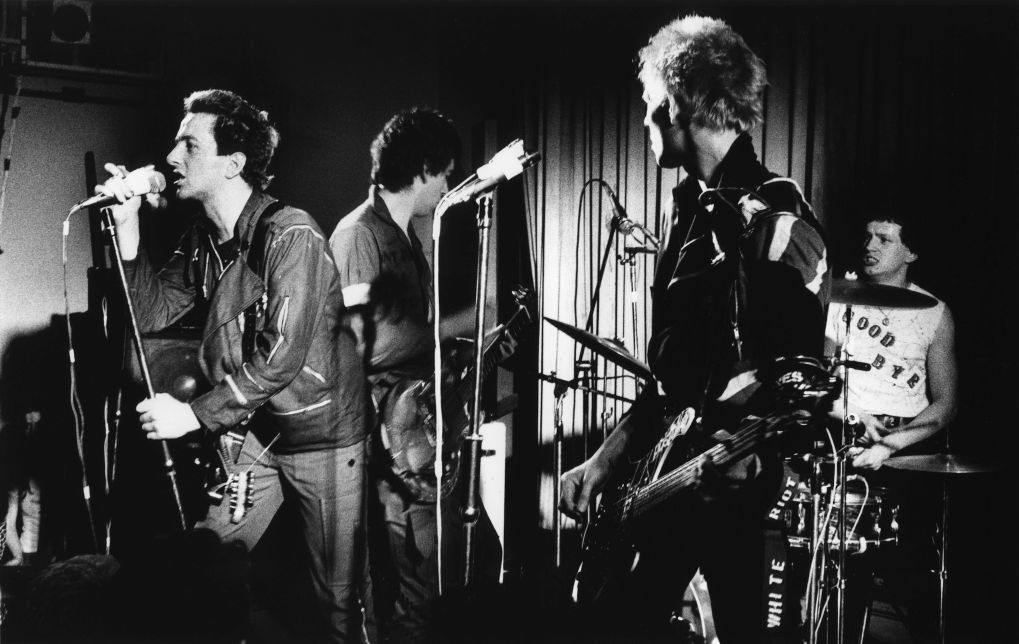
1976 is widely recognized as the moment when British punk was born. The many nostalgic tributes marking its 50th anniversary illustrate how the mainstream tries to co-opt a subculture, and how its subversive spirit tries to resist. (Julian Yewdall / Getty Images)
On December 1, 1976, the Sex Pistols appeared on British channel Thames Television’s Today program as a last-minute replacement. During the interview, host Bill Grundy provoked the band’s Johnny Rotten and Steve Jones into swearing live on air. By the next morning, the press had already fixed its verdict: punk was a subculture of “foul mouthed yobs” with colored hair and safety pins, and the moral panic spread accordingly. Gigs were canceled within days, and a scene until then confined to a small punk milieu was, almost overnight, elevated into a national phenomenon.
Fifty years later, that scene has become the subject of a very different kind of attention. This spring, Matthew Worley’s history of British punk, No Future (first published in 2017), was reissued with a new foreword by Paul Morley. History writing often gathers around commemorative milestones; this is itself a center of lively debate, both among historians and within the communities that went through the events in question. All too often, projects driven by this or that anniversary resemble a desperate search for the “event of the moment,” leaving little room for interpretations to settle or for knowledge to accumulate. Still, in the precarious world of academic labor, these moments are far from neutral. Anniversaries are often the only times when funding becomes available, making research possible and visible to a wider public.