Critics of AI Aren’t Anti-Tech Extremists
Recent US intelligence documents hype up the threat of “anti-tech violent extremist activity” against data centers. Casting protests as ideologically extreme is a shortcut to silencing critics of AI and removing democratic constraints on Big Tech.
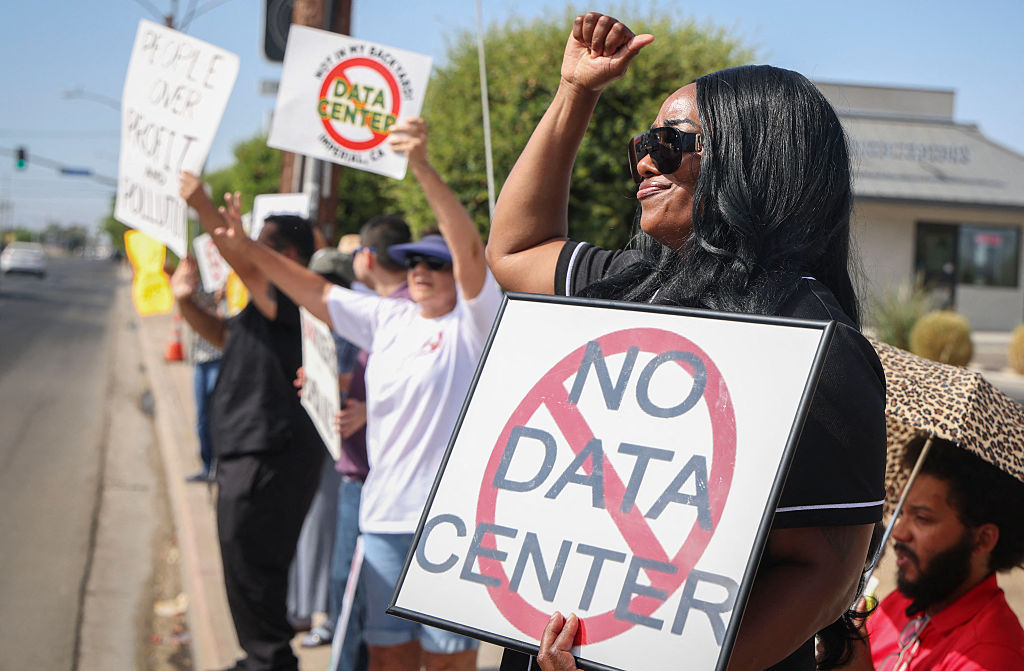
The barons of Big Tech claim that AI is so important to improving our lives that all objections simply pale in comparison. Some governments are buying the claim and taking it as reason to silence dissent against data center projects. (Sandy Huffaker / AFP via Getty Images)
The politics of artificial intelligence are entering a new phase. In the United States and beyond, communities are protesting data centers that are projected to triple water and electricity consumption by 2030, drive up utility costs, and harm the environment. Artists, journalists, and writers are suing AI companies for using their work without permission. Teachers are questioning whether generative AI is improving education. And workers in many fields are growing worried about automation, surveillance, and job loss or displacement.
These aren’t fringe concerns. In 2025 alone, 1,416 data centers were either already built or approved for construction across forty-five American states, triggering a wave of opposition over environmental impacts, quality-of-life concerns, and the growing concentration of corporate power. Similar battles are now emerging everywhere from Ireland to Mexico. Opposition to AI infrastructure is no longer a local dispute but an international phenomenon.
As resistance grows, however, so does the effort to label it. Different concerns — from water scarcity and job insecurity to surveillance and concentration of corporate power — are treated as a single obstacle to technological advancement. This absurdly broad category already has a name: “anti-tech extremism.”