Who Monitors the UAW’s Federal Monitor?

Shawn Fain’s reform administration in the United Auto Workers now finds itself locked in conflict with a federal anti-corruption monitor that Fain says is overstepping his bounds — including in opposing the union’s stance against Israel’s genocide in Gaza.
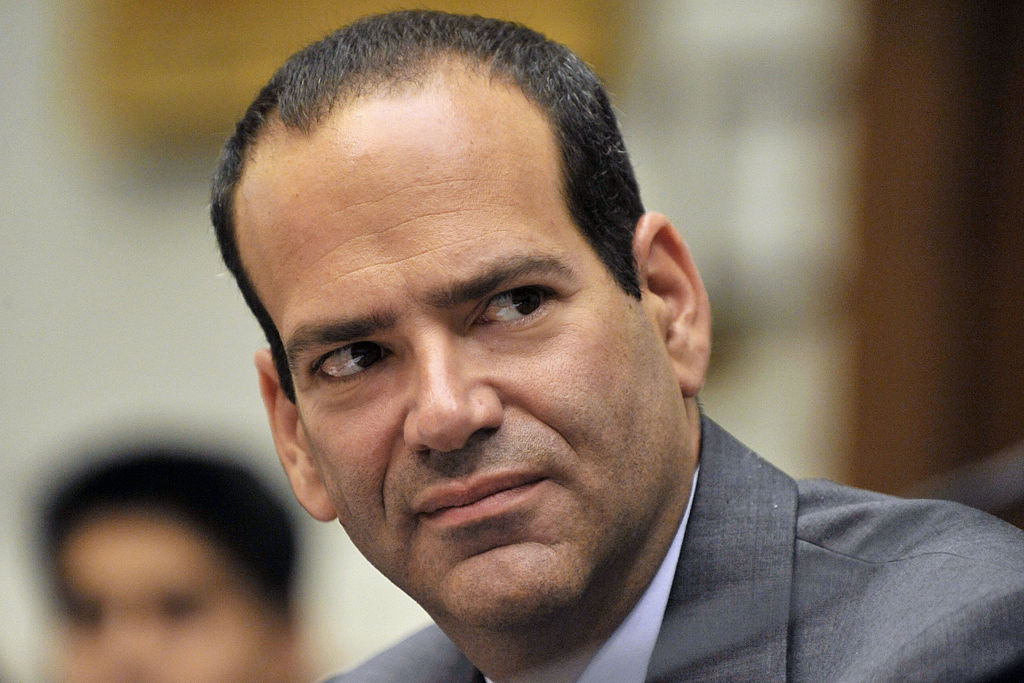
Neil Barofsky, then–special inspector general of the Troubled Asset Relief Program, testifies on Capitol Hill on July 22, 2009.

Neil Barofsky arrived at the UAW with a well-developed philosophy of oversight and no experience with unions. (Jay Mallin / Bloomberg via Getty Images)


The central questions confronting the United Auto Workers (UAW) are no mystery: Can the union organize the nonunion auto industry, particularly across the South? Can it bargain contracts that reverse decades of concessions? Can it rebuild the kind of shop-floor power that once made the UAW the country’s most influential industrial union? Those were the questions that propelled Shawn Fain and the Unite All Workers for Democracy (UAWD) reform caucus into office in 2023, and they remain the standard by which the administration will ultimately be judged.

Over the past two years, however, another conflict has increasingly intruded on that project. It is a growing fight over the role of the federal monitor installed after the UAW’s corruption scandals under previous union leadership — and whether an office created to investigate corruption has gradually assumed a much broader place in the internal political life of one of the country’s most important unions.

Until this week, much of that conflict had played out inside the union itself. Publicly, those at the center of those disputes said little, as criticizing the federal monitor risked becoming part of the record assembled by the very office whose authority they increasingly questioned.

That changed on Wednesday. Hours before the monitor, Neil Barofsky, released his latest report, UAW President Fain publicly accused him of attempting to influence this fall’s election for the union’s top offices.

Barofsky’s report stems from a complaint filed by UAW Vice President Rich Boyer after Fain removed him from oversight of the union’s Stellantis Department. Last week, delegates to the UAW’s constitutional convention nominated candidates for the union’s top offices, setting this fall’s election in motion. Boyer was nominated to challenge Fain for the presidency.

“More than two years after becoming aware of Vice President Boyer’s allegations, and on the eve of our election, Mr Barofsky has chosen to publicly release a politically charged and false report about me,” Fain said. “The most reasonable conclusion is that he is playing political games and abusing his power.”

Barofsky’s report concludes that Fain retaliated against Boyer, abused the authority of his office in matters involving his fiancée and her family, and should face possible further disciplinary proceedings. Fain rejects those findings in their entirety. Under the consent decree, Barofsky can investigate elected officers, recommend discipline, and refer matters to the Justice Department. The possibility that he might exercise those powers carries enormous weight inside the union. The members also pay for that authority. As labor historian Nelson Lichtenstein noted in New Labor Forum, Jenner & Block, the law firm where Barofsky is a partner, billed the UAW more than $25 million for the monitorship during the four years ending in 2025.

But focusing only on the latest report obscures the larger story. The conflict confronting the UAW did not begin with Boyer’s complaint, nor is it principally about the factual disputes contained in Barofsky’s latest report. It is about how an institution created to root out corruption has come to occupy an unusually expansive role inside the union.

The Monitor’s Mandate

The federal monitorship was born out of necessity. Years of embezzlement, bribery, and the misuse of members’ dues culminated in the convictions of two former UAW presidents and numerous other officials. The 2021 consent decree that resolved the government’s civil case installed an independent monitor charged with investigating corruption and enforcing the terms of the settlement. The consent decree also entailed a referendum on the question of direct elections for the union’s highest leaders. When the votes were tallied, 63 percent were in favor of the change; the union’s prior delegate system had been a key mechanism through which the old-guard Administrative Caucus had consolidated power.

In the union’s first direct election, held in 2023, Fain and the UAWD caucus narrowly defeated the old guard on promises to break with concessionary bargaining, organize the nonunion auto industry, and rebuild the UAW into a fighting union. The administration’s victories in the Stand Up Strike and the organizing win at Volkswagen’s Chattanooga, Tennessee assembly plant made it the most closely watched reform project in organized labor.

Barofsky arrived at the UAW with a well-developed philosophy of oversight and no experience with unions. As the first special inspector general overseeing the Troubled Asset Relief Program after the 2008 financial crisis, he made his reputation through repeated clashes with Treasury officials over the administration of the bank bailout. Throughout his memoir, Bailout, he presents conflict with the institutions he oversaw as the inevitable consequence of taking oversight seriously.

The origin of Barofsky’s escalating conflict with Fain had little to do with the financial corruption the monitor was tasked with investigating. On December 1, 2023, the UAW called for a ceasefire in Gaza. Twelve days later, on the eve of a Capitol Hill press conference where Fain was scheduled to speak about the resolution, Barofsky called him, saying he was speaking “strictly in a personal capacity,” to urge him to reconsider the union’s position. In the conversation, the monitor said his children had been “harassed” by UAW members who opposed Israel’s genocide. As Lichtenstein recounted, the insinuation that the union’s position was antisemitic didn’t sit well with Fain: as he said at a later executive board meeting, “For anybody to ever f–king say I’m antisemitic, brother, I’ll fight your ass in front of this building in a heartbeat.”

For many in the reform administration, that episode marked the point at which the monitorship ceased to feel confined to policing corruption and began to look like an institution intervening in the union’s political life.

The monitor’s office soon opened investigations involving Secretary-Treasurer Margaret Mock, staffing decisions, internal appointments, executive board disputes, and eventually Rich Boyer’s removal from oversight of the Stellantis Department. Some of those disputes had little resemblance to the corruption that prompted the consent decree: Mock’s conflicts with Fain increasingly centered on her insistence that expenditures and organizing budgets receive detailed scrutiny before approval, while Fain and his allies argued that the administration needed greater flexibility to hire staff and move resources quickly into bargaining and organizing campaigns. Other investigations concerned appointments, departmental assignments, and executive board decisions that ordinarily fall within the discretion of elected leaders.

The monitor’s own reports increasingly shift from questions of elections, ethics, and compliance toward detailed examinations of disputes among the union’s elected leadership. Taken together, they reflect a monitor increasingly involved not simply in rooting out corruption but in disputes over how the reform administration governed the union.

Federal oversight of unions is rare but not unprecedented. The International Brotherhood of Teamsters (IBT) has operated under a federal consent decree since 1989 after a racketeering case brought under the Racketeer Influenced and Corrupt Organizations Act (RICO). That decree created independent institutions to investigate corruption, supervise elections, and adjudicate internal charges while leaving the elected leadership to govern the union. The arrangement became the backdrop for one of the most significant union reform movements of the late twentieth century, led by Teamsters for a Democratic Union (TDU).

Ken Paff, the longtime national TDU organizer, spent decades working under the IBT’s federal consent decree. When asked to compare the two monitorships, he told me, “The UAW situation seems different, and troubling. The monitor seems to have rather unlimited power.”

Paff points to the structure of the Teamsters’ consent decree itself. “The current Teamster monitors are the Independent Investigations Officer and the Independent Review Officer,” he said. “Both are former federal judges. They don’t issue broadsides against Teamster leaders, but investigate corruption, and the IIO can bring a charge, and the IRO is the final judge of it. They have no authority to tell the IBT leadership who to appoint to what position and don’t try to inject themselves into a Teamster election.”

That distinction is built into the consent decree itself. The Justice Department envisioned a system in which the monitor investigates and, where appropriate, brings charges before an independent adjudicator. As union democracy lawyer Cathy Highet told Labor Notes, “Court-appointed monitors only have the authority given to them by the court, and it’s important they limit themselves to that role rather than trying to run the union. . . .  The Monitor has the authority to bring ‘charges’ against officers. Then the officers have a right to a trial by someone else, with a just-cause standard. In other words, the Monitor is a prosecutor, not a judge.”

The Boyer Report

In May 2024, Fain removed Boyer from oversight of the union’s Stellantis Department, accusing the vice president of concealing bargaining concessions, mishandling negotiations over the Kokomo battery plants and the reopening of Belvidere Assembly, delaying profit-sharing payments for supplemental workers, and otherwise failing in his responsibilities. Under the UAW constitution, a finding of dereliction of duty permits the president to remove an officer from a department. Boyer denied the allegations and filed a complaint with the federal monitor.

Two years later, Barofsky concluded that the documentary record did not support the case Fain presented to fellow members of the international executive board. Drawing on emails, bargaining records, text messages, and witness interviews, the report argues that the administration was aware of key bargaining developments it later claimed Boyer had concealed, found no evidence that Boyer secretly accepted the concessions cited by Fain, and concluded that the stated rationale for his removal did not match what investigators uncovered.

Instead, the report argues that Boyer’s removal followed disagreements over staffing inside the Stellantis Department and disputes surrounding a health and safety settlement at Warren Stamping. It ultimately concludes that the removal formed part of what it describes as “a recurring pattern of retaliation” against officials who challenged the president. The report also finds that Fain improperly sought bonuses that would have benefited his fiancée and misused the authority of his office in matters involving her sister.

Those findings may have merit. But they also come after two years in which Barofsky’s office had become deeply involved in disputes over staffing, appointments, political resolutions, and the day-to-day governance of the union. For Fain and his allies, the issue is therefore no longer only the substance of the report. It is whether the monitor can still be understood as an independent investigator rather than another participant in the conflict.

Fain has rejected the latest report’s conclusions in their entirety. Yet the significance of the report lies not only in the findings themselves. Released just as ballots are about to be mailed in the union’s presidential election, it ensures that the monitor’s conclusions will become part of the campaign between Fain and Boyer.

When I asked Paff about the report’s timing, two years after Boyer’s allegations and days after Boyer emerged as Fain’s likely most substantial challenger for the union’s highest office, the TDU leader did not mince words. “Clearly he wants to tip the scales against Fain, who he politically dislikes,” said Paff.

Whatever members ultimately make of Barofsky’s findings or Fain’s response, the dispute has increasingly consumed a reform administration elected to tackle a different set of problems. The need to accomplish those aims has only become more urgent. As Chris Townsend recently observed, “One thing the federal monitor . . . will not investigate is the fact that the UAW has lost 80 percent of its membership in the last fifty years.” The UAW still has hundreds of thousands of nonunion auto workers to organize, employers determined to reduce labor costs, and an industry undergoing sweeping reorganization.

The reform movement in the UAW was elected to reverse decades of decline. However this fall’s election turns out, the union will still face the same unfinished work: organizing the vast nonunion auto industry, bargaining contracts that restore workers’ power on the shop floor, and building the kind of fighting organization that made the union a force in American life. Those priorities have increasingly been displaced by a monitor who has expanded his role far beyond policing corruption and into the day-to-day political life of the union. The longer that continues, the harder it becomes for the reform movement to focus on the work it was elected to do.