The UAW’s Reform Process Is Being Put to the Test
When Shawn Fain was elected UAW president in 2023, hopes were high that he could reshape America’s most important industrial union. His successes have been undeniable, but they haven’t come without internal conflicts.
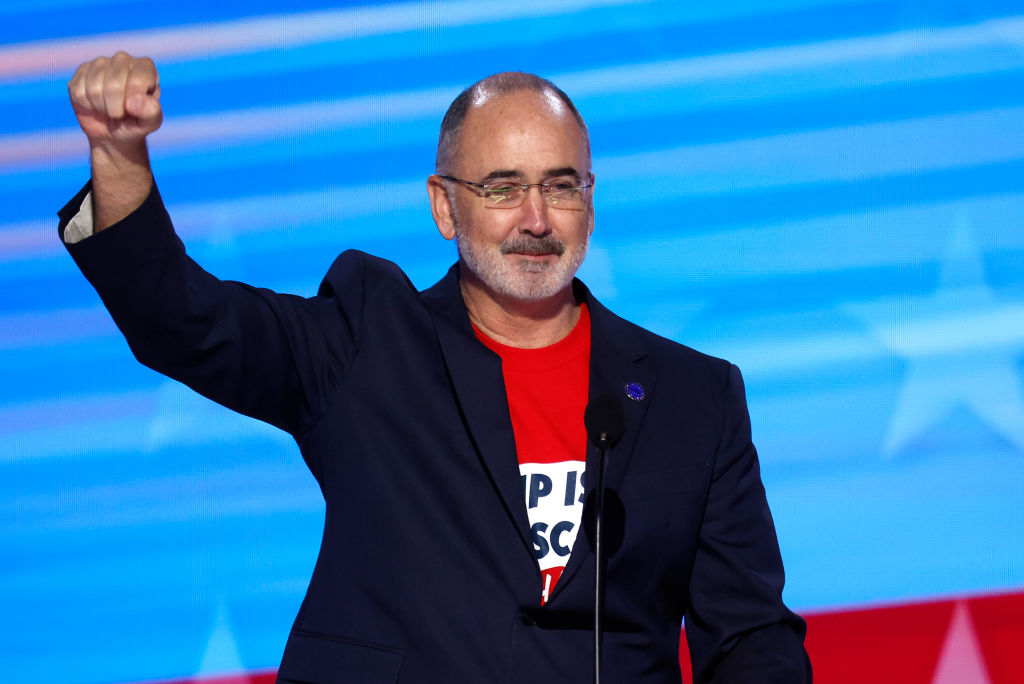
When the UAW assembles this June for its first constitutional convention since reformer Shawn Fain was elected union president three years ago, it will confront the significant internal strike that has wracked the union in that period. (Chip Somodevilla / Getty Images)
The strength of a union and its leadership can be gauged most accurately when the headwinds are strongest: when political opponents command the White House and Congress, when the economy sours, employers play hardball, layoffs proliferate, and new organizing drives stall out. Many American unions confront that situation today, but members and leaders of the United Auto Workers (UAW), who assemble this June for their first constitutional convention since reformer Shawn Fain was elected union president more than three years ago, might be feeling it more acutely than anyone else in the labor movement.
At the convention, almost a thousand delegates will debate a wide variety of topics, from the level of strike pay and union dues to a ban on hiring most non-UAW members on to the union staff. There will be speeches on how to stop layoffs in UAW organized factories and how to get the organizing drive in the South going again. And once the convention is over, we’ll also know who is running for top office in the union. Fain and his team of thirteen executive board candidates, dubbed the “Stand Up Slate” after the 2023 “stand-up strike” against the Big Three automakers, will face opposition. Still, his team is likely to retain control of the union after October 2026, when a government-appointed monitor counts the mail-in ballots sent to upward of a million UAW members and retirees in the weeks before. After conversations with scores of unionists in recent weeks, Fain says he feels “confident” about the outcome.
But just holding office is hardly the point. Fain and most of those who backed him have sought to make the UAW once again synonymous with working-class power and militancy and transform the union into the “vanguard in America,” a phrase coined by Walter Reuther, the UAW’s legendary president, right after his caucus won full power in the union in 1947. That ambition has set a salutary standard for all labor partisans, but it has been thwarted by obstacles arising from within the union and without, circumstances and problems that in one degree or another bedevil all progressive insurgents who find themselves in high union office.