Finland’s Ultranational Pastime
PastimeMeet pesäpallo, a surreal twist on baseball dreamed up by a right-wing, anti-communist Finn.
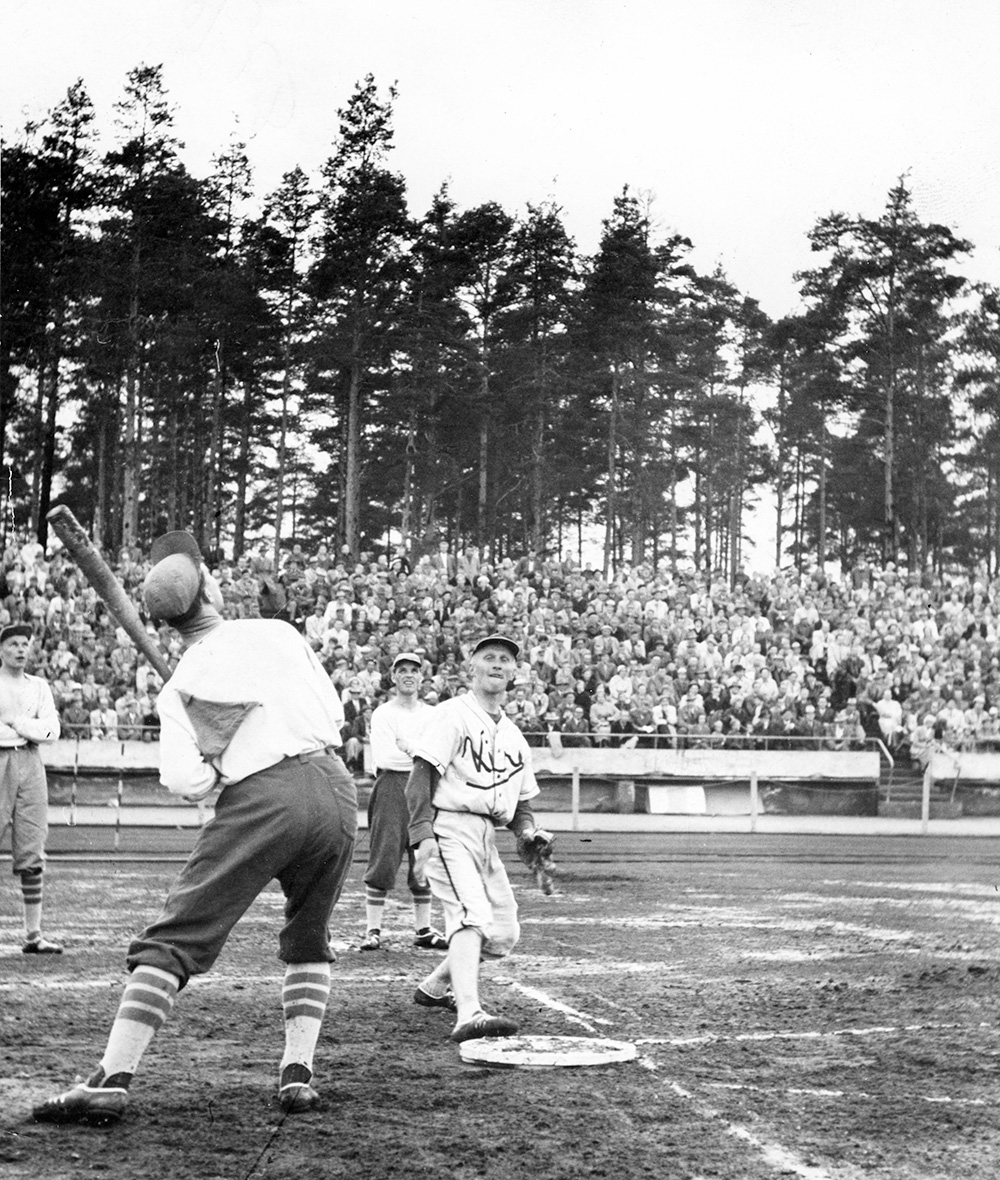
(Wikimedia Commons)
In 1907, the Finnish track athlete Lauri Pihkala visited the United States and watched a baseball game. He found the pace far too slow, but he immediately grasped the spirit of baseball. “I don’t think any other object is quite as appealing to a child, especially a boy, as a bat and ball,” he later remarked. By making a few tweaks to America’s national pastime, Pihkala would go on to invent Finland’s national sport, the game of pesäpallo.
Baseball would have to wait a while for Pihkala’s improvements, though. Not long after the October Revolution in Russia, civil war broke out in Finland. Pihkala served as a propagandist for the Devils of Kuhmoinen, an infamous White Guard unit responsible for the massacre of eleven patients and two attendants at a Red Guard hospital. His brother became a prominent right-wing activ-ist following the White victory, while Pihkala abandoned overt politics. Instead he promoted eugenics and sports, hoping that athletics would strengthen the military and instill national virtues in the defeated working classes.
Introduced to the people of Helsinki in 1920, pesäpallo is a faster and weirder version of base-ball. The pitcher stands next to the hitter and lobs the ball up over the plate, guaranteeing a hit on virtually every play. There are no outside-the-park home runs, and the bases are arranged on a zig-zag path at an increasing distance from one another. Because it’s easy to get a hit and power is at less of a premium, strategy comes to the fore: batters aim the ball to evade the outfielders, who adapt their formation to counter the hitters’ tricks. Rather than sitting in a dugout, the offensive team hud-dles around the plate, heckling the pitcher as their coach calls plays using a multicolored fan.