Federalism Is a Disaster for the Working Class
American federalism is often touted as a source of local democratic engagement, political innovation, and responsive public policy. But in practice, it has served as a laboratory of autocracy and inequality.
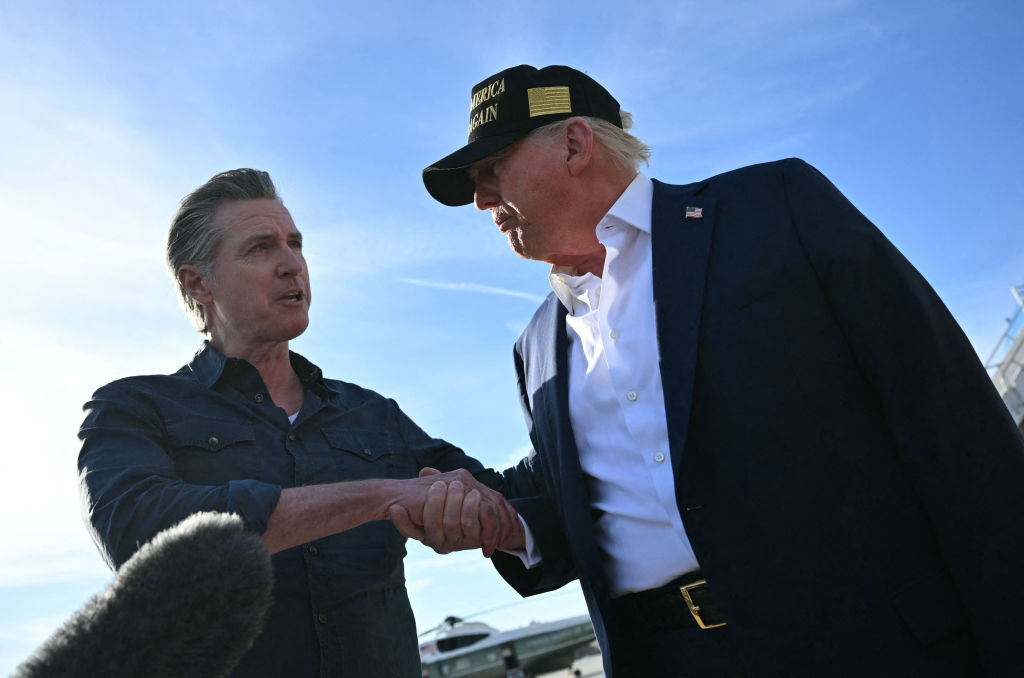
Federalism doesn’t bring government closer to the people. It just gives the working class fifty ways to lose. (Mandel Ngan / AFP via Getty Images)
Democratic capitalism poses an enduring contradiction. At certain moments, the “democratic” side of that equation can operate to ensure that the “capitalist” side is more equitable. But by almost any measure, the American version of democratic capitalism is remarkable for its firm commitment to the capitalist side of that compromise and a correspondingly weak commitment to productive democracy.
The New Deal order and the social movements that gave it meaning now seem like a momentary exception in a long march of unbridled accumulation and neoliberal rule. Modern American political history plays out like endless variations on a “why no socialism?” riddle whose solution is at once elusive and overdetermined. The many failures of progressive politics, and the ease with which its few successes have been rolled back, reflect a wide array of political obstacles, hurdles, and choke points. One of the most important of these is federalism.
In its idealized and abstract form, American federalism parcels out political responsibility across tiered jurisdictions (federal, state, local) in the pursuit of three interrelated goals. First, it promises democratic engagement and political responsiveness by vesting responsibility in the smallest practical unit of government, confining the federal role to those realms (national defense, interstate commerce) beyond the capacity of individual states or localities. Second, federalism envisions state governments as guarantors of liberty, protecting ordinary citizens — and especially regional minorities — from the tyranny of national rule. And third, federalism is routinely lauded as an opportunity for policy competition, innovation, and diffusion across state-level “laboratories of democracy.” Federalism, in this view, structures political representation at a scale large enough to accomplish policy goals but small enough to ensure a nimble response to policy challenges and a meaningful civic connection between the government and the governed.