Why We Should Care About American Federalism
In the face of climate crisis and police killings, thinking about American federalism can seem terribly boring. But the fragmentation of the US state and the dilution of popular power are at the root of many of our most pressing problems — and we desperately need fundamental changes to the country's constitutional order.
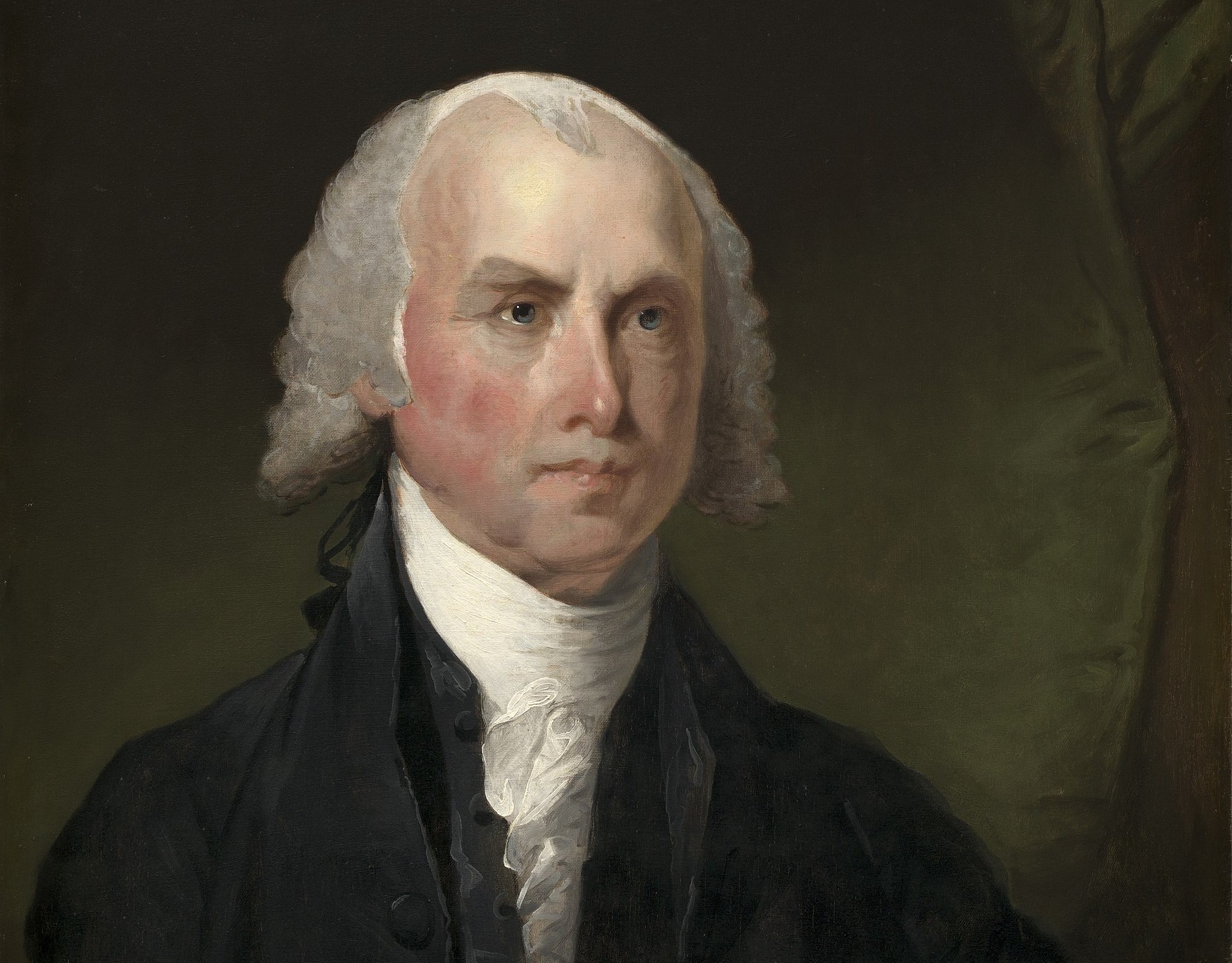
James Madison, by Gilbert Stuart. Wikimedia Commons
Charles de Gaulle, former President of France and the architect of its Fifth Republic, once asked: “how do you govern a country which has 246 varieties of cheeses?” It’s a colorful complaint, but when it comes to governmental fractiousness France has nothing on the United States. France may have 246 varieties of cheeses, but as the political scientist Theodore Lowi put it, in “France there is no Republic of Brie or a Republic of Camembert or a Republic of Roquefort, but in the United States there is a Republic of Alabama, a Republic of New York, a Republic of California.”
Each of the US states are sovereign in their own domain, including the authority to raise their own tax revenue and police their own territory. The fifty states also contain within their borders a kaleidoscopic array of local government units. According to the Census Bureau, there are roughly 90,000 total governmental units in the US: counties, municipalities, townships, special districts, and independent school districts, all with various degrees of fiscal and administrative autonomy. Illinois alone has roughly 7,000 local governments, while Texas and California have over 1,000 independent school districts each.
The extreme fragmentation of law enforcement authority is one of the most overlooked aspects of the country’s policing crisis. There are roughly 18,000 police departments throughout the country, each with its own set of rules and guidelines. Any attempt to radically transform policing in America will have to run this exhausting gauntlet of decentralized authority.