Europe Doesn’t Know How to Respond to China
The European Union’s top diplomat Kaja Kallas says Europe needs to take painful steps to overcome the “cancer” of dependency on China. The EU is talking about protectionism, but in reality its firms are addicted to low-wage labor outside the bloc.
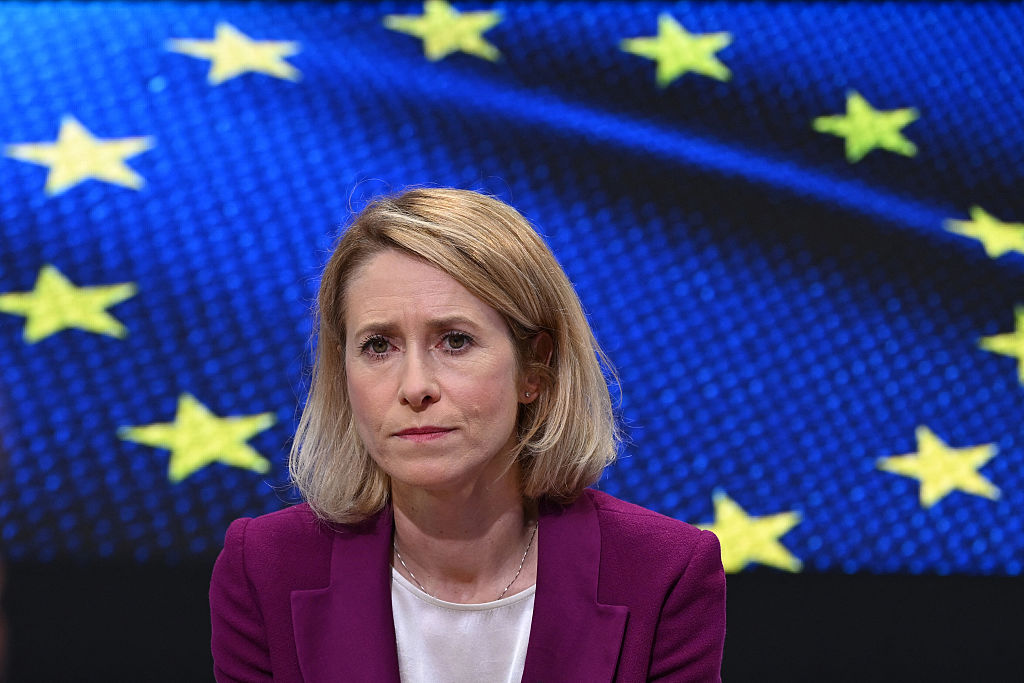
Europe is slowly learning the lessons of China’s interventionist industrial policy. The problem is that it has nothing like the conditions that allowed China to become a tech superpower. (Nicolas Tucat / AFP via Getty Images)
The European Union’s top diplomat, Kaja Kallas, has again gained attention for provocative statements about China. In remarks last month, she compared the EU’s economic relationship with China to a “cancer,” arguing that Europe must endure the painful “chemotherapy” of export controls, investment screening, and supply chain restructuring.
Her attitude highlights a rhetorical turn toward economic independence, recognizing the EU’s inability to manage the consequences of global capitalism. Faced with China’s growing technological and industrial power, officials in Brussels have launched industrial initiatives, discussed new trade restrictions, and sought to strengthen domestic manufacturing. Across the Atlantic, the United States has pursued similar goals through tariffs, industrial subsidies, and efforts to bring production back home.
Over the last few years, the EU has made attempts to reposition itself as an economic powerhouse, in light of member states’ growing dependence on China’s exports and the Chinese market. Official Eurostat numbers tell a stark story. In 2024, EU imports from China reached €517.8 billion, as against €213.3 billion in EU exports to that country, leaving a goods deficit of €304.5 billion. That deficit had climbed to €98 billion in Q1 2026 alone, the highest since Q3 2022. China is now the EU’s largest source of imports, and the gap of export deficits keeps widening.