The End of the Old Economic Order Is an Opening for the Left

Ha-Joon Chang

For decades, the rules of the global economy — and the economics discipline — seemed fixed. But now, with Donald Trump’s help, the edifice is collapsing. We talked to heterodox economist Ha-Joon Chang to understand dying dogmas and emerging alternatives.
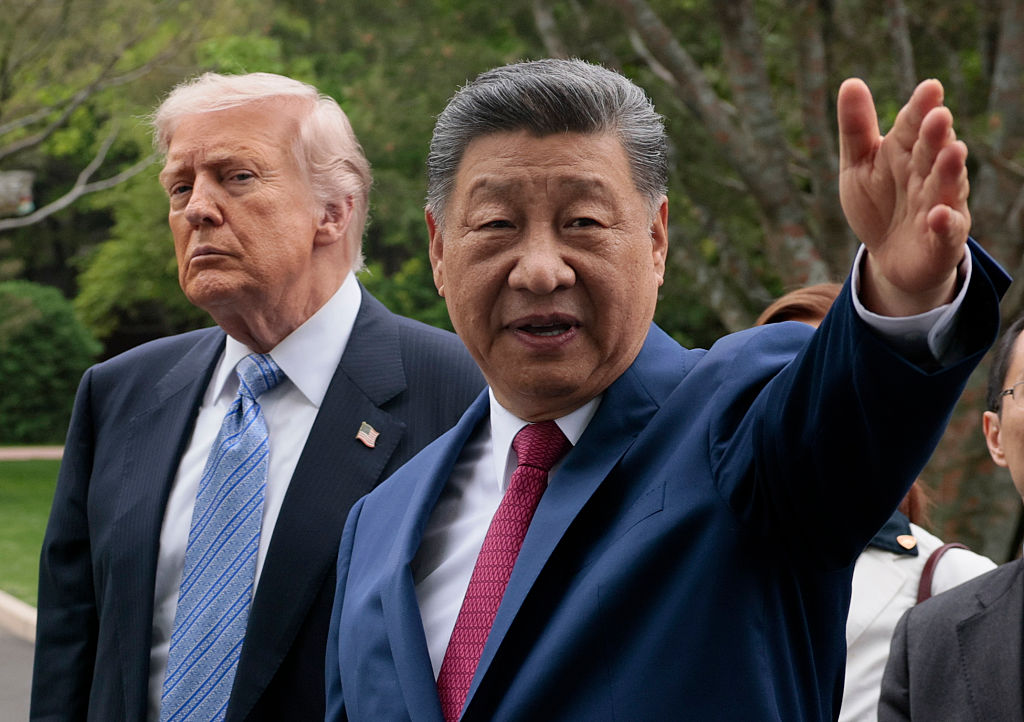
US President Donald Trump and Chinese President Xi Jinping tour Zhongnanhai Garden on May 15, 2026, in Beijing, China.

The world economy is being remade, and it’s not all bad, from new geopolitical openings for the Global South to industrial policy back on the table. (Evan Vucci-Pool / Getty Images)


Interview by
Asher Dupuy-Spencer

Ha-Joon Chang is one of the world’s most influential heterodox economists. A professor at SOAS University of London and the author of Kicking Away the LadderBad Samaritans, and Economics: The User’s Guide, among other works, he has spent decades challenging the development orthodoxy imposed on the Global South and exposing the myths at the heart of mainstream economic thinking.

Jacobin‘s Asher Dupuy-Spencer spoke with Chang about the state of the economics discipline, the narrowing of development pathways in the age of China, the prospects for left governments in the advanced world, and the economic consequences of the war in Iran.


Asher Dupuy-Spencer

I wanted to start with a question about the state of economics. There’s a prevailing view that the 2007–8 economic crisis threw the economics discipline itself into crisis. How true is that? How much has the discipline actually changed, and what does it mean for the class content of mainstream economics more broadly?

Ha-Joon Chang

Things have changed, but not a lot. One significant shift is what’s called the empirical turn. When I was doing my graduate work in the 1980s, there was a very clear hierarchy within economics whereby the less connected to reality you were, the cleverer you were. If you were clever, you did mathematical modeling — the more abstract, the better. Game theory, general equilibrium. If you weren’t quite at that level, you did macroeconomics — theoretically less robust, mathematically messier, but still technical enough. Below that, you did economic development or economic history. And if you couldn’t handle any of that, you talked to real people — case studies, interviews with trade union leaders. That was not considered economics at all.

Compared to that, there is now at least a recognition that economics has to engage with the real world. That’s an improvement. But has it changed enough? In the old hierarchy I described, econometricians and certain kinds of economic historians and development economists using quasi-experiments and historical data analysis have risen considerably. They are now seen as equals to those doing abstract work. But anything below that — historians relying on archival research, oral history, qualitative fieldwork, industry case studies, and interviews with policymakers — is still not considered legitimate. Empirical work, in the discipline’s current understanding, has to involve quantitative data and specific tools: econometrics and randomized controlled trials.

Asher Dupuy-Spencer

To what extent has the empirical turn put pressure on the hard core of the discipline — rational choice theory, general equilibrium, and the core assumptions about perfect markets?

Ha-Joon Chang

It hasn’t, really. Only quantitative treatment of data is considered legitimate. Even qualitative phenomena have to be converted into numbers — indexes of this, indexes of that. In the 1990s, when mainstream economists were grappling with the fact that African countries had faithfully implemented International Monetary Fund (IMF) and World Bank policy recommendations for twenty years with nothing to show for it, there was a sudden explosion of studies using an “African dummy” in regressions. Being in Africa makes you grow more slowly — we don’t know why, but here’s the coefficient. That is a clear sign that you don’t have a theory.

Asher Dupuy-Spencer

Or the corruption data, which was another variable they often used.

Ha-Joon Chang

Yes, and ethno-linguistic fractionalization, tropical climate, and so on. These things can be quantified to an extent, but their impacts are far too complex to be captured that way. According to the ethno-linguistic fractionalization index, Rwanda is actually one of the most homogeneous nations in the world, along with Korea.

Asher Dupuy-Spencer

And it doesn’t seem to have held back Belgium, for instance.

Ha-Joon Chang

Exactly. And for a while, there was a very popular theory arguing that geography is what matters most — that being landlocked is the worst thing that can happen to a country. But then how about Switzerland?

Asher Dupuy-Spencer

Austria and Switzerland are both landlocked, and Switzerland has ethno-linguistic diversity as well.

Ha-Joon Chang

Four official languages and no fewer than four civil wars. You need to be far more respectful of fine-grained narrative history and fieldwork-based case studies, because only those can really tell you what’s going on. If your theory is that being landlocked is bad, you have to explain Switzerland and Austria. You can’t dismiss them by saying they had navigable rivers, because many landlocked African countries also have rivers. So then you have to ask why rivers were developed in Switzerland and Austria but not elsewhere — and then you have to go through the whole history.

That’s a bit like explaining life on Earth by saying it came from an alien planet. You still have to explain how the neighbors became wealthy in the first place.

Asher Dupuy-Spencer

So what you seem to be describing is a process in which economists are confronted by data that confounds their theories, and rather than reappraising their core assumptions, they complicate the theories in order to preserve them.

Ha-Joon Chang

What I call drawing epicycles. The geocentric astronomers couldn’t reconcile their theory with observational data from better and better telescopes, so they said: actually, the planets don’t just orbit in circles — they loop and then loop again.

Asher Dupuy-Spencer

Anything to avoid heliocentrism.

Ha-Joon Chang

Exactly. The theory was constructed by stripping away everything except the timeless, selfish, rational individual. The entire theoretical edifice was built on that assumption. And now they are attempting to reinsert history, politics, institutions, conflict — but that’s not the same as a theory that was developed with those things in mind from the start. The result of all this is that you have people mobilizing enormous amounts of data and using the most sophisticated techniques, only to arrive at either banal conclusions or conclusions that help neoclassical economics maintain its core assumptions.

So many of these supposedly original findings are things that Marxists, institutionalists, and structuralist Keynesians have been saying for decades — they’re only accepted now because they’re expressed in neoclassical language using approved techniques. One recent winner of the John Bates Clark Medal wrote about the lasting disadvantage caused by the mita forced-labor system in Latin America. Well and good, but this problem has been pointed out by Latin American historians and economists for at least a couple of centuries. These economists may actually agree with conclusions that radical economists reached long ago, but they feel compelled to express them in neoclassical language with quantitative tools to be taken seriously. For me, this is like cracking a nut with a steamroller. Why do you need all of that to say such obvious things?

Asher Dupuy-Spencer

The classical avenues for development seem to be narrowing. It’s much harder to imagine a Kenya or a Ghana exporting its way up the supply chain the way Taiwan or Korea did — partly because of China but also because of countries like Vietnam, which can now do low-wage manufacturing with superior infrastructure and deeper global integration. How helpful can this shift in policy orthodoxy actually be for the more underdeveloped countries?

Ha-Joon Chang

Yes, Olivier Blanchard says interesting things about inequality and structural weakness. But is it filtering down? The person running the country office in Malawi might still be steeped in 1990s orthodoxy. You have to distinguish between the pronouncements of the chief economist on one hand and actual practice on the ground on the other. The IMF was insisting that developing countries open their capital accounts right up until the financial crisis. Since then, it has officially changed its position. But the Center for Economic and Policy Research documented that in the IMF packages issued after that change, across many dozens of programs, capital controls were permitted only on two occasions. The gap between what is announced at the top and what happens on the ground is real.

Asher Dupuy-Spencer

But industrial policy does seem to be back — from the United States to China.

Ha-Joon Chang

You need to understand the economics debate as a political debate, because there’s so much at stake. These people are changing their tune mainly because the American government has changed its tune. Suddenly there are experts on industrial policy everywhere — including people who used to actively denounce it. Having said all that, I’m actually quite optimistic. On your question about China: yes, it looks dominant, and it seems impossible that anyone could industrialize in that context. But go back to 1950, the United States produced 60 percent of world manufacturing. Today China accounts for only about 30 percent. In 1950, if any other country had thought it could industrialize, people would have said it was madness.

Asher Dupuy-Spencer

And yet you had the thirty glorious years — the postwar boom in France, Germany, and Italy. Countries that successfully industrialized in America’s shadow.

Ha-Joon Chang

Yes, it happened, and now the United States produces only about 16 percent. The fact that someone is far ahead doesn’t mean you can’t catch up. When South Korea tried to enter automobiles, shipbuilding, and steel, everyone said there was already overcapacity. And yet the Koreans went in and essentially destroyed the European shipbuilding industry. You cannot simply say it can’t be done.

China will shed a lot of low-wage employment, and some countries have already taken advantage of that. China has now opened its market to African countries, giving most of them tariff-free access. And China’s development of renewable energy has driven down the cost of solar and wind to the point where they are now the cheapest forms of energy. Many developing countries — Nigeria, South Africa, Pakistan — are installing renewable energy on a massive scale precisely because China is producing these technologies so cheaply. You shouldn’t see China purely as an obstacle. In the early 1960s, Korea’s per capita income was at the same level as Nigeria’s — less than half of Ghana’s, a third of Senegal’s.

Every time a new country succeeds through exports, people say the markets are saturated. I remember a famous paper by the American economist William Cline, published in 1982, arguing that East Asian export penetration of Western markets had reached a critical level and that export-led growth would henceforth be very difficult. And then, in the next thirty years, China — an economy five times larger than all those countries combined — came along and succeeded on exactly that basis.

Asher Dupuy-Spencer

Right, that argument did not age well. Now I want to change gears. What are the prospects for left governments in the advanced world? Are macroeconomic constraints genuine roadblocks to left policy, or are there ways around them?

Ha-Joon Chang

There’s always the burden of incumbency. If you have inflation while you’re in government, you get voted out — as Joe Biden was — even if it wasn’t entirely your fault. But I don’t think left governments should be especially pessimistic, because any government in power is vulnerable to that.

Having said that, when a government comes in, finance capital makes sure it behaves by threatening to sell bonds, pull capital out, and so on. But if you immediately capitulate — as the current Labour government in Britain has done, essentially saying, “You’re right, we’ll do whatever you want” — you get discredited and lose the ability to do anything else. A government should make a more positive, bold argument: we want to rebuild the economy; taxing and redistributing more for productive purposes — infrastructure, health, education, skills — these are things that even a right-wing economist should be able to support.

And you have to push the boundaries. If there’s inflation, use price controls. Put a windfall tax on the rich. When Britain threatened a wealth tax, I think only one prominent person actually left the country.

Asher Dupuy-Spencer

The price control question is another one like industrial policy — something that was only discussed in the margins and is now being seriously considered again. I remember Isabella Weber was attacked by everyone when she raised it. Now you can’t get her on the phone because she has so many speaking engagements.

Ha-Joon Chang

And put extra taxes on the oil companies making windfall profits from this war. Above all, you need to offer a more aggressive long-term vision. Remind people that things don’t have to be like this. Most people don’t know that between the mid-1940s and the late 1960s, the top income tax rate in the United States was 92 percent — higher than in Britain, higher than in Sweden. Now Warren Buffett is saying, “Please tax me more, because I pay less than my cleaner.”

And bring in examples from other countries. My favorite is Singapore — not socialist in any straightforward sense, but 90 percent of the land is owned by the government, 85 percent of housing is supplied by a government-owned corporation, and over 20 percent of GDP is produced by state-owned enterprises, including Singapore Airlines. People talk about Singapore’s low-income taxes — the top rate is 24 percent — but they don’t know about the forced savings scheme under which everyone under roughly sixty has to put 30 percent of their income into an account that can only be used for health, education, and retirement. So for top-rate taxpayers, 60 percent of their income is effectively not at their disposal. When the Brexiteers said they wanted to make Britain “Singapore on the Thames,” I couldn’t stop laughing — because if you actually want to be Singapore, you’d have to start by nationalizing 90 percent of the land.

Asher Dupuy-Spencer

Before we run out of time, I’d love to give you a chance to discuss the future of the global economy and the impact of the war in Iran.

Ha-Joon Chang

In the long run, Donald Trump could turn out to be a good thing, because he has completely shaken the world order. The United States has been slowly disengaging from the multilateral system it built. Trump is now going all out to destroy it. He has effectively blown the lid off industrial policy. The sociologist Fred Block wrote a great deal about the hidden developmental state, and now there isn’t even a pretense. Europeans are doing their own thing, and this has opened ideological space for developing countries.

And because Trump has been so hostile to everyone, people are beginning to think seriously about a world economy in which the US plays a much less central role. The United States may still produce around 25 percent of world GDP, but in terms of international trade it accounts for only about 11–12 percent, because it is a relatively closed economy. And until the 1970s, there were many things you had to buy from America — semiconductors, supercomputers, color televisions. Now, is there anything you absolutely have to buy from the US?

Asher Dupuy-Spencer

Certain financial services.

Ha-Joon Chang

Yes, financial services — and platforms. But a lot of countries are now daring to think about an alternative economic order. And for the developing world in particular, there is a greater material basis for becoming more independent from the Western-dominated order than there has ever been.

Asher Dupuy-Spencer

It sounds like you are saying that the costs of the dollar system now outweigh the benefits of access to Western markets for certain poor and developing countries.

Ha-Joon Chang

Yes, it’s moving that way, because more than half of Global South trade is now South-South. Now there are alternative financial institutions controlled by southern countries: the Asian Infrastructure Investment Bank, the New Development Bank, and the Development Bank of Latin America (CAF). When developing countries called for a new international economic order in 1974, there were practically no multinational companies based in the Global South. Now there are hundreds. You have the African Continental Free Trade Area and the expansion of BRICS membership. The direction of travel is clear. And you can use that new position to extract concessions. If the World Bank offers you a loan with conditions you don’t like, you can say: we’ll go to the Chinese — they charge higher interest rates, but they don’t interfere in our domestic policy. That gives you leverage.

On the Iran war: you might worry that this becomes a rerun of the 1970s oil crisis. I don’t think so, because the world has changed. It’s not just oil we’re getting from that region. Korea and China are getting most of the helium they need to manufacture semiconductors from there. So when the region is caught up in conflict, the whole global economy suffers. And if this war is not resolved quickly, it will contribute to the popping of the artificial intelligence bubble. Energy markets are global — gas prices are rising in the United States because American producers are exporting to Asia where they can get higher prices.

Asher Dupuy-Spencer

Which means the chief beneficiaries are American energy producers, not American consumers.

Ha-Joon Chang

American energy producers and the Russians. And when you remember that AI is the most energy-intensive technology humanity has ever invented, you see how rising energy prices are going to hit it hard. Without helium, Korea and China cannot supply semiconductors at the volumes needed. And the Gulf countries have been among the largest investors in the US AI industry. All of these factors are going to contribute to popping the AI bubble. The United States has, in recent years, become something of a one-trick pony — it’s AI or nothing.

Asher Dupuy-Spencer

And non-AI investment looks absolutely anemic in the US.

Ha-Joon Chang

Exactly. This war is going to have an enormous impact worldwide. I’m not saying the crisis will be strictly a good thing. There will be hunger, possibly famine, in parts of Africa; a lot of people will lose their jobs if the AI bubble pops. But in the longer run, it may give us some opening to work toward building a different kind of order.