Remaking Globalization for an Era of Trade Wars

Michael Pettis

Few economists have had a greater impact on the way we talk about global trade and China’s role in the world economy than Michael Pettis. He spoke to Jacobin about Donald Trump’s tariffs and why inequality is at the heart of the trade war.
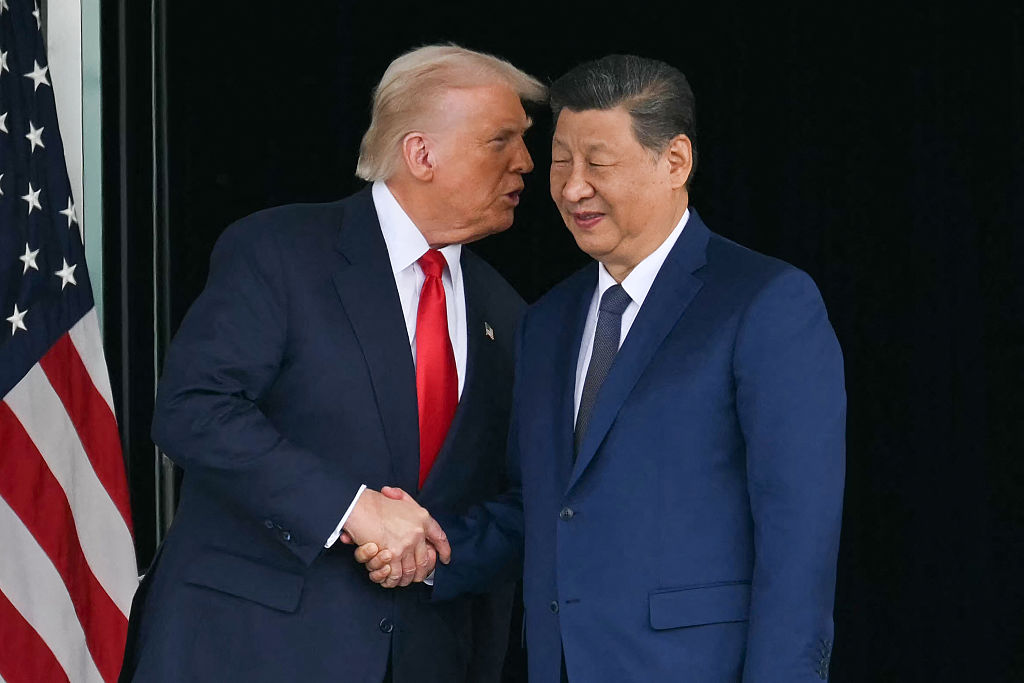
Liberals often dismiss Donald Trump’s trade war as irrational. But the deeper problem is that the free trade system itself has failed the world's working class, relying on rising inequality and the suppression of living standards. (Andrew Caballero-Reynolds / AFP via Getty Images)

Interview by
Dominik A. Leusder

Rising levels of inequality are the defining political and economic issue of our times. Middle- and working-class Americans, who a generation ago could afford to buy a home and save for their children’s college, are today struggling to make ends meet. Donald Trump owes his rise to power partly to his misdiagnosis of this malaise. Since the 1980s, he has argued consistently that trade deficits are at the root of the United States’ problems. In his view the chief culprit is China while the solution is tariffs.

There is much to fault in Trump’s account. Economist Michael Pettis argues that what is in fact distorting the US economy is global inequality, and that action needs to be taken to correct the imbalances that result from it. Mercantilist countries like Germany, Japan, and China, which aim to increase their wealth by increasing their exports, persistently consume much less than they produce and deal with the resulting excess by exporting goods and savings, principally to the United States. The refusal of national elites around the world to address growing inequalities has driven up costs for average Americans while undermining industrial production in the United States.

Pettis has been sounding the alarm about the unsustainability of global imbalances for more than two decades. He is the author of a number of books on the crisis of global finance and trade including The Volatility Machine, The Great Rebalancing and, most recently, Trade Wars Are Class Wars, which he coauthored with Matthew Klein. Western societies appear now to have reached an inflection point. It is unclear whether we will ever return to the post-1990s era of free trade.

In this discussion, Dominik Leusder pushes Pettis to explain his own position, questions some of his assumptions, and asks whether another globalization, one less dominated by unhindered capital flows and growing inequalities, is possible.


Dominik A. Leusder

Your work on trade has recently gained attention in US policy circles. Along with your coauthor Matthew Klein, you locate the origins of the current trade war in the growth models of large export-oriented economies such as Germany, Taiwan, Japan, and particularly China. Large and persistent imbalances in global trade and finance originate from “institutional distortions” in these countries. These take the form of weak welfare regimes and suppressed wage growth, which shift income to high-saving entities, such as firms and rich households, at the expense of workers. In other words: high inequality leads to a glut of savings in one sector and lower consumption in another.

In countries such as China, this is the result of concerted industrial policy: the “excess” of savings can be channeled into investment, and goods can be exported competitively. And China certainly is the most spectacular example of economic development driven by investment and net exports. But in a globalized economy, these domestic distortions are transmitted through the trade- and capital accounts, since globally savings and investment need to balance out the “excess” of both production and savings.

The United States, with its large capital market and consumer base, plays a singular role not just as a trading partner but as a destination of first choice for these “excess savings.” How do those capital inflows distort the US economy and how do they inform the current trade policy that we’re seeing?

Michael Pettis

A lot of this framework comes from John Maynard Keynes, and especially from one of his disciples, Joan Robinson. Unfortunately, because Robinson wrote a book on Marxist economics, she’s considered beyond the pale by a lot of mainstream economists. But her great strength was that she really understood the accounting identities, and she was incredibly logical. What Robinson wrote about is not necessarily about all economies, but about economies that don’t suffer from a savings constraint. In other words, she really wrote about advanced economies. According to Robinson, persistent trade surpluses are largely the result of what she called “beggar-thy-neighbor” policy. And what she meant by that is that in a well-functioning system, if the purpose of economic development is to maximize domestic welfare, then the purpose of exports is to maximize the value of imports. She argued that economies that are trying to grow especially quickly, can “opt out” or take advantage of the system.

This leads to a paradox, named after Robinson’s contemporary Michał Kalecki. The Kalecki paradox describes how it makes sense for an individual company to repress wages and thus increase its profit, but it doesn’t make sense collectively. Because if all companies repress wages, rather than becoming more profitable, they become collectively less profitable, because in advanced economies it is that drive in demand that in turn drives investment.

Dominik A. Leusder

This is what’s referred to as a “fallacy of composition,” the notion that what benefits or applies to one individual or sector or country will necessarily benefit or apply to the entire economy.

Michael Pettis

Yes. You can extend this to the global economy: globally, we are all better off if wages rise quickly, because rapidly rising wages means rapidly rising demand, and businesses respond to that rapid rise in demand by investing in increasing capacity. And because wages are rising, they invest in productivity-enhancing technology. It’s not an accident that in the nineteenth century, most American innovations were productivity enhancing. American wages at the time were the highest in the world. When you look at British technological innovation in the eighteenth century, much of it was organized around increasing the energy input, such as the steam engine, etc.

The Kalecki paradox applied to the global economy is that when global wages are rising, countries grow much more quickly because businesses are investing in productivity-enhancing ways of expanding production to meet very high demand. But if individual countries try to compete on cost by repressing wages they gain a greater share of global demand, but at the expense of long-term productivity and thus long-term growth.

Dominik A. Leusder

To clarify: by “productivity enhancing,” you effectively mean “labor-saving” investments in response to rising wages?

Michael Pettis

Exactly. The paradox is that if instead you repress domestic wages and use your earnings to subsidize, say, manufacturing, you will grow more quickly. The problem is that your production will grow faster than your demand. And because in a closed system you can’t sustainably produce more than you demand, you end up running a trade surplus. At some point you will have to cut back on production and allow unemployment to go up. But in an open system like the globalized economy, you can run a trade surplus.

Robinson argued that it was a bad thing — but that’s not necessarily true. You can export your excess savings to developing countries who can use it to increase domestic investment. Because they have high investment needs and typically insufficient domestic savings, the reduction in your domestic consumption will be matched by an increase in investment elsewhere. And the world is still fine. Demand continues to grow, and businesses have to respond to that growing demand by expanding production and expanding productivity.

The problem arises from exporting the savings imbalance to advanced economies that aren’t suffering from saving constraints. In other words, if you export your excess savings to England or Canada or the United States — which together account for two-thirds to three-quarters of all of the export of excess savings — your domestic imbalance is being absorbed by countries that don’t have saving constraints. In that case, investment doesn’t go up.

If savings go up in, say, Germany, then that is relative to German investment. If, say, Spain was a developing country whose investment was constrained by lack of Spanish savings, then, driven by German capital flows, Spanish investment could go up, and the world would be in a better place, right? More investment in a country that needed it and growth as a result. But if Spain isn’t savings-constrained, investment won’t go up. And because everything has to balance, something must happen to allow higher German savings to be matched by lower savings in Spain. So something else has to adjust, and there are various ways they can adjust.

Robinson argues that Spanish savings adjust through higher unemployment in Spain. When you increase your manufacturing growth by repressing wages, then an increase in exports earnings isn’t recycled back to workers in the form of higher income, and so consumption doesn’t go up and imports don’t go up. So Germany runs a persistent trade surplus with Spain. [In an ideal trading system which didn’t allow for “beggar thy neighbor”–style export growth, trade imbalances are more likely to equilibrate if a rise in German export earnings translated into a rise in domestic consumption to the point that demand for Spanish goods and services rises.]

Robinson was writing during the gold standard, a time in which credit growth was constrained. But of course, we live in a different world where you can expand credit. So Spain has an alternative to a rise in unemployment: a rise in debt by way of the fiscal deficit. This would raise domestic demand in Spain. So now we don’t have a rise in unemployment, but we have a rise in Spanish debt. In addition, the increase in demand caused by the increase in debt gets redirected away from the tradable goods sector to the service sector, causing inflation and a rise in asset prices.

This is the basic problem: if Germany runs an export surplus because of distortions in the way domestic income is distributed and exports the excess savings to Spain, and if Spain does not invest those excess savings because there’s no saving constraint on investment, then Spain must respond either with a rise in unemployment or with a rise in debt.

This is pretty much what happened. After the German labor reforms in the early 2000s, Germany became a surplus country. That money poured into Spain, and Spanish household credit expanded very rapidly, and Spain went into a fiscal deficit from a fiscal surplus. Once Spanish debt could no longer rise after the 2008 crisis, Spain still had to adjust. But then it adjusted in the form of a rise in unemployment.

The same holds true for South Korea or Japan: if they implement policies that lead to persistent surpluses, specifically surpluses driven by the repression of domestic wages, and if they then invest the proceeds from those surpluses in the United States, Canada, and the UK, then what we should see is that those countries run persistent deficits backed either by rising unemployment or, much more likely, by rising household or fiscal debt. This is exactly what happened.

Dominik A. Leusder

Is it fair to say that the structure of the EU’s monetary union prevented Spain from adjusting otherwise?

Michael Pettis

Yes. The rules of the eurozone made it hard. Before the euro, Spain could have adjusted by devaluing its currency or by changing domestic interest rates. So there were a lot of things Spain could have done, but with the existence of the euro, they couldn’t. And the important lesson there is not that the euro is bad. The important lesson there is that if your economy is open and you create a distortion in your internal account, it will create an external imbalance. And if mine too is an open economy, your external imbalance becomes my external imbalance, which means that my internal economy must shift in a way to accommodate that imbalance.

For example, if my country engages in industrial policy in order to increase the manufacturing share of my economy, then whether you like it or not, my industrial policy becomes your industrial policy in reverse. You must reduce your manufacturing share of your economy and shift from tradable goods to non-tradable goods, whether that’s your policy or not.

This argument was originated by both Joan Robinson and John Maynard Keynes. But more recently, Dani Rodrik has made a very similar point. He notes that in a hyper-globalized world, one in which frictional trading costs and frictional capital costs are very low, every country has to choose between more control over the domestic economy or more global integration. So if you and I both agree to choose global integration over economic sovereignty, we can have some kind of equilibrium. But if you choose global integration and I choose economic sovereignty, then I control both my internal imbalances and your internal imbalances.

Dominik A. Leusder

That’s the beggar-thy-neighbor aspect of it. But does it always have to be zero-sum? I’m thinking of the benefits that China’s industrialization has had for the developing world or Germany’s industrial expansion for Eastern Central Europe.

Michael Pettis

It can be a good thing or a bad thing. If I force my internal imbalances onto you, and you are a developing country, that could be a good thing for both of us. But if you’re not a developing country, then your industrial policy is the mirror image of mine. And presumably my industrial policy is designed to benefit me, so it may not benefit you.

Dominik A. Leusder

Now that we have the general contours of the argument, let’s focus on Sino-American trade. I want to hang a lantern on some of the empirical assumptions of your argument. You assume an underconsumption bias in the Chinese economy. A recent piece by economist Oliver Kim, highlighting earlier research, made the case that Chinese underconsumption may have been overstated, both by overstating GDP and undercounting consumption in various ways.

In that account, China looks like a relatively consumption-rich society. Do you think there’s a possibility that underconsumption isn’t as drastic an issue as you thought, and does your thesis hold?

Michael Pettis

I think it’s very likely, in fact. It’s what we saw in Japan in the 1980s and ’90s, in Brazil in the 1960s and ’70s, and in the Soviet Union. Namely, if domestic consumption is much higher than we think it is, there’s a puzzle. And there are only three ways you can resolve that puzzle: investment is much lower than we think it is; GDP is much higher than we think it is; or the country doesn’t actually run a trade surplus but a deficit. If you believe any of those things, then you can argue that consumption is much higher as a share of GDP.

But the problem is this: what do we mean by GDP? If Chinese investment were productive, then their measure of GDP would be correct. But as the Financial Time’s Martin Wolf asked about a month or two ago: How is it possible for a country to invest the equivalent of 43 percent of GDP and only grow by 5 percent?

Let’s look at Malaysia. At the peak of its growth, when it was growing much faster than China is growing today, investment was 33 percent of GDP at its peak. And that makes sense if you look at very rapidly growing countries with high productive investment — typically, investment is about 30 to 34 percent of GDP on average. It’s about 25 to 26 percent of GDP on average globally.

The only way you can resolve that very high investment with relatively low growth in China is by assuming that much of the investment isn’t productive. In practice this means that investment is unprofitable. One hundred renminbi of savings are invested but they create something only worth, say, eighty renminbi.

There are many reasons to assume that’s been happening. It is impossible for debt to rise faster than GDP, because the increase in debt should be matched or exceeded by economic growth. That was the case in China before 2007, where you had a rapid rise in debt but the debt-to-GDP ratios were pretty stable. It’s only after that you saw an acceleration in debt and a deceleration in GDP growth.

This cannot happen if you are investing productively. In a capitalist economy, nonproductive investment leads to insolvency. This is what economist János Kornai called a “hard budget constraint.” But in an economy with “soft budget constraints,” you don’t need to write your investment down. You can effectively pretend that investment is productive. In other words, you take one hundred renminbi of resources, you convert it into an investment project that only creates eighty renminbi of value, but you carry it on your books at one hundred renminbi. Now this changes your GDP calculation, because normally, when you take a loss, that’s a reduction in total GDP. And if you don’t take the loss, if you capitalize it, you’ll end up with a higher GDP than you would in a hard budget constrained economy. Hard budget constraints enforce discipline because, over time, nonproductive investment results in bankruptcy that effectively writes down the “fake GDP.”

If China’s GDP growth is much lower than the reported growth, then, it’s not because they’re lying. They’re calculating GDP the way the rest of us do. But this process can’t tell good investments from bad investments. Assume for a moment there are two Chinas that are identical in every way with only one difference. In the first China, you invest nonproductively but somehow you know you are and you immediately write down your investment. In the second Chin you don’t know. These identical Chinas will report very different growth numbers.

Now you might say, well, that’s a Chinese problem. Why should the rest of the world care? The world should care because of how it affects China’s trade account, especially after the property bubble collapsed. Property is one of the three big areas of investment in most economies. And GDP growth is equal to investment growth plus consumption growth plus the growth in the trade surplus or net exports.

If investment in property drops very rapidly — which it did in China — then either total investment must decline, or you must do something to prevent total investment from declining. But if you allow total investment to decline, then the GDP growth rate must decline unless you get explosive growth in your trade surplus or a much more rapid growth in consumption. So what did China choose? It chose to externalize the cost of the property sector collapse by reverting to net exports of manufactured goods. Dollar for dollar, the reduction in property investment was matched by an increase in manufacturing investment.

But China was already over invested in manufacturing and already produced more than it could domestically absorb. So those trading partners that don’t control their trade and capital account saw a contraction in manufacturing, because total manufacturing must equal whatever global demand is.

Dominik A. Leusder

Let’s recap. We live in a hyper-globalized open economy where “beggar-thy-neighbor” trade and imbalances persist, and where some countries are savings constrained and some are not. At the center is China’s struggle to rebalance after its growth model sputtered out.

We began by talking about how the United States is affected. One big element is the inflow of capital from surplus countries. The United States strongly attracts these flows due to the size of its financial sector and the role of the dollar as the global reserve currency. This inflates the value of non-tradable goods in the United States and strengthens the dollar relative to economic fundamentals. Who benefits from this arrangement?

Michael Pettis

A strong dollar, as well as a strong pound sterling, is not bad for the United States or Britain per se. It is bad for American and British workers, farmers, and businesses. But it is great for Wall Street, the City of London, and owners of movable capital and companies that are large enough that they can shift production elsewhere.

Dominik A. Leusder

As you say, if you consume much more than you produce, eventually something has to give. That is either higher unemployment, or, as has been the case in the United States, very high, persistent fiscal deficits. In your writing you seem to attribute imbalances in most other countries to policy choices, whereas you tend to exceptionalize them in the United States. That is, it seems you attribute US deficits and the rise in US debt primarily to the corresponding trade deficits driven by the externally imposed capital inflows. The implication is that there is little agency at the domestic level. But aren’t the large fiscal deficits in the United States mainly an expression of regressive policy choices such as very aggressive tax cuts for the middle classes?

Michael Pettis

I have never said that. It is not true that American debt has nothing to do with domestic conditions.

The most important reason for why American debt rises has been articulated in a series of papers by economists Atif Mian, Ludwig Straub and Amir Sufi: income inequality and “the saving glut of the rich.” If income inequality goes up, consumption goes down. Because rich people consume a much smaller share of their income. So if you take $100 from a worker and you give it to a billionaire, the worker’s consumption will probably go up by $95 but the billionaire’s consumption will not go up at all. So income inequality raises, not the national savings rate, but the savings of the rich.

Now, how does that affect the United States? If it were a developing country like in the nineteenth century, having lots of rich people would be very good for investment, because there would be huge investment needs and rich people save. That’s what they do. That’s their function in the economy. But American businesses refrain from investing, not because they can’t access savings or because they can’t finance it. Interest rates were zero at one point in the United States, yet they still weren’t increasing investment. The reason they don’t increase investment is because building, say, an automobile plant in the United States makes no sense if it simply cannot compete with subsidized automobiles abroad.

So if the savings of the rich rose, but American investment did not, then savings in some other sector must have fallen. One way in which this happened is that Americans stopped buying American made cars and bought German made cars, and American car companies fired workers. And unemployed workers have a negative savings rate. So, the savings of the rich are matched by “dis-savings” among the ordinary people through a rise in unemployment.

If we don’t want unemployment to go up, we can either loosen monetary conditions, encourage a rise in household debt, or expand the fiscal deficit. Now you notice, this is exactly what Joan Robinson was talking about. She said, if you are not savings-constrained, and if foreign savings flows into your country, unemployment goes up. Or, in our current economy, the fiscal deficit or household debt. The research shows a rise in debt of ordinary Americans.

So I would argue that the American trade deficit adds to a problem that’s probably primarily driven by rising income inequality, in which the only way to keep the economy growing, to keep unemployment from going up, is by encouraging household debt and/or fiscal deficits.

It is not a coincidence that when American income inequality started to surge, so did American trade deficits, household debt, and fiscal debt.

Dominik A. Leusder

Right. Let’s assume that the current administration actually reduces the fiscal deficit. What happens to the trade deficit?

Michael Pettis

Let’s say Donald Trump reduces the American fiscal deficit. What most American economists will tell you — because I think Americans don’t really believe that foreigners have agency — is that if the US fiscal deficit goes down, then savings go up by definition. If savings go up, the US trade account contracts. This assumes that net foreign inflows into the United States will also contract.

But if you were a Chinese or British or Swiss or Malaysian investor, or a Belgian dentist or the central bank of Korea, would a reduction of fiscal deficits make you less likely or more likely to invest your surpluses in the United States?

I would say you’re probably more likely to invest in the United States, because suddenly American debt has become much more valuable and much safer. In that case, you could actually see the trade deficit rise. So the question is: Is the American trade deficit driven by low American savings or by high foreign savings? If it really is all about low American savings, then I agree that raising the American savings rate and the trade deficit will come down. But if it’s driven by foreigners, then reducing the American fiscal deficit will probably be balanced by a rise in unemployment, not a reduction in foreign inflows.

Dominik A. Leusder

So it is not that inflows are the driving cause of fiscal deficits, but that they aggravate an existing problem in a very unequal society. And lower fiscal deficits might render US assets “safer” and increase inflows. But surely the reason people invest in the United States is not just safety but high returns. And it seems to me that the American political economy is skewed towards producing high returns. It allows for very powerful rent-seeking groups to co-opt much of the country’s growth by building huge barriers around income streams. The difference between the United States and other rich countries is that there are a lot of these professional-class intermediaries that have a huge cut in everything. They are supported by a very asymmetric global intellectual property rights regime that ensures outsize profits for American firms. So it’s not just safety and size of US capital markets, but the promise of outsize profits. Now, following the Levy-Kalecki profit equation, bigger fiscal deficits invariably mean higher profits for firms as well. Does this contradict your views on what drives capital inflows and deficits? [In the Levy-Kalecki equation, profits are determined by the flows of funds between sectors in an economy. The biggest sectors are households and the government. When the government saves less/spends more, corporate profits rise, all else being equal.]

Michael Pettis

It doesn’t, but I find inconsistencies in what you are saying. Once again, Americans are incredibly provincial. There’s a notion that only Americans have agency. But if that really were the case, why does Britain have an even bigger trade deficit than the United States? You could ask the same about Canada, or, until recently, Australia.

Dominik A. Leusder

But surely what they all have in common is a political-economic model that, as I pointed out, is skewed toward producing very large rents for their professional classes and for foreign investors. This differentiates them from most other rich countries in the world.

Michael Pettis

It could be. Although in that case, they wouldn’t really be buying Treasury bonds which is most of what they buy, right? They would be investing in ways that generate far more profits. But it’s a combination of things. Some people invest in the United States because it is growing quickly, some because of high returns, some because it is a very liquid, safe market, with the least number of restrictions on foreign ownership. You can invest a billion on Tuesday and take it out on Wednesday, and nobody will stop you.

The important point is this: if you invest in a foreign country, you are changing its external imbalance, and you are thereby changing its internal imbalance. The question is whether those changes are the ones that Americans, Brits, and Canadians want. Do we simply accept this because the rest of the world wants to invest in these countries, whatever their reason is? This is why countries such as China have increasingly sought to control their capital accounts.

Dominik A. Leusder

How effective do you think tariffs are in rebalancing this? Don’t they primarily hurt workers?

Michael Pettis

There’s nothing special about tariffs. For some reason, academic economists go absolutely crazy when you mention tariffs. But what tariffs do by raising the costs of imports is not just to act as a tax on consumption for some households and also as a subsidy for the production of others. Lots of things do that. If you depreciate your currency, then you’re doing exactly the same thing. If you are in a system like China or Japan, where the banking system does most financing and it’s oriented towards the production side of the economy, lowering interest rates is a much more efficient way of transferring income between households.

The question is what are you trying to do and what’s the most efficient way? What you’re trying to do in the United States and in England, presumably, is to incentivize production. And if you call it a subsidy, everybody panics because you are making it more profitable to produce and more expensive to consume — you’re taxing consumption. Now, many people say that’s terrible. Consumption is what poor people do. You’re hurting them. But consumption depends on production. The way for me to get you to consume more is not to lower the price of imports, but to get you to produce more. Then, whether import prices go up or down, you will consume more. The only way to separate consumption from production is temporarily with increases in debt. So that’s really what you are really doing.

Dominik A. Leusder

I see a few issues with the notion of tariffs being a subsidy to production. First of all, tariff-induced windfalls of profits would only accrue to the few households that are actually producers, and market power is highly concentrated. So are you relying on the assumption that higher profits for some US households would also lead to more production overall? Secondly, the cost of imports would rise for everyone who is expected to produce exports meaning they’d be less competitive. Wouldn’t that decrease production? You also mentioned currency devaluations as an equivalent method of subsidizing certain households. My impression is that they are not useful methods of external adjustment. Say you’re an Italian trade union, prior to the introduction of the euro, and you’ve just negotiated an arduous wage increase. Now the lira is devalued to make Italian industry more competitive. All that happens is a transfer of income from wages to profits. How would that be an effective subsidy for production?

Michael Pettis

There are all sorts of conditions. But look at how China implemented tariffs. Initially, it caused consumption to go down but it ended up causing a massive surge in production. Twenty years ago, the Chinese electric vehicle sector was a joke. But after implementing all sorts of trade constraints and industrial policies, they are now the most efficient producers in the world. Industrial policies and tariffs work. Neoliberal economists freak out when you say that, but there’s so much historical evidence that the right kind of industrial and trade policies will work under the right conditions. But tariffs are also very easy to identify and so they become politically very contentious.

Dominik A. Leusder

So tariffs may be a poor subsidy of production, but they are certainly a very onerous tax on consumption. As you said, poorer US households spend more of their income. A lot of that spending is not discretionary but just to maintain basic consumption. Some will reduce consumption, but most households will respond by taking on more debts. Aren’t these obviously bad macroeconomic outcomes?

Michael Pettis

In the short term. But in the longer term, if tariffs cause a surge in production, then consumption will go up without debt. Because at the end of the day, your consumption doesn’t depend on the prices at which you buy things, it depends on your production. It’s like the Walmart problem. When Walmart moves into your town and lowers prices, do you consume more or less well? If your income doesn’t change then you consume more. But if Walmart comes in and puts everybody out of business, then, even with lower prices, you’re going to consume less because there’s less production. If everybody’s unemployed, it doesn’t matter where prices are.

Dominik A. Leusder

I am skeptical about the timeline in which production would be increased. We’ve seen a lot of manufacturing projects being canceled in the wake of tariffs. As you know, US manufacturing is very heavily dependent on intermediary goods sourced from trade partners that are now hit with tariffs. How can US producers shift the trade deficit if you raise the price for all those intermediary goods?

Michael Pettis

When China put tariffs on electric vehicles it was bad for Chinese consumers. They could have bought much better foreign electric vehicles. So in the short term, they paid a price. But in the longer term, production of electric vehicles soared and created huge benefits for consumers. I think one of the things we must do is separate the short term from the long term. This implies that if you’re going to put tariffs, you should put them slowly and increasing over a five- to ten-year period, so that the domestic economy can adjust. You won’t start producing cars from one day to another. You need time to adjust. So that’s another problem with tariffs, that politically, it’s very hard to do them the right way. You have to do them all immediately, which can be very disruptive in the short term.

Dominik A. Leusder

I would generally agree that there is room for tariffs as part of national industrial policies. But in addition to not doing them all immediately, as you said, shouldn’t tariffs be more targeted and sectoral?

Michael Pettis

I think the only way to implement tariffs is a blanket tariff, like a 20 percent tariff on all imports. When you start doing all of these bilateral tariffs and sectoral tariffs, all you’re doing is redirecting trade flows through other countries, given how supply chains work nowadays. It’s like saying the United States should depreciate the dollar against the renminbi, but not against pound sterling. That would make no sense. If you happen to own renminbi and wanted to buy dollars, you would simply buy pounds and then buy dollars. So capital inflows would continue, the same way trade flows would.

I would argue that the most efficient way to do this is to have a new global Customs Union along the lines that Keynes proposed at Bretton Woods, in which you penalize countries that run deep and persistent imbalances. Keynes’s argument was: I don’t want to tell you how to run your economy. You can be communist, capitalist, fascist, socialist, whatever you like, but whatever your domestic problems are, you cannot externalize them through the trade account. So we will not allow you to create persistent imbalances. That would be the best solution — a new form of globalization.

Many people say this can’t be done: at Bretton Woods everybody hated everybody, and the United States ruled the world. Back then only one country needed to be convinced, now it’s many. But I think that’s a little pessimistic. If you include the United States, Canada, England, and a few other developing countries with deficits, such as Mexico or Colombia, then you’ve got 80 percent of global deficits. If you create a Custom Union that says “if you trade with us, you cannot run surpluses,” that will force the whole world to adjust.

But if you can’t do that, then the next best way is unilaterally. This means that the United States should refuse to continue absorbing global excess savings. How do we do that? We put a tax on inflows, also known as a Tobin tax. [Named after its originator, Nobel Prize–winning economist James Tobin.] A Tobin tax is just a small transactional tax on capital flows. So, if you’re a “hot-money” speculator it can get brutally expensive. But if you’re going to build an automobile factory in Leeds, England, it’s going to take you twenty years to get your investment back. A small tax on inflows will have no impact on your investment. So you can impose a small Tobin tax that discourages short-term capital flows without discouraging productive foreign investment.

Dominik A. Leusder

I’m also in favor of resurrecting some form of the “Keynes Plan” to deal with imbalances at the global level, and I agree that, since that is unlikely to happen anytime, for now, taxing dollar inflows seems more elegant. But there seem to be several problems with this idea too. For one you would need a bipartisan coalition strong enough to overcome both Wall Street and an extremely powerful tech sector, which both benefit from endless dollar inflows. In addition, there would be unintended effects on other parts of the economy within the global dollar system. If there were a tax on dollar inflows in the United States, that would create incentives to invest in certain hot spots of the dollar system. So would that mean that there are more destabilizing capital inflows to places like London? Would I be evicted from my London flat in a few years if there were to be a Tobin tax?

Michael Pettis

So there was a proposal by Senator Josh Hawley (R-MO) and Senator Tammy Baldwin (D-WI) a few years ago. Many people said it came from my work. This is not the case. But it was a good idea, and it had bipartisan support.

Regarding the effects on other places: remember that the Eurodollar market [the original terms for the offshore dollar market], which was centered in London, was created because of American taxes on inflows and outflows. So what that would really do is create an offshore dollar market, and, yes, that could be in London, or it could be anywhere else. It doesn’t really matter. The key point is that the United States would no longer play the role of absorber of global savings imbalances. I don’t want to be naive. It was the petrodollars from the OPEC countries, which they could not put into the United States due to these taxes, that created the Eurodollar market. The resulting imbalances did not affect the United States. Rather, it created huge trade deficits in Latin America, which then led to the global debt crisis of the 1980s.

So this proposal has its problems. But the point is we don’t want a world in which real economies must adjust to hot money flows. So anything that reduces them — and I’m saying this as an ex–Wall Street trader — is good for the global economy.