Darializa Avila Chevalier on Running for Congress in Zohran’s NYC
Young socialist organizers are entering electoral politics out of obligation, not ambition. Darializa Avila Chevalier, running for Congress in New York’s 13th District, explains why.
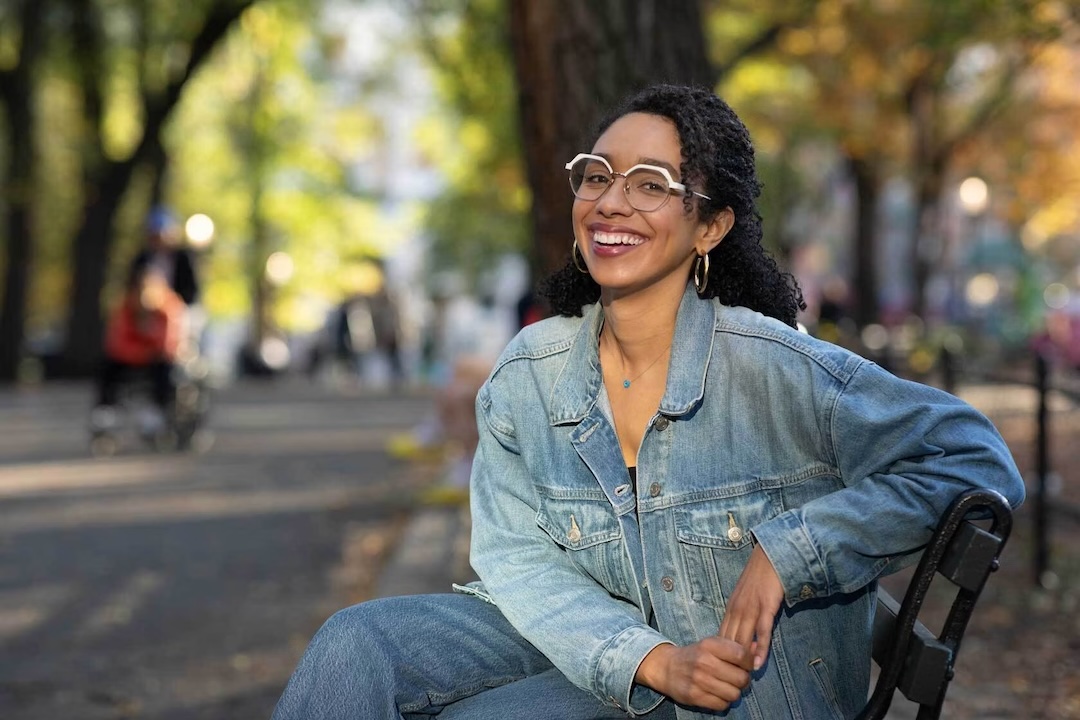
Darializa Avila Chevalier is a democratic socialist running for New York’s Thirteenth Congressional District. (Darializa for Congress)
- Interview by
- Daniel Denvir
In the wake of Zohran Mamdani’s victory, a new generation of organizers are now stepping directly into the electoral arena. Among the candidates emerging from that moment is Darializa Avila Chevalier, a Justice Democrats recruit and New York City–Democratic Socialists of America (NYC-DSA)–endorsed challenger to Rep. Adriano Espaillat in New York’s Thirteenth Congressional District.
Avila Chevalier comes to politics from years of grassroots work on immigration, mass incarceration, and the movement for Palestinian liberation. Her campaign has featured the same organizing traditions that shaped her: door‑to‑door conversations, coalition‑building across Uptown’s racial and ethnic lines, and a focus on broad working-class demands around affordability.
This conversation between Daniel Denvir and Darializa Avila Chevalier was recorded for the Jacobin Radio podcast The Dig. You can listen to the episode here.
Daniel Denvir
What was the path in life that took you to this moment you’re in — running an insurgent left-wing campaign for the US House of Representatives? And more specifically, how was it that Justice Democrats successfully talked you into running?
Darializa Avila Chevalier
I never thought that I would run for office. I come from community organizing, and that’s what I’ve been doing my entire adult life. I grew up in a working-class Dominican immigrant family. I saw my family navigate the immigration system. I had the opportunity to visit Palestine when I was twenty, and that was a really formative experience for me. Also, I have seen so much of my community be impacted by mass incarceration. These were the issues that I was organizing around for most of my adult life and the things that I felt really passionately about.
In February of last year, I started knocking on doors for the mayoral primary because I was at a really low point, where I felt that I’d done everything I knew how to do as an organizer, and there was still an ongoing genocide. And I saw through that — through knocking on doors and going back to the basics of talking to my neighbors — that there was an incredible opportunity to use electoral politics as a vehicle for mobilizing our communities again on the issues that deeply matter to us, issues that are all interconnected. Issues that at their core have to do with valuing human life and dignity. I’ve had a sense for a really long time that the incumbent, Espaillat, was very weak and deeply unpopular here in this district — not just because of the way he’s failed this community on Palestine but also because of the way that he’s been absent on so many of these issues.
So when Justice Democrats reached out to me and told me that I’d been nominated by my community, I knew that I had to take this opportunity seriously and think about it, even though running for office was not something that I had on my bingo card. But it was the thing that my community was pushing me to do, and it’s how they were asking me to show up in this moment.
We’re in a moment now where we’re facing fascism. It’s at our door, and it’s going to require so much more bravery from every single one of us to be able to defeat it and to save our democracy. I knew that I could not ask that of others if I myself wasn’t willing to be brave in this moment and take that step.
Daniel Denvir
Espaillat has often been portrayed as a real Manhattan political institution who would seemingly be rather hard to topple. What convinced you that he was vulnerable? And how are you making the case to voters in a district that includes neighborhoods like Harlem, Washington Heights, and Inwood?
Darializa Avila Chevalier
I’ve always had the sense that folks here did not find him to be fighting for us in the way that we deserve in this district. That sense was even more magnified during the mayoral primary when, again, I was talking to my neighbors about what they wanted to see out of their politics, and the name that would come up most often after Andrew Cuomo as an example of a politician who has failed us was Espaillat.
I knew he was deeply unpopular because I’ve reached out to his office over the course of my organizing and never gotten a response. It actually wasn’t until we launched our campaign that I finally got a response from his office about anything. He turned away my friend Mahmoud Khalil’s family when his family was seeking support. He turned away our friends when they sought his support to help get Mahmoud out of ICE [Immigration and Customs Enforcement] detention, and I’ve known for quite some time that he has been an example of leadership that has been absent from this district. So when I saw the numbers after the mayoral primary — where Espaillat had endorsed Cuomo, but the district went toward Zohran by 19 points — I knew that this was a measure of what I had sensed on the ground for so long.
A lot of folks had initially dismissed this district as one that would just go with whoever the establishment representative was. But I had a sense that if we told people that there was a primary happening and that there was another option on the ballot, they would take the risk and go with the person who was actually fighting for working people. We saw that in the primary where Zohran won by 19 points, and we saw that again in the general where he won by 34 points, I believe. That really highlighted that folks were willing to come out to the polls in droves, in a district that has historically had significantly low voter turnout, when they were given an option that gave them hope that there was somebody who would fight for them.
Daniel Denvir
Has Zohran’s victory made a socialist message something like common sense among the voters whose support you need to win?
Darializa Avila Chevalier
I think so. A lot of the folks who live in this district who maybe wouldn’t have identified as socialists before still have those values. I think the way we use these labels has obviously had an impact on how willing people are to identify with them. But when they hear the core value, when they hear what it is socialists are fighting for, they’re on board.
That’s because this is a working-class district of people of color who benefit greatly from the policies that democratic socialists are putting forth. Also, I think the fact that we, as socialists, are so open about our willingness to fight for these things and not just wait for them to maybe happen one day, or make excuses for why they’re not happening, has been a refreshing change of pace for a lot of people.
We’ve also seen that people who are giving us something to fight for is what drove people to come out to the polls to begin with. We saw record turnout last year during the mayoral primary. And we know that in past elections, Espaillat’s benefited from historically low turnout.
We know who came out last year; we’re talking to them. We know that there was a historic turnout among young people in particular in last year’s election. And there was a historic turnout in 2020 when there was greater access to the ballot because of vote-by-mail that was happening during the pandemic, where folks essentially participated in a protest vote and voted for candidates other than Espaillat who didn’t have a meaningful infrastructure. Still, they were willing to take a chance on names they didn’t know because they felt so dissatisfied with the leadership that Espaillat was giving us. Zohran’s race showed New Yorkers that socialism is rooted in care, that it’s rooted in community values, that it’s about standing up for human dignity and for what’s right.
Now we have an amazing slate of socialist electeds and candidates who are pushing the envelope even further and making sure that we are showing not just the city but this country that last year was not a fluke — that these are the values that our community cares about and wants to fight for, and that they aren’t radical. These are the basic principles of what it means to live with human dignity. It’s time that we stop putting in politicians who only vote in the interest of corporations and start voting in politicians who actually fight for the working people of our district.
Daniel Denvir
My sense is that Espaillat has really tried to drive a wedge between the black and Dominican communities that are such major parts of your district. How are you building coalitions across the differences that make up a district that’s black, Dominican, white, and also includes all sorts of other people?
Darializa Avila Chevalier
I am a proud Afro-Latina organizer, and I really do think that these differences are manufactured by politicians who benefit from these divisions. What I see are artificial divisions that are created for the sake of profit for the corporations that are funding these types of politicians when so many of us are struggling with the very same issues.
What we see at the doors time and time again is that people are struggling with issues of housing. They’re struggling with immigration. They’re struggling with the cost of living and the cost of raising a child in the city. So, our platform and our politics are about making sure that we’re addressing those concerns, concerns that transcend race and ethnicity but are also at their core issues of racial justice.
When I was teaching at Lehman College, one of my intro to sociology classes was an introduction to race and ethnicity. I would explain to my students that the history of race is a history of labor, that the history of racial justice is also a history of economic justice, and if we’re addressing those things, we need to do it in a way that’s encompassing of the various forms of injustice that black and brown communities in this district have been impacted by this capitalist project. And making sure that we are advancing economic justice just as much as we’re advancing racial justice.
When we have politicians whose interests are rooted in corporate greed, who are fighting on behalf of corporations and special interest lobbies and not on behalf of the communities that make up this district, a historically black and brown district, then what we’re going to see see is greater tensions among these groups that aren’t real. They’re manufactured by these corporations and special interest groups.
Daniel Denvir
You were a leader in the Columbia University student encampments against the genocide in Gaza, and as you referenced earlier, you organized alongside Mahmoud Khalil, who also lives in your district. You organized for his freedom after he was abducted by ICE, while the incumbent who you’re challenging did nothing at all, at least nothing positive.
What role does Palestine play in your politics and in this race? And how do you connect the dots between Palestinian liberation and the everyday issues faced by black and Latino working-class New Yorkers?
Darializa Avila Chevalier
For me, Palestine makes one question in particular very clear, and that is: Do you value human life or do you not? If you are somebody who sees the lives of Palestinians as expendable, then you probably also see my life as an Afro-Latina as expendable. This is a district, again, that is made up predominantly of people of color, of black and brown people. At its core, this is a question of human dignity. Do you value life? And that question is going to seep into every policy decision that our representatives make.
I was arrested. I’ve been arrested twice now, organizing to end the genocide in Palestine, and I’m not ashamed of that. I would do it again because for me, there is nothing more sacrosanct than human life and dignity, and we need to make sure that our budgets, our policies, our laws, all of these things are reflective of that value, and that we’re fighting for human life and dignity on every level of government. The same forces that are funding the occupation in Palestine are also the forces displacing black and brown people who live here in Uptown, in the Bronx. It’s the same forces that allow or who share this worldview that capital and money can just be used to displace people for the sake of more capital and more money. That’s something that I entirely reject.