Black Conservatives Have Made Their Own AIPAC

The National Black Empowerment Council presents itself as a voice for black communities. Its funding, alliances, and political strategy suggest a different mission: expanding pro-Israel conservative influence within black political institutions.
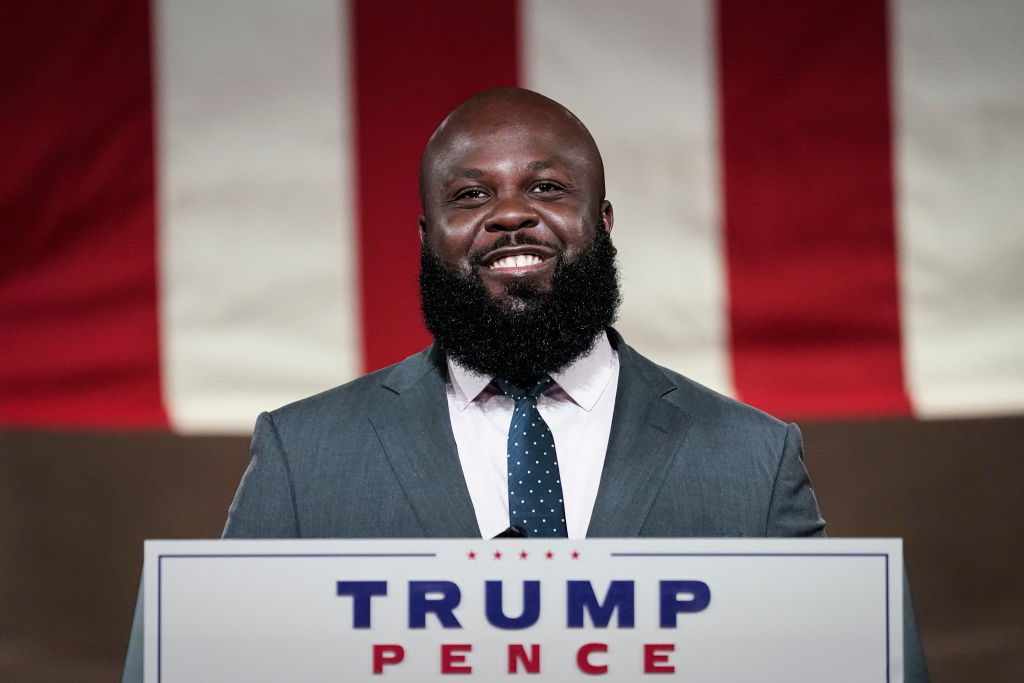
Ja’Ron Smith, White House director of Urban Affairs and Revitalization and deputy assistant to the president, prerecords his address to the Republican National Convention at the Mellon Auditorium on August 27, 2020, in Washington, DC.

Ja’Ron Smith, formerly the highest-ranking black aide to President Donald Trump, is a key federal lobbyist for the National Black Empowerment Council. (Drew Angerer / Getty Images)


On June 23, democratic socialist Darializa Avila Chevalier defeated pro-Israel incumbent Rep. Adriano Espaillat by 4 percentage points in New York’s Thirteenth Congressional District. However, in the process of campaigning, Espaillat’s team leaned into a rather audacious strategy. It weaponized anti-blackness in a historically black area in an attempt to win. Ultimately, Espaillat’s camp failed, but its attempt reveals a broader strategy on the part of the Right to undermine socialist candidates.

The vitriol was partially stoked by the National Black Empowerment Council (NBEC). It is part of a playbook of tactics that the NBEC has used before and will likely use again in the future.

What Is the NBEC?

The nebulously titled National Black Empowerment Council was established by former American Israel Public Affairs Committee (AIPAC) alumnus Darius Jones in 2021. Jones specifically was the former national African American constituency director at AIPAC; his codirector, Richard St Paul, still serves on the committee’s national council. At the federal level, a key lobbyist of the group is Ja’Ron Smith of conservative lobbying firm CGCN. Smith was formerly the highest-ranking black aide to President Donald Trump.

On the “priorities” landing page of the National Black Empowerment Action Fund (NBEAF), NBEC’s “sister organization,” a sparsely populated list is present. The three policy priorities are “Jobs and Economic Mobility,” “Educational Equity and Excellence,” and “Public Safety and Common-Sense Criminal Justice Reform.” The focus on all three issues does reflect recent polling on which issues matter the most to black American voters; however, the tangible policy proposals of the NBEAF are rather scant.

For the economic mobility section, the description merely lists “good-paying jobs and generating economic activity in black communities” as the key objective, with no specific economic proposals. More recently, the NBEC also publicized an event in the heart of NY-13 focused on black economic empowerment in May, shortly before several inflammatory NBEAF-funded flyers were mailed to several constituents, myself included. For education, the objective is to “ensure Black children have access to excellent educational options that nurture their personal and intellectual development,” again with no specification for if those policies include better-funded public education or the favored conservative alternative of school-voucher programs. Furthermore, the use of the phrase “common sense policies” in the public safety section is followed by no substantive solutions for criminal justice reform.

Interestingly, in a video introducing the work of the NBEC to a wider audience, Jones routinely discusses the importance of advancing a “model of advocacy” within the black community — one that reflects NBEC allies such as former New York City Mayor Eric Adams, who has been accused of corruption, and current Congressman Wesley Bell, AIPAC-backed challenger to former Rep. Cori Bush. During her 2024 race, Bush herself criticized the NBEAF for ties to AIPAC.

It is evident that NBEC is primarily focused on increasing buy-in for their vision of a cohesive center-right black upper class of businesspeople, politicians, leaders in higher education, and more. It is a leadership class more concerned with creating a conservative base within the black upper class in support of Israel’s oppression of Palestine, starting at the college level.

Expanded Partnerships With Israeli Universities

Parsing through transcribed interviews from Jones in his capacity as the founder of the NBEC, his statements often center Israel. Rarely does Jones provide substantive breakdowns of solutions to the issues impacting the black community, such as the root causes of economic disempowerment or educational inequity.

There are clear reasons for the NBEC’s obsessive focus on Israel. The lobby shares a significant portion of its donor overlap with AIPAC, especially donors also focused on higher education. Billionaire Daniel S. Loeb donated $100,000 to the NBEAF’s affiliated political action committee (PAC), known as the Empowering Black Americans PAC, in spring 2024. Loeb was one of several high-profile financiers caught in a WhatsApp chat with former Mayor Eric Adams urging Adams to deploy police onto Columbia University and the City College of New York’s campuses.

Two 2025 posts on the NBEC’s Facebook page include the announcement of Texas State University’s nascent partnership with “leading institutions in Israel” as an act of diplomacy, paired with their publicization of a partnership between the Hebrew University of Jerusalem, Ben-Gurion University in Beersheba, and eighteen historically black colleges and universities (HBCUs). At a time in which boycotts have sought to highlight what the academic Maya Wind has called Israeli universities’ “work on behalf of the Israeli state to counter international grassroots organizing for Palestinian rights” in the occupied territories and beyond, it is difficult to see how these partnership expansions are not just a form of indoctrination. Especially when they are aimed at HBCU campuses that have experienced administrative crackdowns against grassroots protests in solidarity with Palestine.

NBEAF’s Impact on the 2026 Midterms Cycle

The campaigning challenges that Chevalier faced were not unique. Former Rep. Cori Bush (D-MO) endured the same two years prior. In her widely spectated showdown against current Rep. Wesley Bell of Missouri’s First Congressional District, it was reported that AIPAC-affiliated mailers sent to in-district voters depicted Bush with an unusually large “jaw and forehead.” This was a blatant attempt to masculinize her image, a common trope used against black women. Similar racist tactics were used during current Rep. George Latimer’s challenge against former Congressmember Jamaal Bowman in New York’s Sixteenth Congressional District, where certain anti-Bowman campaign mailers allegedly darkened Bowman’s skin.

In all cases, the racialized attacks on pro-Palestine candidates were primarily done in the name of protecting pro-Israel interests in Congress. For Jones, who is a self-proclaimed supporter of “social justice” for minority groups, such smears against black candidates who extend their vision of racial justice to Palestine seem rather contradictory to his organization’s mission of “empowering” the black community. While NBEC and its affiliates market themselves as aiding “Black families in living their life safely,” Jones’s operation willingly accepts monetary support from the same billionaires who enabled an influx of police into historically black Harlem in the name of squashing critics of Israel’s apartheid and genocide.

The attempt to create a wedge between a generation of black Americans and the struggle for Palestinian liberation is motivated by a broader right-wing agenda. It is an agenda that will ultimately harms black Americans, since it is also opposed to the redistributive policies pushed by Bush, Chevalier, and others.

In the words of Darius Jones himself, “Not all leaders who share racial identity prioritize the community’s needs.” The NBEC writ large is no exception.