Sewer Socialism Comes to the Pennsylvania Suburbs
Norristown, Pennsylvania, is a majority-renter town with deep industrial roots. New councilmember David McMahon explains why the suburbs aren’t a monolith — and why suburbs like his are fertile ground for socialist organizing.
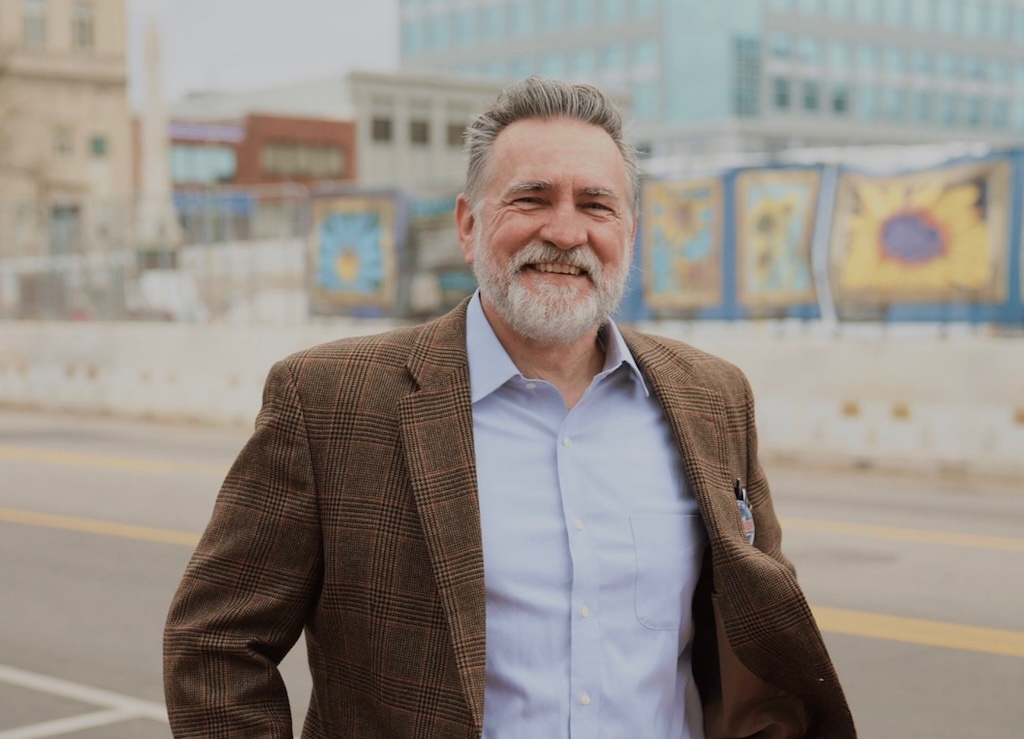
Not all suburbs are rich suburbs. Socialist David McMahon won a council seat in suburban Pennsylvania by organizing around privatization, housing, and the basic idea that public services should stay public. (David McMahon for Norristown Council)
- Interview by
- Patrick Wargo
A hundred years ago, Pennsylvania was crawling with socialists. Not just in big cities, but in coal towns, mill towns, and small boroughs that look a lot like today’s inner suburbs. Socialists ran city halls, sat in the state legislature, and focused on the basics: public ownership, decent services, and making life better for poor and working people.
Some of the most well-known sewer socialists came straight out of those towns. Emil Seidel, the first socialist mayor of Milwaukee, was born in Ashland, a coal town in northeastern Pennsylvania, and was a craftsman. Reading’s socialist mayor, John Henry Stump, was a cigar factory worker and union organizer. Not career politicians, early socialists were workers who believed the government should work for the people who keep our communities moving.
Fast-forward to today. Pennsylvania now has more than a dozen socialist elected officials, from Pittsburgh to the Lehigh Valley to Philadelphia. In November, Philly Democratic Socialists of America (DSA) endorsee David McMahon joined their ranks when he was sworn in as an at-large councilmember in Norristown, a working-class suburb just outside Philadelphia.
Norristown isn’t a wealthy community. It’s not swimming in luxury developments. It’s a majority-renter town with deep industrial roots and a long history of its residents being asked to do more with less. A hundred years ago, socialists would have recognized it immediately as a fertile ground for working-class agitation. McMahon sees the potential there, too.
A longtime community organizer, DSA member, and union worker in the film industry, McMahon brought sewer socialism to Norristown (literally) in 2024 when he led a successful campaign to stop the privatization of the sewer system. Now, as a council member, he sees an opportunity to build on that struggle to create a mass movement for democratization of utilities, housing, and labor.
McMahon’s victory shows something important: socialism isn’t just for cities. Its appeal is not limited to dense downtowns or college neighborhoods. It can appeal to anyone fed up with privatization, rising costs, and a political system that keeps telling them there’s no money for the things they need. Not all suburbs are rich suburbs, and plenty of suburbanites fit this description.
In this interview, McMahon speaks to Jacobin about suburban organizing, the fight against privatization, building tenant power, and what socialists can learn from sewer socialism’s success.
You’re a builder in every sense — as a father, an organizer, and a craftsman who has spent over thirty years creating the sets that bring stories to life. Your craft reflects a core socialist idea that the people who build our world should have power in shaping it. How has your work shaped the way you see the world and the kind of councilmember you want to be?
Working in the film industry is an intensively collaborative experience. Hundreds of skilled workers coordinate across dozens of roles, each bringing years or decades of craft and problem-solving to realize a shared vision, often under serious time pressure and demanding physical conditions. At its best, that collaboration — and the camaraderie it produces — has been deeply inspiring, and it’s been a wonderful career.
At the same time, it’s also the industry that radicalized me. When you’re embedded in that kind of production process, you see hierarchy up close. You see how money, time, and resources are allocated, whose decisions carry weight, and where the benefits and rewards ultimately flow — or don’t. It’s been a direct and lived lesson in how our broader economy operates.
More and more, projects start behind schedule and supposedly with no money, yet it’s only labor costs that appear on spreadsheets as a problem to be solved. Poor top-down decision-making is invisible, while our wages and benefits are treated as burdens to be cut. The familiar tactics of short-staffing and time-crunching show up again and again in this industry, as in so many others.
These experiences are partly why I want to govern the way good crews work: collaboratively and with respect for the people getting their hands dirty. It’s also why I’m committed to pushing back on austerity logic that treats workers as expendable and to centering poor and working people in how policy is designed and implemented.
Tell us about your history with the labor movement. How has being a union member shaped your politics? How has that overlapped with organizing in DSA?
I’ve been a union member for about thirty years, but my deeper connection to the labor movement really began in 2017, when I joined Philly DSA. It was there that two main processes unfolded: I took advantage of political education through what we called Philly DSA Night School, and I began learning the practical skills of organizing — first in workplaces, later in my community.
Most of my early activity in DSA was through the labor movement. During that time, we helped win Fair Workweek legislation in Philadelphia and the city’s Domestic Worker Bill of Rights, while also building relationships with local unions, including UPS Teamsters, nurses, educators, and municipal workers. We organized strike support for Starbucks workers and organized picket and food assistance to GM workers during strikes in both 2019 and 2023.
I’m a member of the International Alliance of Theatrical Stage Employees (IATSE), which represents entertainment industry workers of many kinds across the United States and Canada, and I was an early cofounder of a reform caucus within the union, the Caucus of Rank-and-File Entertainment Workers (CREW). That work has reinforced my belief that unions are strongest when they see themselves as part of a broader working-class movement engaged in solidarity across sectors and committed to advancing all workers’ struggles, not our own narrow interests.
You’ve been a leader in Philly DSA since 2017, and a lot has changed since then. What has your leadership in the chapter looked like, and how has the organization evolved over that time?
Frankly, I’ve never thought of myself as a leader, just as someone putting in the work to try to build a better world. I was part of the wave of members who joined DSA after Bernie Sanders’s 2016 campaign, when the chapter was growing quickly and figuring out what it meant to move from enthusiasm to sustained organization.
Early on, a lot of our internal work was about learning how to build consensus around campaigns and priorities while bringing together members with very different political experiences. I found myself working most closely with people who believed that DSA’s strength comes from mass movement–building — organizing working people, building durable institutions, and connecting electoral work to broader struggles. That wasn’t always a shared assumption at the time, but it’s something the chapter has increasingly coalesced around.
Over the last few years, Philly DSA has grown in size, capacity, and political clarity. We’ve become more grounded in structure-based organizing, more intentional about developing leaders, and more strategic about how we use our resources toward the long-term project of building a democratic socialist movement that can actually deliver and win.
You won your race the same night as Zohran Mamdani won the race for New York City mayor, in an election cycle that saw dozens of socialists win across the country. What does winning as part of that broader movement mean for you?
Winning alongside Zohran and many other socialists, from big cities to rural areas to suburbs like mine, made it clear that it wasn’t just a local victory. It’s certainly reinforced my belief that mass movement–building is the only viable path forward for socialism in this country, especially given that we don’t have the same access to the levers of power that both major parties rely on.
What we do have is our ability to organize, to build community, to take in people with almost no political experience and develop them into capable leaders, and create solutions rooted in people’s material needs where they actually live. Those processes and the cultural shift it has produced are what I will invest in as a leader in Norristown.
At the heart of organizing are one-to-one conversations. That’s why I plan to host monthly town halls, not only as opportunities for residents to raise concerns in the open, but to allow space for political education, for organization, and collective problem-solving. I want to connect the people of Norristown with organizers and leaders from nearby communities who have successfully fought for change, and work together to take those lessons to our own local conditions.
Back in 2016, Chuck Schumer famously pointed to the Philadelphia suburbs as a place Democrats could win by shifting away from the working class — a view that assumes a pretty homogenous and outdated picture of who actually lives there. Looking at Norristown and the coalition that elected you, how would you describe your Philadelphia suburb and others?
Norristown doesn’t fit the outdated picture that Democratic leaders have in mind. It’s a former industrial mill town with deep roots, many residents are third- or fourth-generation Norristonians. It’s not a Levittown-style bedroom community, and it’s not dominated by sprawling Toll Brothers developments. While we’re surrounded by those kinds of suburbs, Norristown is fundamentally different.
This is a solidly working-class town that has lived through the long and slow decline of deindustrialization since the 1960s. That history is a part of daily life. We face real challenges of funding essential public services in a community with limited wealth, relying heavily on property taxes in a place where most residents are already stretched thin. And that pressure is even more intensified because Norristown is the Montgomery County seat, home to county government, nonprofit, and religious institutions that don’t contribute to the local tax base.
What Norristown shows is that the suburbs are not monolithic. They include working-class communities, immigrant communities, and people dealing with decades of disinvestment. The coalition that elected me reflects that reality. The working class is already here.
What organizing challenges are unique to the suburbs?
One of the main challenges is geography. Lower density makes it harder to reach people regularly, to build relationships and the kind of visibility that organizing often depends on. It’s a real constraint. On the other hand, there are many opportunities, often undervalued, within the local party and municipal structures to exert influence beyond what our numbers suggest.
In my experience, many people active in local politics genuinely want to do what they see as good for their communities. What’s often missing is a clear political analysis of where problems actually originate. Without that, proposed solutions tend to default to a grab bag of familiar market-based ideas that dominate the broader political environment.
For socialists, that means we have to be intentional about creating opportunities to be in the room early when problems are first being defined and before solutions are settled upon. That’s often the only way to introduce perspectives that aren’t going to arrive through mass media or top-down party channels. Too often, local committee people and even elected officials are asked to simply sign off on prepackaged solutions, rather than play a meaningful role in agenda-setting.
In Norristown, I want to help build a genuinely grassroots, community-based process for identifying problems and developing solutions outside of party structures, and then bringing those ideas into local government for serious consideration. I think that approach has real potential to be replicated elsewhere.
I’m also deeply looking forward to helping develop our BuxMont DSA branch’s Socialists in Office program. As we work together to vet and advance solutions in Norristown, the lessons we learn can be adapted to other communities across our two counties. We saw an early version of this during the Norristown Opposes Privatization Efforts (NOPE) campaign: after winning in Norristown, it became clear that we needed to help surrounding communities quickly organize against water and wastewater privatization. I think we can follow a similar trajectory going forward, moving from defensive fights to more proactive, coordinated organizing across suburban communities.
You helped stop the privatization of Norristown’s sewer system a few years ago through the NOPE campaign, delivering a concrete win that protected millions of residents from higher utility bills and deregulation. As you step into office as a socialist, what lessons are you taking from that fight and what do you hope to take on next?
During the NOPE campaign, when we were collecting thousands of petition signatures, people immediately understood what privatization meant in concrete terms: higher rates, less accountability, and the loss of public oversight over an essential service. There was nothing abstract about it. People recognized that if a community has an essential need, the most sensible approach is to pool our resources and provide that service ourselves, at cost.
Clarity is what made the campaign so successful, and it’s also what makes it a powerful starting point for broader conversations. People could see the same dynamic at work in the proposed sale of our sewer system to Aqua Pennsylvania. They see how we’re being ripped off more generally whenever essential needs are handed over to private corporations that prioritize shareholders over residents. Once that connection is made, it opens up real, grounded discussions about health care, childcare, housing, and public education, other areas where we’ve seen aggressive efforts to privatize public services or block public options altogether.
As I step into office, one of my earliest priorities is housing. Norristown is a majority-tenant community — about 60 percent of residents rent — and that shapes everything. Some steps can happen relatively quickly, like creating a publicly accessible landlord registry or strengthening basic tenant protections. Other efforts will take longer, like establishing a land bank, supporting the development of community land trusts, and pursuing other permanently affordable or social housing models.
While some of this work extends beyond the formal powers of municipal government, I also hope to help catalyze conversations that lead to the formation of a tenant union in Norristown. The lesson of NOPE is that when people understand how privatization and deregulation affect their daily lives — and when they organize collectively — they can win. I want to carry that approach forward, to start with concrete fights, build shared analysis, and use those victories to expand what people believe is possible and to develop real left-wing organization.