We Can Truly Forgive Oppressors Only When Oppression Ends
D. K. Renton’s new book tackles the thorny subject of revolutionary forgiveness. Few can accept preemptive forgiveness of their persecutors: we have to have some faith in the future, that there will be a little less pain when we build the world to come.
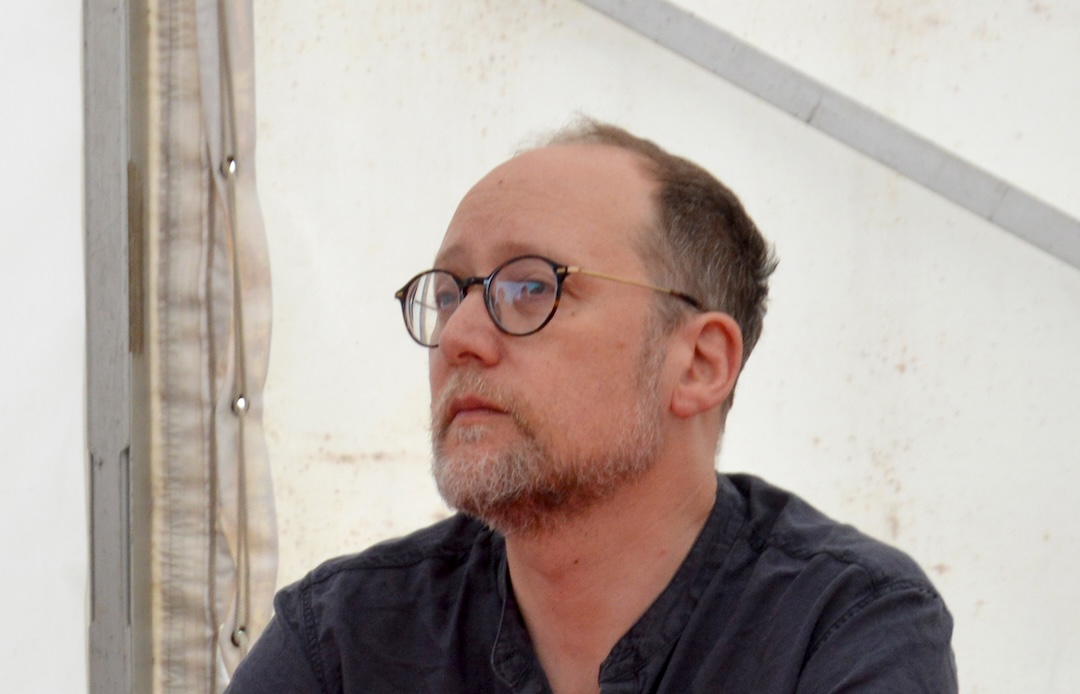
D. K. Renton is a secular writer, more likely to cite Marx than Maimonides. And yet, as with many elements of the modern left, we can trace his desire for a culture of forgiveness to a particularly Jewish notion about what is needed to right our wrongs. (DimiTalen)
When Jews conceive of questions of guilt and forgiveness, they are often framed around the biblical concept of “Teshuvah.” While Teshuvah is often translated as “repentance,” that terminology has a particularly harsh Christian connotation that loses the process that the Hebrew word connotes. Teshuvah literally means “return” (as in one who “returns to God”), so it implies a repair necessary to return a relationship, or a life, to its previous wholeness.
With Teshuvah, a person is seeking to acknowledge the breakage their behavior caused: Teshuvah happens when the damage is authentically managed. This is when forgiveness can occur, which is not naturally owed in the Jewish tradition. Only the person harmed can truly forgive, and without Teshuvah, the victim is not required to offer forgiveness.
When a secular Jew says they are motivated by “Jewish values,” the practice of Teshuvah is often a piece of what they mean. This is part of why David Renton’s new book, Revolutionary Forgiveness, stood out to me: it is rich in a perhaps unintentional, but certainly unapologetic, Jewishness.
Renton is as secular as they come, a celebrated socialist and anti-fascist scholar and lawyer, one who is more likely to cite Karl Marx’s dialectic than Maimonides, the Jewish Talmudic scholar who truly fleshed out the concept of Teshuvah as we know it now. And yet, as with many elements of the modern left, we can trace back Renton’s desire for a culture of forgiveness, the repair necessary to radically change our world, to a particularly Jewish notion about what is necessary to truly right our wrongs.
Stray Moments, Stray Lives
Renton’s book takes different social and political snapshots to see how forgiveness has (or hasn’t) been understood, unpacking stray moments and lives in uniquely prescient ways. We start with the abusive marriages and subsequent suicides of Eleanor Marx and Jane Wells, the revolutionary writings of György Lukács, and even look at more recent events like the sexual assault crisis that tore apart Britain’s Socialist Workers Party (SWP). Specific stories set the understandable framework for the bigger scope: environmental collapse, the end of apartheid, the crimes of Zionism, and the victims of violence who become its enthusiastic perpetrators.
With each of these chapters, the underlying Jewishness of this simmers, whether Renton is considering the question of forgiveness from Holocaust survivors like Jean Améry or Elie Weisel, or the totalizing lack of forgiveness offered by now deceased Israeli American fascist Meir Kahane and his influence on the Israeli state project. Suffering is what forgiveness has to address, and it is also what has led so many victims to become perpetrators.
Renton weaves this conversation with a kind of masterful grace: he has always been a good writer, but this is likely his best book. This is, in part, because of his patience; he lets the discussion progress naturally and simmer when it needs to, and he never forces objectivity. We sit with these stories and ideas because we must; forgiveness only comes from the true rendering of trauma. And while the maturity of this discussion is certainly the product of age and experience, it’s also drawn from a type of faith.
For Renton, those involved in the messy work of building a new future are searching for how to forgive each other (and perhaps ourselves) for our inevitable failures, particularly the catastrophic ones. Those he tracks are equal parts small and large, but there is a certain magnanimity he offers to the impersonal ones, those that drop an atom bomb on our lives and yet are often the first ones we are asked to forgive. The crimes of history are sometimes easier to deal with than those without the abstract distance of time.
Paperclipping
Who gets forgiven and why? Which sins are forgiven, and which remain written in the Book of Life? Besides the question of ecocide, Renton’s discussion of forgiving fascists and the unforgivable nature of the Palestinian occupation took much of my attention, perhaps because of our shared Jewish vantage point.
Liberal discourse on the far right is shaped by a nonprofit-industrial complex around the certitude of forgiveness, which contends that neo-Nazis are temporarily insane self-victimizers who will soon abandon their misgivings and become our greatest allies. We have organizations and speaker bureaus that become an intellectual “Operation Paperclip,” filled with former white nationalists who have not only never fully apologized but have never even been pressed to address their victims. Likewise, we are watching an Israeli polity built by the inability to forgive now help to craft a situation that never can be, with our own stories of collective trauma weaved together to coerce us to the side of the occupier.
Renton’s examples are mixed in a way that kind of makes his point. He discusses two particular ex-fascists: Ray Hill, a former British fascist who infiltrated the British Movement for Searchlight, and Adrianne Black, the daughter of former Klansman and Stormfront founder Don Black and someone famous for leaving a leadership role in the movement. With Hill, work was done to actively destroy one of the most violent neo-Nazi organizations on the island from within. The process was complicated and unfolded in fits and starts.
With Black, the same is true, but she has gained an enormous amount of attention specifically because her story validates the worst assumptions of liberal Americans. In Black’s biography, which was narrated in Eli Saslow’s best-selling book Rising Out of Hatred, it was simply a number of kind interventions and meals from persistent students that pulled her out of her family’s muck.
When I was working with Ben Lorber on our book Safety Through Solidarity: A Radical Guide to Fighting Antisemitism, one well-known Jewish author told me with reference to her case that “apparently having Shabbat dinner is enough to convert a Nazi.” But it’s not, and our willingness to believe that it is says a lot about what we are willing to confront and what kind of accountability we think is reasonable, both for ourselves and for others.
“When a victim forgives a perpetrator, they are choosing to relinquish any rights they would have of redress against them,” writes Renton. The stakes are high. What do we expect of those who cause us harm, including fascists who have helped institute a state of racial terror or a ruling class that has brought life on Earth in earshot of extinction? They need more than apologies over matzah.
Vengeance
I finished Renton’s book shortly before Israel and the United States commenced a long-planned assault on Iran, the kind of cynical regime change effort Likud has long used to gain an upper hand both geopolitically and domestically in advance of Israeli elections. Renton captures the underlying sense of vengeance that sits at the heart of the Israeli project particularly well.
In a state built by colonists and combatants traumatized by pogroms and the Holocaust, there has always been a distinct lack of sentimentality to Israeli state violence. Renton looks at Meir Kahane as a prototype for Israeli vengeance on steroids, a sense of exclusivist Jewish nationalism that is taking over Israeli Orthodox and settler culture.
For Kahane, Jewish humiliation demanded violence, a way of returning Jews from a state of exile by persecuting those that forced us out of the center of our own history. Forgiveness was simply another product of the diasporic sickness; history has taught us what happens to those who forgive.
Renton provides us the opportunity to linger with those we love and hate, and there is an underlying sense of compassion even for someone like Kahane whose own fascist worldview was formed, in part, by the traumas of his ancestry. Early in Israel’s founding, there was a certain cultural understanding of Israeli violence, an empathy for these people and all they’ve suffered. While the shine has mostly worn away, we understand the cruel Zionist logic because we recognize it all around ourselves.
A culture that refuses to forgive denies itself the power to build a society that has less to forgive. If we learn from history in a way Kahane never did, we can understand how that lack of forgiveness makes us all the more vulnerable to a coalition of global empires that would love to manipulate our traumas to turn us into agents for those who benefit from our dispossession.
Atonement
Forgiveness isn’t easy, it’s not always owed, and to know when and where (and especially how) to forgive requires an examined life. Renton presents historical and literary arguments, argues and debates with them (and himself), and presents forgiveness in ways that are less didactic and more curious.
There is a Jewish practice of study called “Chevruta” where two Jews sit across from one another, reading text aloud before debating the meaning. I remember walking through the Chabad Lubavitch Yeshiva in Crown Heights as young students nearly screamed back and forth while others collapsed in oversize tracts of Talmud, too exhausted to continue.
Even the tradition of Jewish commentary, called the Oral Torah, simply consists of more debates, inviting you to join in the discovery. Forgiveness is thorny precisely because it is unclear what it means for those choosing to forgive, and even more so for those desperate to be forgiven.
Forgiveness is a process, not an end point. It’s something people aren’t owed, and despite the examples that proliferate, we have few signs of collective success. Renton looks at the Truth and Reconciliation process for South Africa after the fall of apartheid, a process pointed to by the global community as an example of bearing moral witness. Those who really profited off of the crimes of apartheid continued to get away with what they had done, and those who suffered have largely been forgotten.
To forgive requires a profound kind of change, one that is material and judged by those carrying the trauma with them. But few with these experiences truly want to sit with their hurt for the rest of their lives.
According to Maimonides, “The sinner should abandon his sin, remove it from his thoughts, and resolve in his heart to never do it again,” while the Mishnah says that “atonement is not achieved until he asks forgiveness from the injured person.” Many of us are burning to forgive, if only to alleviate ourselves of the burden we have been saddled with for years. But we need the opportunity presented by a true admittance and a commitment to actually ameliorate the harm by changing the conditions that caused it.
Renton describes preemptive forgiveness, the kind offered before redress, as “a strategy to heal victims of social violence who would be otherwise trapped, having to replay forever the moment when a culprit harmed them.” This is an act of faith, offering forgiveness to those who have not shown their deservingness because we acknowledge that it is for ourselves, not their posterity.
This is, perhaps, what brought Renton to the concept of forgiveness itself: without a grand, revolutionary movement, few can accept preemptive forgiveness of their persecutors. We have to have some faith in the future, that there will be a little less pain when we build the world to come.