Desmond Tutu Never Sold Out the Liberation Struggle
The late anti-apartheid leader Archbishop Desmond Tutu was no neoliberal sellout. His legacy was always to advocate structural reforms in South Africa.
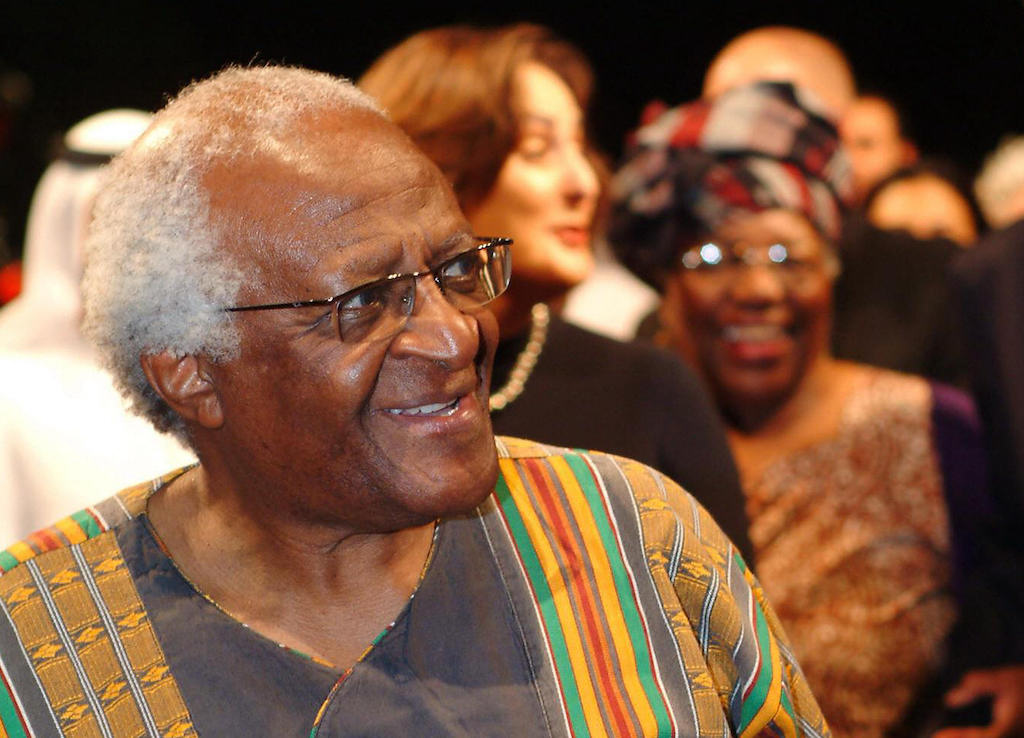
Archbishop Desmund Tutu attends the closing gala at the first Dubai International Film Festival, 2004. (Nasser Younes / AFP via Getty Images)
On December 26, 2021, anti-apartheid and human rights activist Archbishop Desmond Tutu died at the age of ninety. The occasion was immediately marked by tributes from around the world and across the political spectrum.
In the international press, most sought to sanitize Tutu’s radicalism and present him purely as the Nobel Peace laureate who championed “rainbowism,” the South African post-apartheid paradigm of forgiveness and reconciliation. From this perspective, Tutu stands in his rightful place alongside his Nobel Peace Prize–winning peers — Albert Luthuli, Nelson Mandela, and F. W. de Klerk — immortalized as bronze statues for posterity.
The image of Tutu, as found in even liberal publications like the Guardian, prefers to ignore his more radical political stances, from his critical position on the Israeli-Palestinian conflict in which he drew parallels with apartheid South Africa; to his call for George Bush and Tony Blair to be tried as a war criminals for their invasion of Iraq.