SCOTUS Is Siding With Capitalists Over Trump
The Supreme Court’s willingness to protect the Fed — in contrast to every other independent regulatory commission — reflects the strength of its loyalty to neoliberal capitalism over the Trump administration and even the vaunted “unitary executive theory.”
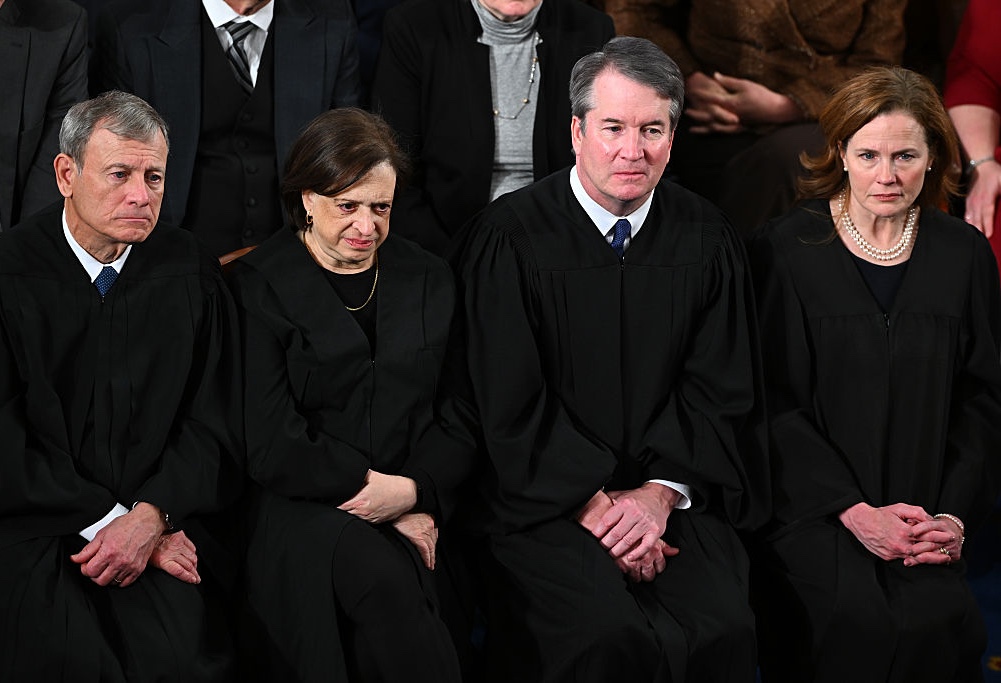
In Trump v. Cook, the conservative justices are poised to vote against Donald Trump, eager to preserve a financial system that already serves them and their allies well. (Graeme Sloan / Bloomberg via Getty Images)
In the ongoing dispute between Donald Trump and the Federal Reserve, the Supreme Court has strongly indicated that it will side with the Fed. It is now abundantly clear that the conservative justices want to protect the independence of the Fed — in contrast to that of virtually every other independent regulatory commission, like the Federal Trade Commission (FTC), the National Labor Relations Board (NLRB), and the Security and Exchange Commission (SEC).
In both the recent Trump v. Cook oral argument and in prior arguments and opinions, the justices have argued that the Fed is somehow different, specifically in that it does not exercise executive powers. But this simply isn’t the case: it regulates banks, credit card fees, and financial advertising, among other things, and issues fines. So what’s actually different about the Fed?
Justices Amy Coney Barrett and Brett Kavanaugh have hinted at pragmatic concerns: if the president can violate the independence of the Fed, it would have potentially serious economic consequences. They are betraying their commitment to the “unitary executive theory,” which respects the president’s complete authority over the executive branch, simply not to spook the markets.