In Poland, Liberalism Takes Yet Another Hit
Establishment candidate Rafał Trzaskowski had the perfect résumé to become Poland’s centrist, pro-European president. His defeat to the hard-right Karol Nawrocki reflects the liberal establishment’s evaporating support among the middle and working classes.
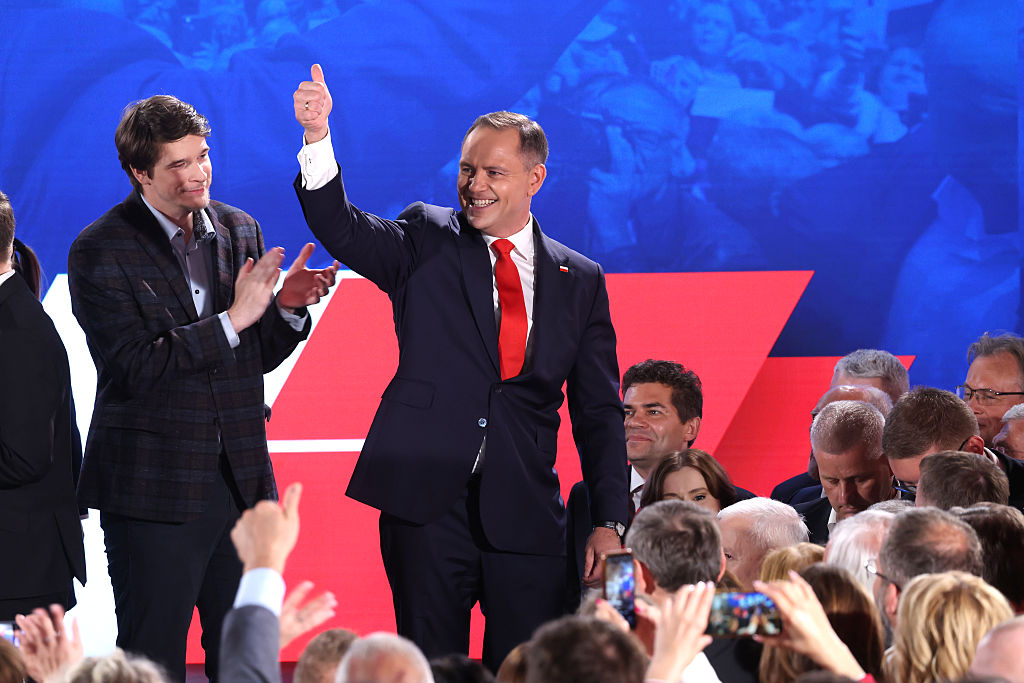
Karol Nawrocki speaking to supporters following the Polish presidential runoff election on June 1, 2025, in Warsaw, Poland. (Sean Gallup / Getty Images)
To the surprise of commentators both in Poland and abroad, prime minister Donald Tusk’s candidate, the highly educated, internationally respected liberal Rafał Trzaskowski, did not become Poland’s next president.
A former member of the European Parliament (MEP), cabinet minister, mayor of Warsaw, and deputy leader of the Civic Platform (PO), Trzaskowski embodied everything Western elites have celebrated in the region since 1989. He represents technocratic competence, transatlantic credentials, and an unshakeable faith in liberal democracy.
His opponent, Karol Nawrocki, was largely treated as a meme throughout the campaign. Head of the state-run Institute of National Remembrance, Nawrocki has spent years pushing an obsessive anti-communist agenda, often celebrating far-right resistance groups from Poland’s interwar and postwar history. But this wasn’t just about historical revisionism: Nawrocki also carried a deeply checkered personal past — alleged 1990s ties to the Gdańsk mafia, links to football hooligan groups, and involvement in illegal retaking of apartments. . .