For Roman Workers, Life Was Nasty, Brutish, and Short
Our images of the Roman Empire are dominated by the monuments and lifestyles of wealthy urban elites. An important new history shifts our attention to the 90% of Rome’s population whose brutally exploited labor made it all possible.
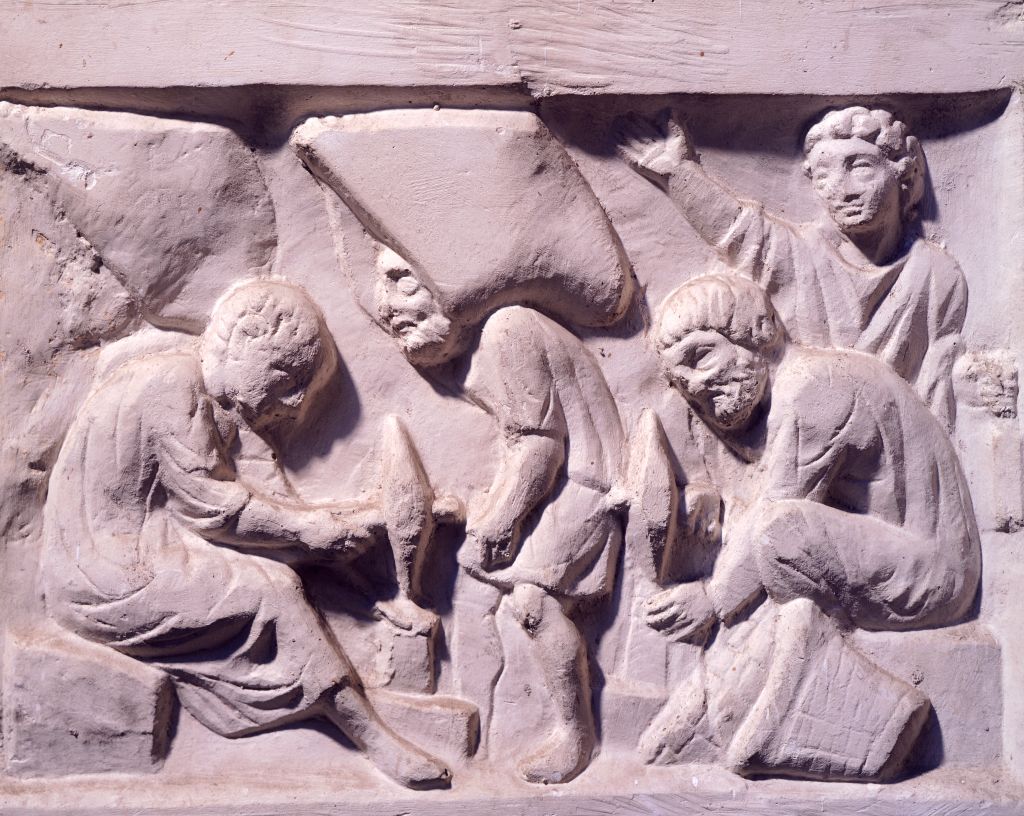
In her book Surviving Rome, Kim Bowes gives us a magnificent, revelatory picture of the Roman Empire’s working population, how they lived their lives, and the price they paid for generating the wealth that accrued to a privileged social elite. (DeAgostini / Getty Images)
Our image of Rome, with its efficient infrastructures and splendid architectural works, is inextricably linked to the names of the emperors, generals, and wealthy senators who ordered (and paid for) their construction and management. In this framework, the economic complexity of the Roman Empire seems to be the result of the action of a few powerful and wealthy men with command over a multitude of anonymous workers.
It is no coincidence that the most effective representation of Roman economic dynamism is the centralized landed estate. In the Roman world, the easiest way to maximize production and exchange was through increased exploitation by the employer of the people who did the actual work, whether they were free workers or slaves. From this perspective, whatever form of inequality the Roman system created was the natural consequence of its inherently precapitalist economy.
Surviving Rome offers us a very different vision of Rome’s economic life. It shifts the focus from macroeconomic indicators of growth to ordinary people, showing us how they actually lived, worked, and died during the four centuries separating the period of the Late Republic (first century BCE) from that of the Middle Empire (third century CE). It does not tell the macro story of the empire’s economic rise and decline but gives us instead many micro stories of peasants and slaves — men, women and their children — who had to wrest a living from a hard and complex world as farmers, herders, spinners, potters, or part-time shopkeepers.