A Post-Order World
As US power declines, it is destroying the norms and institutions that once organized its international projection of authority. While the US is losing its leadership role, no single power is replacing it as a global hegemon.
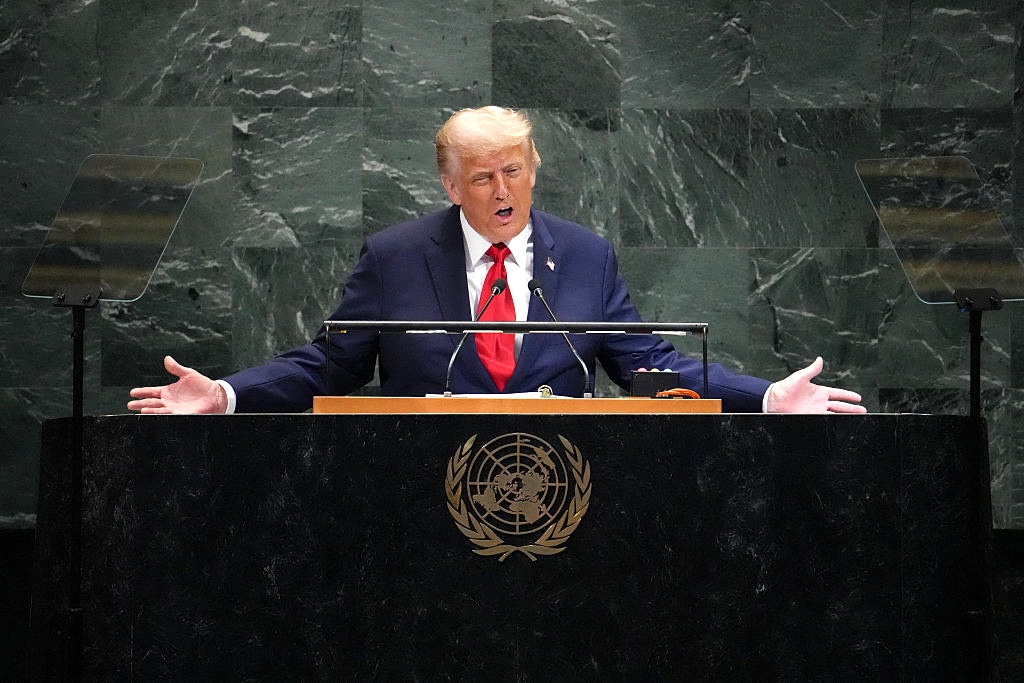
If the international order has now come to an end, it is because consent for US empire has broken down. (Timothy A. Clary / AFP via Getty Images)
If there was still any doubt about our coordinates after a decade of shocks to the normal order of things, the disorientating opening of this year has confirmed that we are not in Kansas anymore. A new geopolitics is taking form, particularly evident in the ongoing US-Israeli bombardment of Iran, in the US abduction of Nicolás Maduro from Venezuela, and in the positioning of European troops in Greenland following Donald Trump’s claims on the island.
Since the financial crisis of 2007–8, incipient challenges to the primacy of US power, as well as political turbulence within Western capitalist democracies, have provoked the production of a considerable body of angsty writing about the end of things. Much of this writing, as it pertains to the imperial situation now commonly referred to as “international order,” expresses the desire for a “return” to stability.
It’s perhaps unsurprising, then, that so many commentators on international affairs, of different political allegiance, have repeated the famous statement on “interregnum” authored by Italian communist Antonio Gramsci: a period in which “the old is dying and the new cannot be born.”