Hugh Mulzac’s Journey From Black Nationalism to the New Deal

Pioneering ship captain Hugh Mulzac’s remarkable life story reflects the maturation of black politics in the early 20th century. He began as a black nationalist but soon saw the singular promise of multiracial labor struggle to improve black workers’ lives.
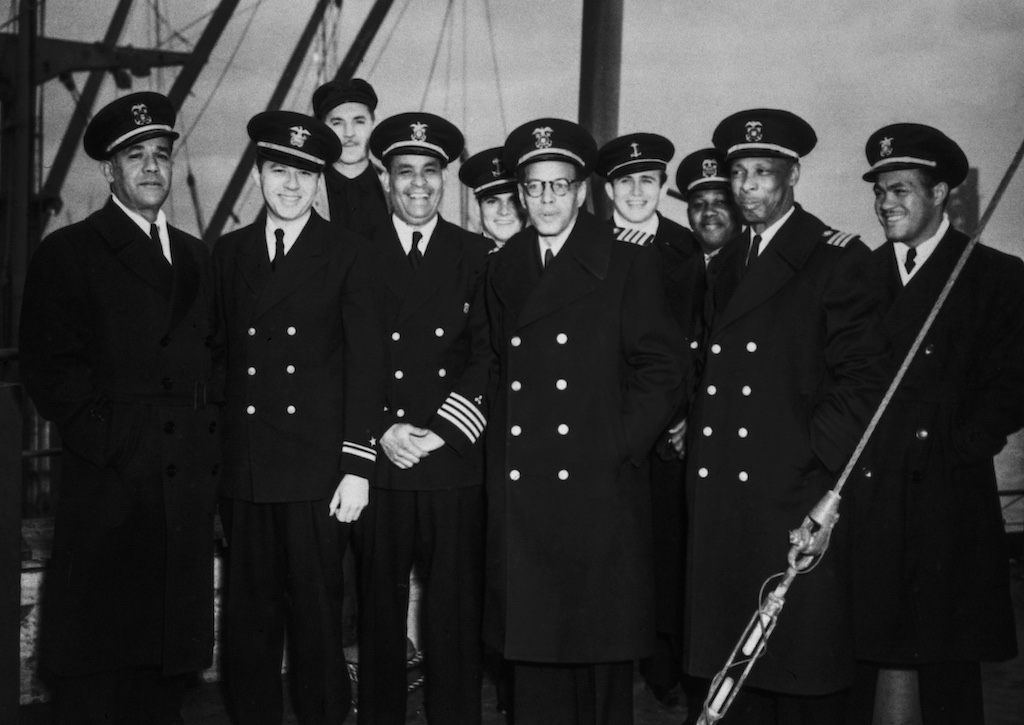
Hugh Mulzac’s life is a reminder that true liberation will come in the form of patient, interracial, class-based organizing and a robust social state. (Archive Photos / Getty Images)

On September 29, 1942, a large vessel set sail to support wartime logistics for the United States military. It was one of many such ships — but this occasion was filled with powerful symbolic and political importance. Singer Marian Anderson christened the ship, and Mary McLeod Bethune, famed member of Franklin D. Roosevelt’s “Black Cabinet,” gave a welcoming address. The SS Booker T. Washington was about to set sail for the first time.

The vessel was captained by Hugh Mulzac, the first black person ever to do so in the United States and the only one to hold a master’s license at the time. The government had suggested an all-black crew, but he resisted, preferring an integrated one. Having been instrumental in the formation of the National Maritime Union (NMU), Mulzac made sure the Booker T. was assigned to an NMU-contracted company. He was as pro-union a captain as one could find.

Throughout the rest of the war, this vessel acted as a mobile beacon of racial integration, internationalism, and working-class democracy. On the ship, classes were taught on every subject under the sun, political murals were painted on the walls, fundraisers were held for social causes, and crew members organized letter-writing nights for elected officials. Mulzac called it “a floating bastion representing America’s finest traditions of democracy, integrity, and working class ingenuity.”

Mulzac’s journey through the first half of the twentieth century reflected the evolution and maturation of black politics. His life serves as a powerful demonstration that black nationalism could only truly become a mass movement in the context of a racially exclusionary labor movement and thoroughly reactionary federal government. Like so many other talented and educated black men of his time, he drifted to Marcus Garvey’s Universal Negro Improvement Association (UNIA) as all other pathways for advancement were strangled by the Jim Crow system. Frustrated by the failures of Garvey-inspired nationalism, the rise of the Congress of Industrial Organizations (CIO) and the New Deal in the 1930s reinvigorated both his personal career and belief in US society.

His service on the Booker T. during the war represented the best of the country’s democratic impulses and put forth a vision of what a just postwar social order could look like.

A Life by the Sea

Mulzac’s early life was shaped by the sea and the British Empire. Born on March 26 in Union Island (part of Saint Vincent and the Grenadines) in 1886 — exactly 140 years before the day of this publication — his father owned a shipyard and worked in the whaling business. Church and school were the twin pillars of his upbringing, which he described in his autobiography, A Star to Steer By: “Both were very British, and a very British gentleman they sought to make me.” In school, he learned much about the “glory and growth of the Empire,” but nothing whatsoever about “the story of our own islands and peoples.” Like many West Indians, he played and excelled at the game of cricket.

On a tiny island with a population of only five thousand, “where there was little communication with the world,” the arrival of ships was among the more interesting things that could happen. Mulzac remembered, “The only events which disturbed our lives were the unpredictable arrivals of the mail boat from St. Vincent.”

The island could only contain his energy and intellect for so long. He saw that the only real opportunities available were in government service, where one was “doomed to a narrow, dull, underpaid existence as tiny cogs in the British Imperial machine.” At the age of eighteen, he met a girl he wanted to marry and decided to try his luck in the shipping business for a few years before coming back to settle down. Working with his brother John in Barbados, he was asked to be a seaman on a ship headed to the United States.

Life at sea would open up a new world of ideas and experiences. When the ship arrived in North Carolina, he got his first real taste of discrimination. As the crew tried to enter a church, an official explained to Mulzac that due to a state law he would have to sit in the balcony. He angrily wrote home to his family about “the barbaric custom of our northern neighbors.” Despite being subjects of the British Empire, West Indians existed in majority-black societies and often did not experience racism with the kind of intensity that existed in the United States.

The more he worked at sea, the more he saw the limits discrimination imposed on the career of a black seaman. On a trip to Australia, the crew suffered with very little food but learned that the captain was hoarding more rations than he knew what to do with. When they arrived, they went to the Board of Trade and demanded compensation for the provisions they should have received. The board relented — but only for the white workers.

He took classes at Swansea Bay Sea School in order to get his master’s license, working on English coastal boats in the meantime. When he returned to the United States and looked for work in Baltimore, he had to settle for a job as a chief cook on a passenger vessel. This reinforced a bitter lesson for him: “A West Indian in the United States quickly learns that he is meant for menial labor.”

Mulzac got a perfect score on his master’s license exam in record time, becoming the first black person in Baltimore to get one. But this didn’t change his fortunes. He was denied entry into the Masters, Mates, and Pilots union because of their color clause banning blacks. He made a ritual of showing up to the United States Shipping Board asking for work, only to be explicitly told he could not get work due to his race.

Though he was able to get a little more work during World War I due to the manpower shortage, Mulzac saw no hope of advancement and eventually decided to open up a wallpaper business. But his interest in sailing arose again when a friend told him about Marcus Garvey’s Back to Africa movement. A key component of his vision was a vast African trading network facilitated by a black-owned-and-operated steamship company: the Black Star Line.

When Mulzac heard they were looking for black seaman, he had hope again. “Maybe this was the answer,” he wrote, “the only answer . . . a whole fleet of ships owned and operated by black men!”

The Draw of Garvey

Garvey’s movement emerged in an “ocean of black unhappiness,” as black journalist Roi Ottley phrased it. The labor movement was organized on a craft basis and for the most part excluded unskilled black workers. Jim Crow meant near complete political disenfranchisement for black communities in the South. Civil rights leaders such as W. E. B. Du Bois hoped that World War I would be an opportunity for blacks to prove their loyalty to the nation and be rewarded with progress after hostilities ceased.

The mass movement of black workers to the North during the war only brought vicious competition over jobs and housing as soldiers returned home. A wave of brutal race riots and lynchings, often victimizing black World War I veterans, rolled over the nation during the “red summer” of 1919. Mulzac described, “It was in this setting of bitter disillusionment following the War to Make the World Safe for Democracy that Marcus Garvey for a brief time occupied the center of the stage in the unfolding drama of the black man’s struggle.”

Promising racial glory, a trading empire, and possibly a colony in Africa, Garvey captured the imaginations of urban black populations like no one had before. Mulzac, like so many others, found it hard to resist the “appeal of race patriotism, the promise of an African renaissance under their own control, and the attraction of rapidly multiplying dollars.” It didn’t hurt that this ideological project converged with his hitherto unjustly frustrated professional ambitions.

After writing Garvey a letter, Mulzac received an invitation to meet him at UNIA headquarters in New York. When he arrived, he found a line out the door of “job-seekers and supplicants, stock-owners-to-be and a few hero worshippers who simply wanted to tell Mr. Garvey how proud they were for him for what he was doing for the race.” Mulzac bought five shares of stock in the Black Star Line and was made captain of the Yarmouth ship.

But once operations began, he saw the fraudulent underbelly of the whole enterprise. No one knew the basics of running a shipping company, and the first couple voyages were profitless. Huge crowds greeted the ships in destinations throughout the Caribbean, but food products onboard were allowed to spoil while these demonstrations were indulged. Eventually Mulzac realized, “The Yarmouth was simply being used as a propaganda device for recruiting new members to the UNIA. It was a helluva way to run a steamship.”

His attempts to submit detailed cargo plans to his superiors were ignored, for “with membership booming they could not be bothered with such irksome details.” The exaggerations became more fantastic, as “for propaganda reasons Mr. Garvey announced that I had been made master of the Phylis Wheatley, a ship that didn’t even exist.”

A year after the Black Star Line collapsed in 1922, Mulzac published a series of letters in the Cleveland Public Journal and Cleveland Gazette, explaining what went wrong. There, he charged, “The executive positions in the company are staffed by opportunists and relatives from all walks of life except the shipping industry.”

In his autobiography, Mulzac expressed sorrow for the “scores of thousands of humble black men and women” who donated money to Garvey’s cause but “received in dividends only a transitory inflation of their racial pride.” The movement spread quickly, but just as soon, “the torch flickered and was out, leaving us in darkness as before; poorer, sadder, and perhaps wiser . . . who knows?”

Mulzac flocked to Garvey’s UNIA as all other possible avenues of progress closed off. But as the 1920s slowly became the 1930s, a new kind of labor movement would change the prospects for Mulzac and scores of other black workers like him.

“The Collective Power of Thousands of Union Brothers”

The spike in unemployment in the shipping industry after the war was accompanied by an assault on the nascent unionization efforts among seamen. The workweek was dramatically increased from fifty-six hours to eighty-four hours, along with a 25 percent wage reduction and no overtime pay. Mulzac observed how this degraded the human spirit of the workers and undermined the social conditions for organizing.

While declining conditions led some people to fight back, it “crushed others into human pulp without honor, spirit, dignity, or will to resist.” This created groups of “friendless nomads, ranging the waterfronts of the world, drunk, beaten, and incapable of responsible social cooperation.” These were “not the men of whom militant union fighters are made,” and their presence “sapped the determination of honest workers to fight for their rights.”

Mulzac became involved in early attempts to rebuild the union from this morass. In the late 1920s, “Seamen’s Clubs” and branches of the Marine Workers Industrial Union (MWIU) began to grow. In Baltimore, they were able to create a hiring hall and staged a strike on fifty ships to enforce fair hiring procedures. Mulzac saw how the union, by fighting for practices like the hiring hall, could root out discriminatory practices in the industry and improve the lot of black workers.

He felt that “a fresh breath of hope blew over the land” with the election of Roosevelt. As the New Deal slowly began to create more favorable conditions for union organizing, workers from below forced the issue more urgently.

The 1934 strike by longshoremen on the West Coast was, for Mulzac, “the real turning point in U.S. waterfront history.” Their historic wins included a union-operated hiring hall, big wage raises, overtime pay, and a thirty-hour workweek. Further inspired to build unionization on the East Coast, Mulzac got involved in an effort for a merger between the MWIU and International Seamen’s Union (ISU).

This group organized quick wildcat strikes over workplace issues like better food, overtime pay, and the supply of insecticide onboard the ship. Mulzac was inspired by the emergence of the CIO and organizing drives in major industries like auto, meatpacking, and electrical. During a seamen’s strike in the fall of 1936, he was heavily involved in building community support by speaking to churches and fraternal organizations. In the aftermath of the strike, the National Maritime Union (NMU) was formally chartered with a membership of 20,000.

Through the NMU, Mulzac finally saw a path toward addressing racial inequality. This union was heavily influenced by Communist Party activists who had a special commitment to racial justice. They didn’t bow to pressure when operating in the South; “There was a single union hall in each of the port cities, serving colored and white equally.” He truly believed that the union’s fight against segregation would begin to fundamentally break down prejudice, saying, “Southern crew members, living with colored seamen, sharing the same fo’c’cles, the same messroom, playing poker together, working together, talking and arguing together, discover that their prejudice is artificial and socially contrived.”

It’s hard to overstate how much seemingly straightforward and technical union contract provisions changed the daily lives of black workers. Mulzac reflected, “When the employers chose the men they wanted, militant unionists and colored seamen did not get jobs. Under the union hiring hall men of every race, creed and color are assigned equally.” People who hadn’t gone through his past experience in the shipping industry “cannot understand what it meant to walk up a gangway with an absolute right to the job — and a right, furthermore, that was enforceable through the collective power of thousands of union brothers.”

Mulzac was personally transformed through the NMU and found an outlet for his great intellectual and organizational energies. He finally “realized how it felt to be free to speak my piece at a union meeting without consciousness of color.” The existence of the union meant he could “walk aboard a ship with my shoulders thrown back in the clear, deep knowledge that no company official could reject me because I was not white.”

Mulzac was not alone. The roughly 400,000 black workers organized through the CIO wave of the 1930s and 1940s found an institutional home that could (imperfectly) challenge racial inequality on the job and throughout society. In Nelson Lichtenstein’s State of the Union, he argues that CIO unionism “generated a kind of industrial citizenship that stood against the paternalism, deferential subordination, and violence of the old order.”

Mulzac’s personal transformation through his union work also led him to “develop what can be called an international political outlook.” He admitted that before he was “driven by personal ambition and never understood my struggle in its wider social context,” but now saw that he was part of a “fight not only of all the colored races, but of poor working people, black or white, and that it could be advanced only by the advance of all.”

Despite the Garvey movement’s heavy emphasis on an international and Pan-African consciousness, it was labor struggle on the seas with workers of all racial and ethnic backgrounds that cultivated true internationalism. Unlike the UNIA, black workers were able to win concrete and measurable victories through the union. For Mulzac, “The experience of working with a group of vigilant union men, determined to fight for their rights — and further, winning frequent victories — sparked my political development.”

Of course, traveling the world as a seaman also cultivated an international outlook. The behavior of bourgeois tourists on some of the voyages he ran earned his contempt. In the face of the harsh poverty on display in some of the countries they visited, “The bored businessmen regarded the world as a vast plantation for the extraction of profits, while their wives supposed it was an elaborate bazaar held to tantalize them with bargains!” He felt allegiance to working people all over the world and reflected, “How stupid it was, I realized, to owe one’s loyalty to one people, a particular people, even Afro-Americans!”

Captain Mulzac and the Booker T. Washington

While Mulzac felt hope and progress through union activities, his quest to become a captain of a vessel was still unfulfilled. The Brooklyn branch of the National Negro Congress, an organizational initiative of black socialist A. Philip Randolph, initiated an energetic campaign on his behalf. Initially it failed, but when the United States entered World War II, a renewed effort finally broke through and Mulzac became the first black captain of a US Merchant Marine vessel.

The NMU helped assemble an internationalist crew to staff the Booker T., which included five Filipinos, two Danes, two British West Indians, and a Honduran. Large adoring crowds welcomed the ship in Panama, an echo of the reception given to Black Star Line vessels in the 1920s.

The Booker T. became something of a progressive darling, with banquets being held by organizations like the California State CIO and Greater New York Industrial Council. The latter event drew 1,200 guests and included political and cultural figures like Paul Robeson, Mike Quill from the Transport Workers Union, Langston Hughes, Hazel Scott, and Congressman Adam Clayton Powell Jr.

Mulzac was conscious of the broader political symbol the Booker T. represented. They weren’t just fighting against fascism: “We saw each step toward full integration uniting broader and broader strata of the people, not only toward victory over Hitler but toward a victorious peace as well.” The ship was a political education center and campaign headquarters all rolled into one. A newspaper called the General Alarm was produced onboard and stimulated discussion. Often when stopping ashore, the crew would meet with local trade unions, and Mulzac was invited to speak to black battalions.

In 1944, Amalgamated Clothing Workers of America president Sidney Hillman asked him to campaign across the country for Roosevelt’s reelection. By this time, the CIO Political Action Committee was firmly in place. “It was an inspiring tour, and one that symbolizes to my mind the highest form of popular political action,” Mulzac remembered. During one of his stops, he addressed a large meeting of United Packinghouse Workers of America members at DuSable Center, its union hall in Chicago.

Mulzac became committed to the ideology and organizational structures of the New Deal/labor alliance. He firmly rejected the nationalist leanings of his past, saying, “Except for a few tiny pockets of Negro nationalists the colored citizens of America are not fighting for the right to have their ‘own’ banks, insurance companies, restaurants, or ships.” Instead, he saw hope in winning “our legitimate right to the share of the nation’s wealth which our labor entitled us, an equal share of its culture, opportunities, and rights on an equal basis with everyone else.”

A Brighter Star

The compounding factors of a full employment economy, an expanding trade union movement, New Deal social policies, and allied unity against fascism produced the high point of New Deal liberalism of which the Booker T. was just one example. The emergence of the Cold War against communism after the hot war against fascism undermined all of these positive dynamics. Mulzac saw the Cold War as “repudiation” of the unity and values his ship represented. Eventually the War Shipping Administration decided to end service of the Booker T.

Shipping management took advantage of the McCarthyite political atmosphere to institute blacklisting, “a convenient weapon for shipowners who want to rid themselves of militant trade unionists on their ships.” He witnessed a decline in his union, which he felt “embarked on a real estate program as if its goal were to become a large, property-owning corporation rather than the organization of the workers to gain real security in increased employment opportunities, laws ensuring a more stable economy and improved maritime regulations.”

Mulzac eventually retired and became involved with the American Labor Party in New York as well as hobbies like painting. He died in 1971 at the age of eighty-four. He is part of a rich cohort of black political activists whose conception of racial justice was profoundly shaped by the growth of industrial unionism and the New Deal.

His disappointing experiences with the nationalism of Marcus Garvey are instructive. Though our conditions and context are radically different, various iterations of black nationalist and race reductionist ideas have gained currency today as our political institutions have decayed. Mulzac’s life is a reminder that true liberation will come in the form of patient, interracial, class-based organizing and a robust social state. His belief is still true that “freedom from our own narrow and selfish ambitions is the truest freedom that, as members of class society, we can win — and the most difficult.”