A Religion of Unity
For black meatpacking workers, multiracial class politics was the path to economic and social advancement.
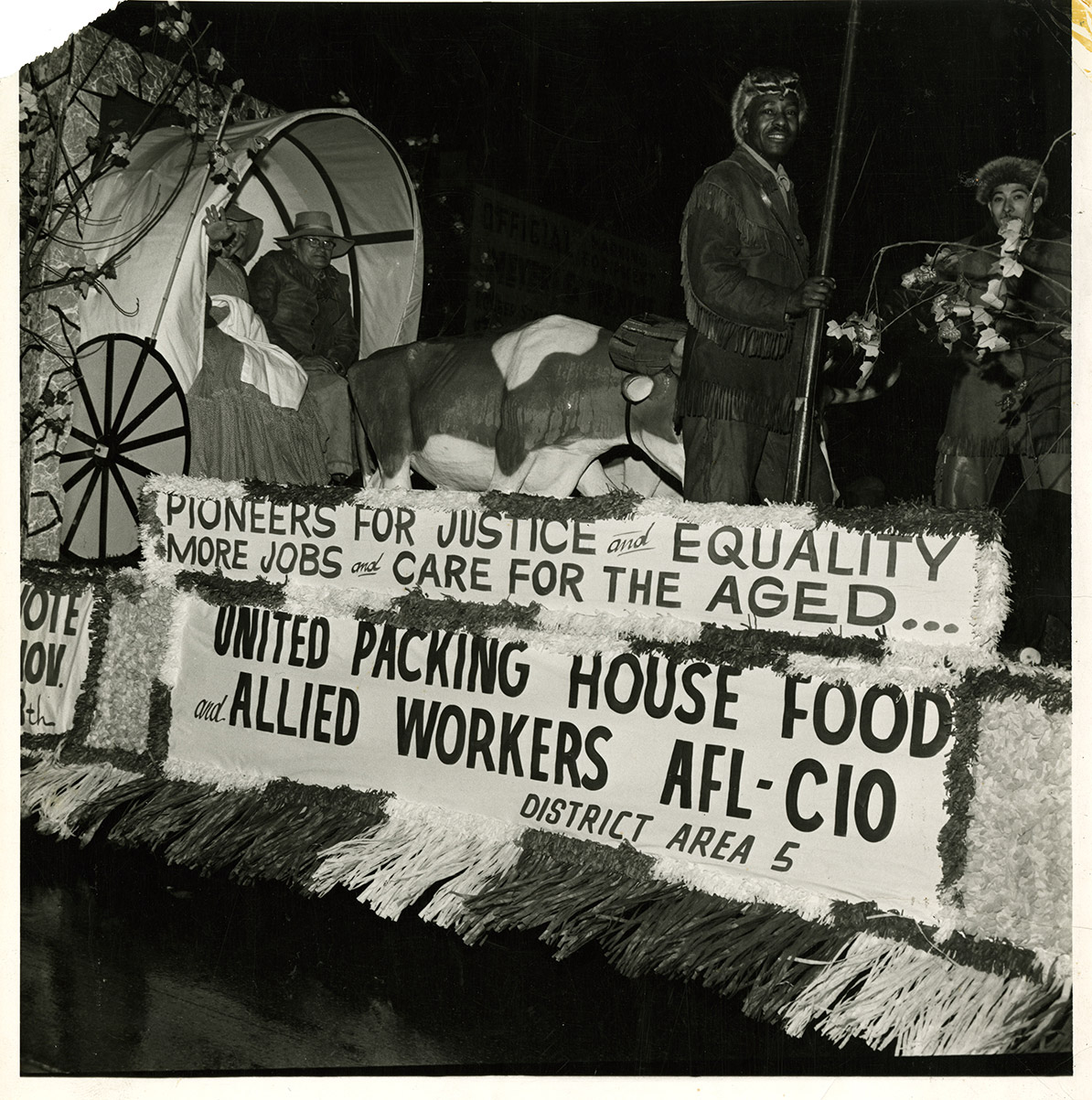
UPWA District Area 5 Members Parade float, circa 1960. (Chicago Public Library)
“For a working man, I mean a black working man, you could hope to be one of those Pullman porters, but the next best thing was to earn top dollar over in a packinghouse.” This sentiment expressed by a Chicago meatpacking worker was echoed by many black workers in the early to mid-twentieth century. Though jobs in meatpacking were always among the better industrial jobs available, it was the United Packinghouse Workers of America (UPWA) that made the industry a leading source of economic stability, racial justice, and workplace empowerment for black workers.
The material gains achieved by the UPWA in collective bargaining elevated black packinghouse workers into the loosely defined “blue-collar middle class.” But the union offered much more than that. The story of the UPWA is an inspiring example of multiracial unionism and labor’s broader political engagement beyond its membership. In many urban areas packing houses were the largest and most important multiracial institution around. African Americans, Eastern Europeans, Irish, Germans, Scandinavians, and native-born Protestants could all be found laboring in meatpacking plants across the country.
Oral histories of the experience of black workers in these plants, provided at length in the excellent work Meatpackers, by Rick Halpern and Roger Horowitz, give us deep insight into the crucial role the union played in improving the lives of working-class black people during this period. The UPWA used shop floor actions to fight boldly against racial and gender discrimination on the job, and made a point of challenging racist attitudes among white union members in the name of class unity. The relentless activism of the UPWA did not stop at the plant gates, however. UPWA leaders used their engaged membership to take on civil rights initiatives that mattered in the communities where workers lived.