When the Longshoremen Said “Enough”
Ninety years ago today, longshoremen led a militant wave of strikes that encompassed every West Coast port. In cities like Seattle, the 1934 strike became more than a labor action — it became a mass movement.
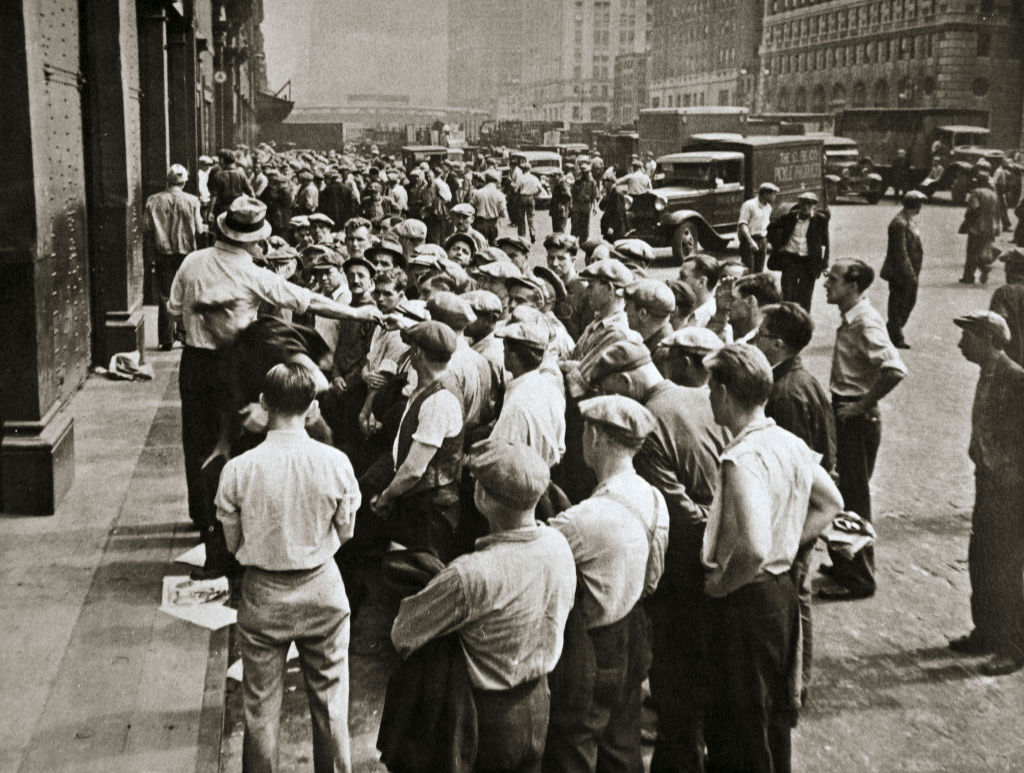
Longshoremen being picked out by a boss in the 1930s. (Historica Graphica Collection / Heritage Images / Getty Images)
On the morning of May 9, 1934, a rejuvenated International Longshoremen’s Association (ILA) struck shippers in the West Coast ports, shutting down them all from Bellingham, Washington, to San Diego.
Seattle’s dockers, some fifteen hundred, walked off their jobs that morning to face an array of hostile shippers united to maintain an “open shop” and the “fink hall” on Elliott Bay, as well as hundreds of scabs reporting to work on city piers. Seattle was the coast’s second-leading port, the hub of a dozen Columbia River, coastal, and Puget Sound ports, second only to San Fransico in volume of goods passing over its piers.
The long ’20s had taken its toll; ILA members were few and scattered along the waterfront and it was not at all clear that the Seattle men would prevail. In the immediate days after the strike began, there were still hundreds of strikebreakers at work, and the employers clearly had plans to introduce more. The Tacoma dockers saw the situation as “shaky,” and no one wanted to see shipping continue in Elliott Bay, least of all rank-and-file longshoremen themselves; defeat in Seattle would undermine the strike everywhere.