Football’s Soul Belongs to the Working Class

David Goldblatt

Despite corporate and elite attempts to wrest football from ordinary people, it remains a site of struggle for community and belonging amid capitalist alienation. The upcoming World Cup will showcase the game and its contradictions.
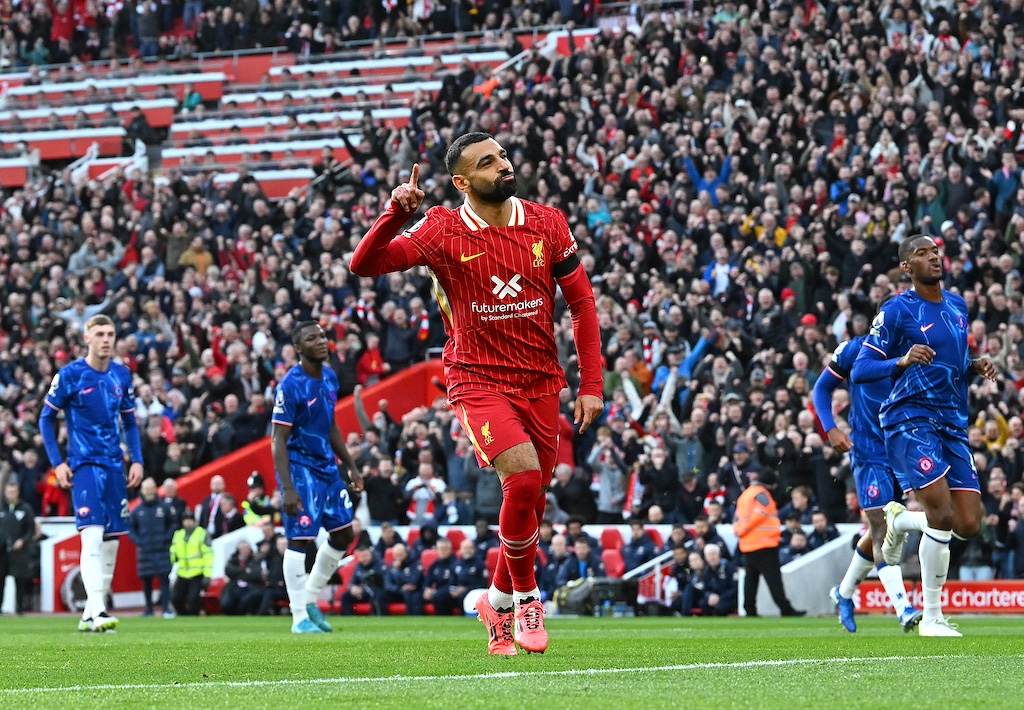
Football is also by far the most popular spectacle on the planet. This has made the game a catalyst for political struggles of all kinds. (John Powell / Liverpool FC via Getty Images)

Interview by
Bartolomeo Sala

There are few things that have been so consistently political as football. This is true of the sport’s early folk origins, in which village-wide kick-abouts became an excuse to destroy fences threatening to enclose common agricultural land. It is true of the mid-nineteenth century when — expunged of its plebeian elements and codified along a clear set of universal rules — football turned into a tool to enlist future members of Britain’s ruling class in the project of empire and initiate them to the amateur athletic cult of the Victorian gentleman.

However, football is even more political today. Not only is the beautiful game a multibillion industry and the playground for all sorts of economic and political interests from Gulf States’ sovereign funds to American private equity firms, but it is also by far the most popular spectacle on the planet. This has made the game a catalyst for political struggles of all kinds. With the next World Cup just a couple of months away, Bartolomeo Sala sat down with British football historian David Goldblatt for Jacobin and spoke about how, despite the best efforts of the monied interests behind the sport, elites just can’t kick politics out of the game.


Bartolomeo Sala

It’s fair to say you are the world’s foremost football writer, but your background is actually in sociology. Your first book, The Ball Is Round (2006), a whopping 900-page-plus global history of football starts with a quote by Émile Durkheim. What made you interested in football in the first place?

David Goldblatt

Good question. I mean, there were several moments, but if I had to mention one, it would be when in 1990 I was invited to the fourth round of the FA Cup between Charlton and Arsenal by my good friend Dan Levy.

I hadn’t been to a football game since I was a kid. At the time, though, I was in the middle of a sociology PhD at Cambridge on contemporary social theory and environmental politics, so I was pretty “sociologically charged.” I remember walking out of the railway station waiting for Dan in front of the Valley, Charlton’s stadium, and there was a gathering crowd. Suddenly, every sociological neuron in my brain explodes simultaneously in a riot of intellectual inquiry and wonders at the hidden rules, traditions, idioms, symbols, and behaviors that were all taking place in front of me in real time.

One of the great things was being in the Arsenal away end and experiencing for the first time, on the third stupid refereeing decision, the instantaneous, simultaneous learned history of the Arsenal crowd to start singing together, “You don’t know what you’re doing.” Or indeed, when Perry Groves was warming up, their cult substitute, singing “We all live in a Perry Groves world” to the tune of “Yellow Submarine.” I mean, it was just hysterical.

I suppose I’d done a lot of reading and a lot of thinking about subculture. Stuart Hall and Birmingham’s Centre for Contemporary Cultural Studies — that’s like the bread and butter of my intellectual life. And so, suddenly I was like, here we are.

Bartolomeo Sala

In the intro to a seminar you are teaching on the occasion of the new World Cup, you begin by quoting Uruguayan author Eduardo Galeano when he says, “Official history ignores football.” And yet, if there is one thing that your books show, it is how the two are irremediably entwined. In The Ball Is Round, for instance, you write, “No history of the modern world is complete without an account of football.”

Can you tell us what you mean by this? And secondly, how, in a world like ours where everything is nominally just about money, does football continue to be a powerful political tool?

David Goldblatt

Two very big questions, so let’s separate them one at a time. Claiming that no history of the modern world is complete without football, certainly from the perspective of 2026, seems a kind of incontestable — actually an obvious truth — in the sense that the biggest collective gathering of humanity that now exists is the men’s World Cup. This is the greatest show on earth.

When Morocco won its games at the Qatar 2022 World Cup, not merely were there exuberant celebrations on the pitch and in the stadium, but in every city of the Arabic world, from Casablanca in the West to Baghdad in the East, and across the Moroccan diaspora in Belgium, the Netherlands, and France people were on the streets in tens, even hundreds of thousands. And not merely celebrating Morocco but a pan-African and pan-Arabic triumph, with the Palestinian flag and pro-Palestinian slogans a central element of it.

So, why wouldn’t you want to include that as part of the warp and weft of everyday life that you’re attempting to capture? And then, football has always been popular and symbolically important from the late nineteenth century onward. It acquired political meanings and political purposes very early on — from the initial creation of football as a sort of amateur athletic cult of the Victorian gentleman, as a subsection of the educational and political program to train the elites of the British Empire. If that’s not a political program, I don’t know what is, and football is at the heart of that.

By the 1930s, communism and fascism had arrived. Ultranationalism has arrived. They all find their niches in football, be it Mussolini at the 1934 World Cup or the Uruguayans celebrating their hundred years of democracy at the 1930 World Cup. There’s a whole shadow history, even if it’s not an accurate reflection, of course.

As to your second question, whether it’s now all about money. . . . Often what we mean when we say football is the men’s elite professional spectacle at the highest level in Western Europe, and maybe a few other places in the world — it is not an unreasonable position to take. However, I think it’s really important to remember that football’s so much more than that. It’s a game people play more than ever. The number of women — and young, young women — playing football is through the roof. The professional spectacle is still not entirely disengaged from these life worlds. I mean, these are the spaces that at the end of the day create the culture and appetite for the spectacle.

I also think the other thing to remember about commercialization is that while there’s a lot of money flying around, and obviously players at the top of the sport are making a lot of money, agents are making a lot of money, and Gianni Infantino has a very nice salary, football clubs lose money. There is a tendency to think that football has become big business. But the rules of neoclassical economics don’t apply here.

The British Premier League is the most successful and popular football league in history. Its annual turnover is almost twice that of La Liga. I think it is more than the Spanish La Liga and the German Bundesliga combined. Still, it’s $11 billion in debt on a $7 billion annual turnover. Collectively, it has made a profit in four seasons out of thirty-four. OnlyFans has paid more in corporation taxes in the UK than the Premier League has in thirty-three years.

So the currency is not profit, but something more complex. For Nottingham Forest’s owner Vangelis Marinakis and the Thais, this all has political capital back home. Then there are explicit state projects such as Newcastle United and Manchester City.

I mean, the dominant club of the era, Manchester City, is a central asset of the United Arab Emirates state. Khaldoon [al-Mubarak], the chair of Man City, owns eight or nine offices at the heart of the Emirati state. All of these people recognize football to be literally the most effective, most powerful tool for global popular communication that is available.

Bartolomeo Sala

It seems unlikely that the world will be cheering for the US during this tournament.

David Goldblatt

The funny thing about the US men’s national team is that they are so terrible, it’s hard to hate them. Also, much of the MAGA constituency really doesn’t like football. In the past around World Cups, some of the more voluble shock jocks and performance artists like Glenn Beck and Ann Coulter have gone as far as to say that football is a game of Third World Marxist peasants, effete men, and women. No one with a single great-grandfather who was born in the United States likes this game. That’s the shtick. Also, recently MAGA plus [Donald] Trump had a real go at the women’s team for being too woke.

So it’s hard for them to do a Mussolini and get behind the great American team as this great expression of American masculinity. It’s super diverse anyway and its constituency is a Democrat constituency: women, Latinos, and cosmopolitan urban professionals.

It could be that actually the US men’s national team and its supporters pitch themselves in the stadiums as opponents of Trump. There’s been a lot of anti-ICE sentiment on banners in the stadiums. We’ll see whether America polices that with the same tenacity that the Qataris pursued people with rainbow banners or Iranian protest banners in 2022. I don’t know what they’ll do with that.

Bartolomeo Sala

I never quite thought of football as a Trojan horse of cultural Marxism, but I will happily take it.

Speaking of tensions, the central tension that you describe in your books is the never-ending contradiction between football as collective ritual — the last “lay religion” as it was called by [Eric] Hobsbawm, [Pier Paolo] Pasolini and [Jean-Paul] Sartre — and the reality of it being, if not an actual money machine, at least an outward expression of the most unbridled and corrupt forms of capitalism.

A very good example of this, as you mentioned, is the Premier League: a billion-dollar global brand and playground for Gulf sovereign funds, shady Greek businessmen, and American financiers and private equity funds, whose appeal and romanticism at least partly rests on a nostalgic attachment to cultural expressions that are working class in origin and, often, a very specific kind of tribalism.

Given the level of commodification and elite capture, what sense is there in continuing to consider football as a form of public theater? Would it be better to think of it as a form of escapism? Almost your daily fix of low-effort communitarianism in a world turning more individualized, atomized, and disenchanted by the minute?

David Goldblatt

I would say, why not think of it as both? In most art forms and most popular culture, that’s kind of the norm. I don’t think football is a religion, but it’s definitely a collective ritual and a soap opera. We only don’t call it a soap opera because it’s been mainly watched by men until recently. It is also a form of public theater and a space of collective ecstasy, a bit like music festivals are on occasion.

It’s all of these things simultaneously, so when we look at the elite capture of the Premier League, for instance, I suppose the question becomes: Is there anything left in football that pertains to its communitarian, progressive, playful elements?

I think at one level there’s a battle going on inside the stadiums of England between those who wish to commercialize and shape the spectacle in every last detail and drain every last bit of collective humanity, wit, uncertainty, or risk out of it, and there are those who insist by their very presence and behavior that actually a set of social relationships is going on here that is not reducible to commercial transaction. And that is a very powerful thing in advanced capitalism. Football is just a game. That is not a reason for its irrelevance, though. On the contrary, the reason for its genius and importance is that we have a space for values and life that is resistant to the logics of money and power.

I also think that, even in its romanticized form, the presence and veneration of what is largely a lost working-class industrial culture is incredibly important.

Who do you think built Britain? It was working people who since the neoliberal turn, politically and historically, have been written out of the equation. I think it’s important that that world is preserved. One of the things I love most about English football is to listen to the five o’clock sports report on BBC 5 Live.

For me, it is a litany of the geography of industrial England to hear about Preston and Macclesfield and Chesterfield and Bolton and Hartlepool. You don’t hear of these places anymore. It is partly the reason why everyone loves the Premier League around the world. It retains, despite everything, amazingly extraordinary fan cultures, behaviors, and atmospheres that draw — although they have been reinvented — on the solidarities, the humor, the archetypes of that lost world.

Finally, on the whole public theater thing, to anyone who doubts that football is not an absolutely vital space for progressive politics to operate in, I will just say two examples: one, Marcus Rashford, a twenty-three-year-old Manchester United striker who forced the British government to change policy on welfare and food twice; two, Gary Lineker, whose sacking after his tweet about the language of migration led to a strike on the Match of the Day football talk show, the first time it had not been correctly broadcast for sixty-four years. He basically won the argument. Like, come on, people, got to get in there! This is where politics with a small “p” is happening! There is a kind of elitism about me that wishes we were dealing with this through less metaphorical forms. But this is the world we live in.

Bartolomeo Sala

What changes to the game would you like to see in an ideal world? What are the things we should organize for as both lefties and football fans? I am thinking in particular of new, or perhaps old, models of ownership.

David Goldblatt

I think the first thing to say is the really good grounds for optimism and the biggest change that is going to happen over the next thirty years is the growth of women’s football. We’ve already seen an enormous transformation, and I think that will continue.

The second thing is that something’s got to be done about global and regional governance. FIFA, UEFA, and the rest of them operate in a kind of grey area of international law where they’re basically not accountable to anyone other than their own internal constituents. At the very minimum — and I think the instrument here is the European Union — there has to be a change in the nature of their governance. I think they should all be broken up as well. I think they’re too big and are trying to do too many different things. The representation of players, fans, and women who are currently either absent or marginal minorities in all of these organizations must also be raised.

As for ownership models, it’s very simple. The Germans have sorted it. We’re already there — the 50+1 rule. It works. You still get to win the World Cup, and you still get to win the Champions League. You’ve got stadiums that are fuller than anywhere in the world. Like, what do you want? It’s very, very simple.

We’ve forgotten on the Left — and Trump and the populist right are a reminder of this — that if you have the political will and the chutzpah and enough groundswell support, you can do all sorts of things that have been deemed impossible for a long time. And one of them would be simply to pass legislation that says this has to be the ownership model for football clubs. This is an enormous leap, politically, not just for football but for the politics of the Global North, but it’s not rocket science.

Finally, we have seen that football fans can get themselves organized on non-tribal lines. We all love the tribal stuff, but we also have to be citizens as well. And in Germany and England, in particular, you now have supporter association groups that are nationwide and have become political pressure groups. We need that everywhere, and we need more of them. Do you know who are often the key figures, certainly in England? Trade unionists, football fans who also happen to know about organizing. This is the last thing: you have to get organized.

Share this article

Contributors

David Goldblatt is the author of The Ball is Round: A Global History of Football and The Game of Our Lives.

Bartolomeo Sala is an Italian writer based in London. His writing has appeared in the Gagosian Quarterly, the Brooklyn Rail, and the Dial.

Filed Under