Sócrates Showed Us the Best Way to Bring Politics Into Sports
Today would have been the birthday of the late, great footballer Sócrates, who challenged the military dictatorship in his native Brazil — an example needed today on the eve of a World Cup designed to be a Trumpian propaganda showcase.
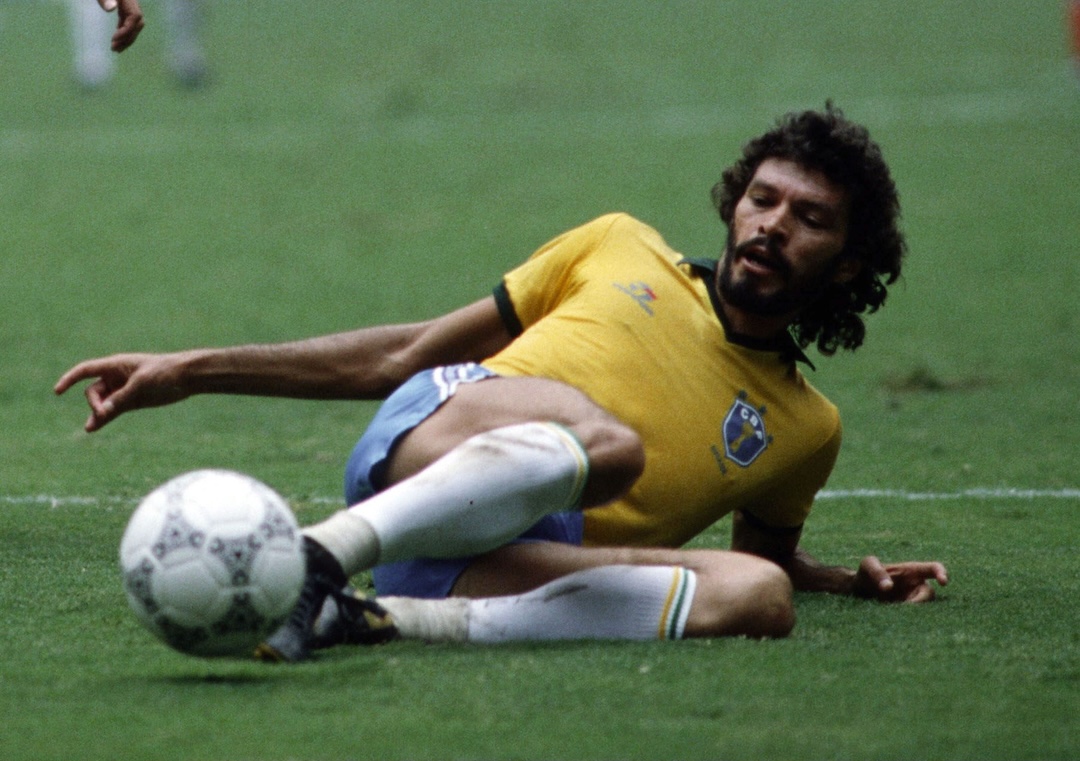
At a time when the US is preparing to host a World Cup set to make the tainted tournaments in Russia and Qatar seem almost quaint in comparison, football players should channel the political spirit of the Brazilian master Sócrates. (Bongarts / Getty Images)
Sócrates Brasileiro Sampaio de Souza Vieira de Oliveira never won a World Cup. He never reached a final, never lifted football’s most prestigious trophy, never secured the kind of immortality that usually defines greatness in the game’s official mythology. And yet decades on, the Brazilian footballing legend remains one of the most important figures in World Cup history.
Hundreds of players have won the tournament, but there has only ever been one Sócrates. His legacy endures not because of awards or even his boundless ability but because he understood something football’s institutions would rather forget: that playing the game is itself a political act. Athletes, whether they like it or not, occupy a stage with enormous social power.
The Anti-Athlete
Tall, bearded, and cerebral, often likened to Che Guevara, Sócrates cut an unmistakable figure on the pitch. He was a master of space and time, a player who saw passes before they existed, threading long balls with surgical precision and dismantling defenses with his trademark no-look backheels.