Diego Rivera Was the Painter of the Mexican Revolution
The Mexican Revolution inspired an extraordinary cultural efflorescence, with painting as its leading art form. The spectacular murals of Diego Rivera, inspired by Mexico’s popular history and culture, are the most remarkable legacy of that period.
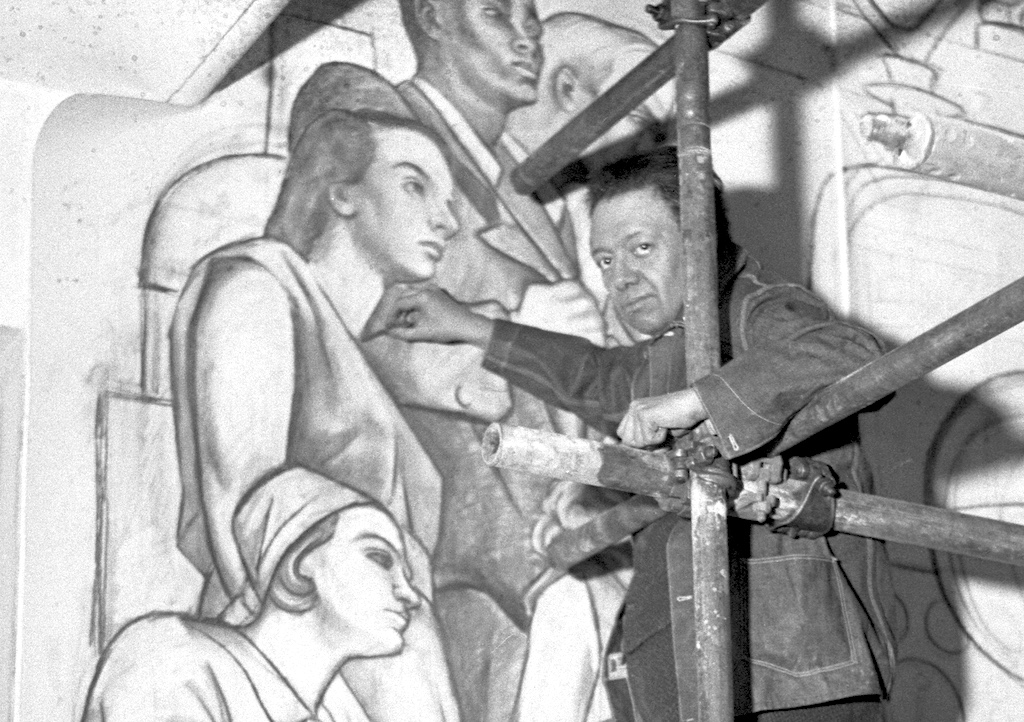
Diego Rivera at work on the mural at Rockefeller Center, New York. (Bettmann / Getty Images)
The art of Diego Rivera is inseparable from the revolution that Mexico experienced in the early twentieth century and the state that was built in its aftermath. The revolutionary process began in 1910, when Porfirio Díaz, who had ruled Mexico for thirty-four years, announced that there were going to be presidential elections.
Díaz had overseen the growth of an economy based on exports such as sugar, coffee, and tobacco, and new industries like oil and textiles, most of which were financed by foreign capital. Mexico’s rural population, Indian and mestizo, lived under the whip of the latifundistas, the landowning class, and the threat of violence from Díaz’s rural police, the rurales (as documented in John Kenneth Turner’s book Barbarous Mexico).
The social tensions were palpable, but the spark that lit the fuse for the revolution of 1910–17 was a politically moderate pamphlet by Francisco Madero, the son of a wealthy landowning family, advocating universal suffrage and a vote against Díaz. Madero’s demands were limited to political reform, and he was soon driven into exile. But his words echoed across a country riven with social conflict.